European Gas Price Shock: Recalculating Decarbonization Cost Curves After the TTF Spike
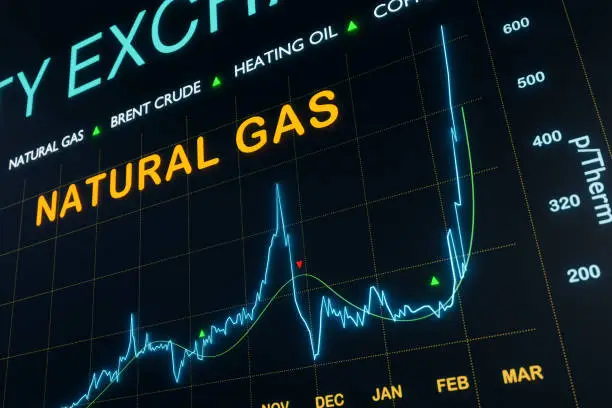
Europe's decarbonization economics are being reassessed as the Dutch TTF gas benchmark remains dramatically above its early-2026 levels. On August 25, European gas was trading around €66–68/MWh, roughly double its level a year earlier. (Trading Economics)
The price shock is doing more than increasing energy bills. It is changing the relative economics of blue hydrogen, green hydrogen, green ammonia, electrification and conventional gas-based chemical production.
TTF Has Become a Decarbonization Variable
The current gas rally is being driven by a combination of disrupted Gulf LNG supplies, reduced shipping through the Strait of Hormuz, low European storage and strong summer power demand. EU gas storage was only around 62–63% full in mid-to-late August, well below the five-year average. (Anadolu Ajansı)
The TTF benchmark had already risen sharply during the 2026 Middle East crisis. In early March, it jumped from roughly €30/MWh to €50–60/MWh, representing an increase of approximately 70–100%. (CEPS)
By August, the market had moved considerably higher again, with TTF briefly exceeding €65/MWh. (euronews)
That changes the baseline against which low-carbon projects are evaluated.
Blue Hydrogen Becomes More Expensive
Blue hydrogen depends heavily on natural gas. When gas prices rise, the cost of hydrogen produced through steam methane reforming or autothermal reforming rises with them.
This creates an important advantage for green hydrogen: its primary energy input is electricity rather than natural gas.
During Europe's previous energy crisis, research found that higher gas prices pushed blue-hydrogen costs sharply upward, while the relative competitiveness of electrolytic hydrogen improved. (OUP Academic)
The current TTF shock is recreating that dynamic.
In simplified terms:
Higher TTF → higher blue-hydrogen cost → narrower green-hydrogen cost gap.
The exact crossover point depends on electricity prices, electrolyser efficiency, utilisation rates, carbon prices and the cost of renewable power.
But Green Hydrogen Does Not Automatically Win
It would be misleading to conclude that today's gas prices make green hydrogen universally cheaper.
Green hydrogen still requires substantial electricity consumption. An electrolyser typically needs roughly 50–55 kWh of electricity per kilogram of hydrogen, depending on technology and system efficiency.
Therefore:
Green H₂ cost ≈ electricity cost × electrolyser consumption + capital + operating costs
If renewable electricity is inexpensive, green hydrogen can become highly competitive. If an electrolyser depends on expensive grid electricity, however, the economics can remain challenging even when gas prices are high.
This is why Europe's renewable-power buildout is becoming just as important to hydrogen economics as the TTF benchmark.
Ammonia Economics Are Also Being Recalculated
The effect extends beyond hydrogen.
Natural gas is the primary feedstock for conventional ammonia production. A sustained increase in European gas prices therefore increases the cost of producing ammonia and nitrogen fertilizers.
At the same time, green ammonia uses renewable hydrogen instead of fossil-derived hydrogen.
The result is a widening strategic distinction:
Factor | Conventional/Blue Ammonia | Green Ammonia |
|---|
Main feedstock | Natural gas | Renewable electricity |
TTF exposure | High | Low |
Carbon intensity | Higher | Much lower |
Energy-price exposure | Gas prices | Electricity prices |
Near-term cost | Generally lower | Generally higher |
Supply diversification | Limited by gas availability | Higher |
Geopolitical exposure | Higher | Potentially lower |
The current energy shock therefore increases the option value of green ammonia even if it does not immediately eliminate its cost premium.
Gas-Fired Power Is Adding Another Layer
The TTF spike also affects decarbonization indirectly through European electricity markets.
When renewable generation is insufficient, gas-fired power plants often become marginal generators. Higher gas prices therefore feed into electricity prices, raising operating costs for energy-intensive industries.
Ember estimates that the cost of gas-fired power generation in Europe increased by more than 50% following the 2026 gas shock. (Ember Energy)
This creates a complicated situation for green-hydrogen developers.
A project using dedicated low-cost solar or wind power may become more competitive against fossil hydrogen.
But an electrolyser dependent on volatile grid electricity can simultaneously face higher operating costs.
The Real Competitive Advantage Is Low-Cost Renewable Power
The TTF shock therefore strengthens the case for green hydrogen projects with dedicated renewable generation.
A project with:
low-cost solar or wind,
high electrolyser utilisation,
long-term renewable power contracts,
efficient electrolysers,
access to hydrogen infrastructure, and
secured offtake
is increasingly insulated from European gas-market volatility.
This makes the location of production more important.
A green-hydrogen project in a high-resource renewable region can potentially produce hydrogen at a relatively stable cost while European fossil-based hydrogen producers remain exposed to TTF volatility.
Europe's Industrial Competitiveness Problem
The bigger issue is that high gas prices affect the entire industrial ecosystem.
Chemical producers, fertilizer manufacturers, glassmakers, steelmakers and other energy-intensive industries compete globally. If European gas remains structurally more expensive than gas or electricity in competing regions, European producers face a persistent cost disadvantage.
This could accelerate investment in:
electrification + renewable hydrogen + energy efficiency + alternative feedstocks.
But it could also encourage some companies to move energy-intensive production toward regions with cheaper energy.
This is why Europe's current energy crisis is simultaneously a decarbonization challenge and an industrial-competitiveness challenge.
The Carbon Price Changes the Calculation
Another important variable is the EU carbon price.
Fossil-based production carries a carbon cost under Europe's emissions-trading framework, while lower-carbon production can reduce exposure to future carbon costs.
This means the correct comparison is not simply:
Green production cost vs. fossil production cost
but:
Green production cost vs. fossil production cost + gas cost + carbon cost + future regulatory risk.
As carbon prices increase, the economic penalty associated with fossil-based production becomes larger.
That can make higher-cost low-carbon projects commercially attractive earlier than a simple energy-cost comparison would suggest.
The TTF Spike Could Accelerate Industrial Electrification
The current environment may also strengthen the case for direct electrification.
Where an industrial process can be electrified efficiently, companies can reduce exposure to gas prices altogether.
The hierarchy increasingly becomes:
Gas-based process → gas + carbon capture → direct electrification → renewable hydrogen
depending on the specific industrial application.
Hydrogen will not be the optimal solution everywhere. But the higher and more volatile TTF becomes, the stronger the incentive becomes to replace gas wherever technically and economically possible.
However, Gas Could Become Competitive Again
There is an important caveat.
Today's gas premium may not be permanent.
Wood Mackenzie notes that if the Middle East conflict ends and Qatari and UAE LNG exports return to international markets, European gas prices could fall sharply, potentially making low-carbon ammonia less competitive again. (Wood Mackenzie)
This creates a major challenge for green-hydrogen developers.
A project designed around today's €60–70/MWh gas environment may look highly competitive. But lenders need to know whether that advantage survives if TTF falls back toward €30–40/MWh.
Therefore, long-term bankability cannot depend solely on a temporary gas spike.
What This Means for Chemical Procurement
For chemical buyers, the current market reinforces the importance of looking beyond headline commodity prices.
Procurement teams should increasingly compare suppliers using:
TTF-linked production exposure
Electricity-source and power-price exposure
Carbon intensity
Carbon-cost exposure
Geographic supply diversification
Gas-storage and logistics risk
Long-term renewable-power contracts
Green or low-carbon product premiums
The lowest-cost supplier today may not remain the lowest-cost supplier after energy and carbon risks are incorporated.
Outlook
The latest TTF spike is effectively forcing Europe to recalculate its decarbonization cost curves.
At around €66–68/MWh, natural gas is substantially more expensive than it was at the beginning of 2026, while Europe's low storage levels and continued LNG uncertainty leave the market vulnerable to further volatility. (Trading Economics)
The result is not an automatic victory for green hydrogen. Instead, the economics are becoming more balanced:
High TTF → weaker economics for gas-based hydrogen and chemicals → stronger relative case for renewable hydrogen and electrification → greater value for energy-secure low-carbon projects.
The long-term winners are therefore likely to be projects that can lock in low-cost renewable energy, reliable infrastructure and bankable demand rather than projects that depend on today's temporary fossil-fuel price premium.
For Europe's chemical industry, the TTF spike is ultimately a reminder that decarbonization is no longer just a carbon-cost decision—it is increasingly an energy-security and competitiveness strategy.