
Global Citric Acid Market Trends: China Supply, Export Pressure and 2027 Outlook
China's citric acid export market remains one of the most important supply indicators for international buyers in 2026. Recent Chinese customs data shows exports reached about 95,700 tonnes in August 2026, while January to August exports stood around 885,000 tonnes, approximately 1% above the same period of 2025.
This supply position gives Chinese producers significant influence over international availability and pricing. At the same time, demand continues to expand across beverages, processed foods, pharmaceuticals, personal care, cleaning products and industrial formulations, supporting the broader citric acid market trends shaping procurement decisions through 2027.
China Remains Central to Global Citric Acid Supply
Citric acid is produced mainly through fermentation of carbohydrate-based raw materials such as corn glucose, starch sugar, cane sugar and molasses. Its broad functionality allows manufacturers to use it as an acidulant, preservative, flavoring agent, pH regulator, buffering agent and chelating agent.
China has developed a particularly strong position in global citric acid manufacturing and exports. Its production scale allows international buyers to source large commercial quantities while maintaining access to multiple grades and packaging formats.
Recent trade data highlights the scale of this export role. Chinese exports reached approximately 119,494 tonnes in June 2026 before falling to about 81,822 tonnes in July and rebounding to approximately 95,700 tonnes in August.
The monthly fluctuations do not change the broader picture. China continues to operate as a large net exporter, with export volumes vastly exceeding imports.
Export Volumes Show a Competitive Global Trade Market
The 2026 export data points to a market where China continues to supply a wide range of international destinations rather than depending on one dominant buyer.
India, Mexico, Japan, Poland and Russia featured among the leading destinations in recent monthly trade data. Other significant markets included Indonesia, the Netherlands, Türkiye, South Korea and Iraq.
This geographic diversity matters for procurement teams because changes in one market do not necessarily determine the direction of Chinese exports as a whole. Producers can redirect shipments between regions depending on freight economics, inventories, seasonal demand and buyer purchasing activity.
August provided another important signal. Chinese citric acid exports increased around 17% from July in volume and about 16% in value, although shipments remained below the stronger levels recorded earlier in the year.
What Is Driving Citric Acid Demand in 2026?
The market benefits from its unusually broad application base. Food and beverage manufacturing remains a major demand center, while pharmaceutical, personal care, cleaning and industrial applications provide additional outlets.
Several demand areas remain particularly relevant:
Food and beverages: Citric acid helps control acidity, enhance flavor and support preservation in drinks, confectionery, sauces, processed foods and dairy applications.
Pharmaceuticals: Manufacturers use citric acid in formulations including effervescent products and syrups where acidity and buffering properties matter.
Cleaning products: Its chelating and descaling properties support household and industrial cleaning formulations.
Personal care: Cosmetic and personal care manufacturers use citric acid for pH adjustment and formulation control.
Industrial applications: Citric acid supports water treatment, metal cleaning and other processes requiring controlled acidity or chelation.
Market research published in September 2026 estimates the global citric acid market at approximately $4.19 billion in 2026, with projected growth toward $6.81 billion by 2034. Asia Pacific accounted for 45.59% of the market in 2025.
The combination of essential applications and geographic demand diversity provides a relatively broad base for continued market expansion.

Raw Material Costs Remain a Key Price Driver
Citric acid production depends heavily on fermentation feedstocks, making raw material costs an important factor in producer economics.
Corn and other carbohydrate-based inputs influence manufacturing costs in major production regions. Changes in agricultural supply, energy costs and fermentation economics can therefore affect producer offers even when downstream demand remains stable.
Chinese domestic corn prices showed firmer conditions during the first quarter of 2026, contributing to higher production costs for citric acid manufacturers. At the same time, cautious downstream purchasing limited the extent of price increases.
For international buyers, the final landed cost involves more than the producer quotation. Freight, insurance, port charges, currency movements, tariffs and destination handling can materially change the delivered price.
Citric Acid Prices Reflect Supply, Demand and Freight
Pricing conditions remain highly dependent on the balance between Chinese production and global buying activity.
Recent trade data shows an interesting distinction between export volume and unit value. Chinese exports in July 2026 declined 17.04% year over year, while the average export price reached about $820.94 per tonne, 21.22% higher than July 2025.
This suggests that shipment volume alone cannot explain market pricing. Buyers should also monitor raw material costs, producer inventories, freight rates, currency movements and purchasing cycles.
For procurement teams, a lower spot quotation may not always translate into the lowest total sourcing cost. A supplier offering a competitive FOB price but requiring longer transit or less flexible shipment scheduling can create additional inventory and working-capital costs.
Global Buyers Face Different Sourcing Conditions
China's export network gives buyers multiple opportunities to source citric acid, but procurement strategies vary according to destination and application.
Large food and beverage manufacturers generally prioritize consistent quality, reliable documentation and supply continuity alongside price. Pharmaceutical buyers may place greater emphasis on grade specifications, purity documentation and supplier qualification.
Industrial buyers can have different priorities, especially where citric acid functions as a processing chemical rather than a direct food ingredient. They may focus more heavily on technical specifications, packaging, delivery schedules and cost per application.
Procurement teams should therefore avoid treating all citric acid offers as interchangeable. Product grade, monohydrate or anhydrous form, specification, origin and intended application should form part of every purchasing comparison.
Supply Chain Risks Buyers Should Monitor
China's dominant export position creates both sourcing opportunities and exposure to regional supply-chain disruptions.
International buyers should monitor:
Freight availability: Container costs and vessel schedules can change the delivered cost even when the chemical price remains stable.
Port conditions: Congestion or disruption can delay otherwise confirmed shipments.
Agricultural inputs: Changes in corn and carbohydrate feedstock costs can affect producer economics.
Currency movements: Exchange-rate changes can alter supplier competitiveness between buying cycles.
Trade policies: Tariffs, customs requirements and changes in import rules can affect landed costs.
Inventory cycles: Buyers placing large orders during a high-inventory period may face unnecessary working-capital exposure.
Recent Chinese export data also shows why buyers should track several months rather than relying on one shipment report. Exports moved from about 119,500 tonnes in June to 81,800 tonnes in July before recovering to approximately 95,700 tonnes in August.
The Market Is Moving Toward More Strategic Procurement
The scale of China's export market makes supplier diversification more complicated than simply replacing Chinese supply with another origin.
A practical procurement strategy can instead focus on maintaining multiple qualified suppliers, negotiating flexible shipment schedules and monitoring both spot and contract pricing.
Buyers should also maintain clear technical specifications before requesting quotations. This helps prevent suppliers from comparing different grades or forms under the same product name.
For recurring consumption, procurement teams can consider a combination of:
Contract purchasing: Useful for establishing predictable supply and reducing exposure to sudden availability changes.
Spot purchasing: Provides flexibility when market prices soften or when additional short-term volumes are required.
Supplier diversification: Helps reduce dependence on one manufacturer, port or logistics route.
Inventory planning: Aligning stock levels with lead times can reduce emergency purchasing when freight or production conditions change.
What 2026 Trade Data Signals for 2027
The available 2026 data points toward continued Chinese importance in global citric acid trade. From January through August 2026, Chinese exports reached approximately 885,000 tonnes, around 1% higher than the same period of 2025, while export value increased about 8%.
The faster growth in export value than volume indicates that the market deserves close monitoring rather than assuming that additional Chinese tonnage will automatically translate into lower prices.
Global demand also provides a counterweight to supply expansion. Food processing, beverages, pharmaceutical formulations, cleaning products and other applications continue to support structural consumption growth.
For 2027, procurement teams should therefore watch three connected factors: Chinese production and export availability, feedstock and energy costs and the pace of downstream demand growth.
What Buyers Should Do Now
The citric acid market offers strong sourcing opportunities, but buyers need to look beyond the headline supplier price. Chinese export availability remains substantial, while monthly shipment changes show that supply and purchasing conditions can shift quickly.
A focused buying strategy should include:
Compare landed costs rather than only FOB offers. Include freight, insurance, duties, port charges and financing costs.
Verify the exact specification. Confirm grade, form, purity, packaging and application requirements before comparing quotations.
Track Chinese export activity. Monthly export volumes can provide an early indication of supply availability and international purchasing momentum.
Build supplier alternatives. Maintaining qualified sources across more than one producer can improve resilience during logistical or production disruptions.
Review purchasing frequency. Smaller and more frequent purchases may reduce inventory exposure when prices remain uncertain.
Monitor raw materials. Feedstock and energy movements can provide useful signals about future producer pricing.
The broader outlook remains supported by diverse end-use demand and continued international dependence on large-scale Chinese supply. Buyers that combine market monitoring with disciplined supplier qualification can respond more effectively as 2027 approaches.
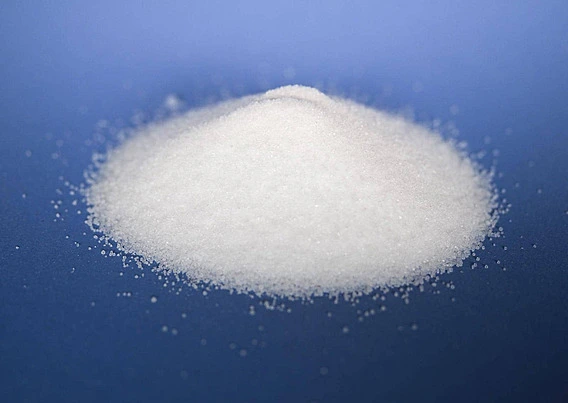
Citric Acid Monohydrate (E330)
Found this useful?