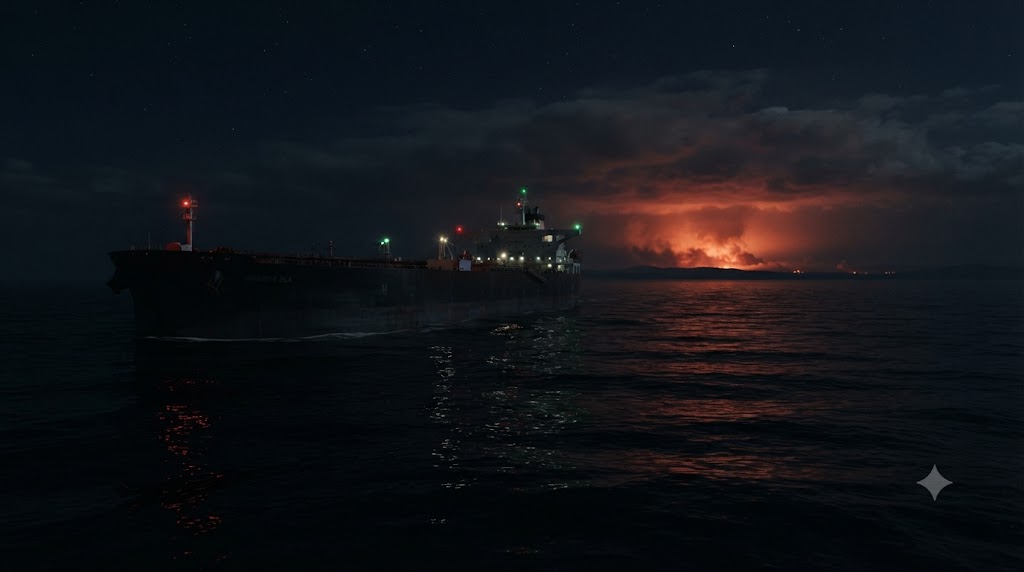
Honeywell's Guidance Bakes In No Further Middle East Supply Chain Disruption
Honeywell's Guidance Bakes In No Further Middle East Supply Chain Disruption
Corporate guidance is often presented as a set of revenue, margin and earnings expectations. Yet beneath those numbers sits another layer of information that procurement teams should examine closely: the assumptions management is making about the external environment.
Honeywell's current outlook provides a particularly useful example.
Management's guidance assumes that conditions in the Middle East remain broadly where they are today, without a significant escalation or additional supply chain disruption.
That qualifier is strategically important.
It means Honeywell's financial outlook should not be interpreted as including the impact of a major deterioration in regional logistics, shipping availability or industrial supply chains. Instead, the company's base case assumes that the existing level of geopolitical pressure remains manageable.
For procurement executives, industrial distributors and chemical buyers, the statement provides more than information about Honeywell. It offers a framework for understanding how corporations are building geopolitical risk into 2026 forecasts.
Guidance Is Only as Strong as Its Assumptions
Every corporate forecast depends on assumptions.
Companies typically model variables including:
Customer demand
Production rates
Raw material availability
Freight costs
Foreign exchange
Labor conditions
Supplier performance
Geopolitical stability
Management then generates a central forecast based on the most likely combination of those variables.
The resulting guidance is therefore not a prediction that every external condition will remain unchanged.
It is a conditional scenario.
Honeywell's Middle East commentary makes this explicit. The current outlook effectively assumes that the geopolitical environment does not deteriorate materially beyond present conditions.
If that assumption changes, the forecast may also need to change.
Why the Middle East Matters to Honeywell
Honeywell operates across a broad industrial portfolio, including aerospace, automation, energy-related technologies and advanced materials.
These businesses interact with global supply chains involving:
Aircraft components
Industrial electronics
Control systems
Specialty materials
Energy infrastructure
Logistics networks
Large industrial projects
The Middle East also represents a strategically important region for aviation, energy, infrastructure and industrial investment.
Disruption therefore has several possible transmission channels.
It can affect customer projects directly while also influencing freight routes, component deliveries, energy markets and regional transportation capacity.
This makes the assumption embedded in Honeywell's guidance particularly relevant.
The Key Phrase Is "No Further Disruption"
A critical distinction lies between assuming no disruption and assuming no further disruption.
The second formulation acknowledges that the market is already operating under some level of geopolitical and logistical pressure.
Current conditions may already include:
Higher freight costs
Longer transportation routes
Additional insurance expenses
Supply chain contingency planning
Inventory adjustments
Delayed shipments
Honeywell's guidance can therefore accommodate conditions already visible today.
What it does not necessarily accommodate is a significant additional deterioration.
That boundary is what procurement teams should monitor.
What Could Break the Base-Case Assumption?
Several developments could cause actual operating conditions to diverge from the assumptions underlying guidance.
These might include:
Closure or severe restriction of major maritime routes
Significant airspace disruption
Extended port interruptions
Sharp increases in freight insurance
Supplier production interruptions
Escalation affecting regional industrial facilities
Major energy supply disruption
Not every geopolitical headline would materially alter Honeywell's outlook.
The important question is whether events begin affecting the physical movement of products, people or critical industrial inputs.
Once that occurs, the operating consequences become much more significant.
Supply Chain Exposure Extends Beyond Direct Middle East Sales
A company does not need to manufacture heavily in the Middle East to experience disruption from the region.
Modern supply networks are interconnected.
A logistics disturbance can influence companies through:
Air freight capacity
Maritime transit routes
Energy costs
Insurance premiums
Supplier lead times
Component availability
This is why regional geopolitical events can create global industrial consequences.
A delayed component moving through an affected transportation network can slow manufacturing thousands of kilometers away.
For procurement teams, mapping indirect exposure is therefore as important as identifying direct suppliers.
Aerospace Makes Logistics Reliability Particularly Important
Honeywell's aerospace activities make supply reliability especially important.
Aerospace supply chains often involve highly specialized components with strict certification requirements.
Replacing one supplier with another may not be straightforward.
Components can have:
Limited qualified sources
Long manufacturing lead times
Certification requirements
Complex quality-control procedures
High switching costs
This creates vulnerability when transportation or manufacturing is disrupted.
Procurement teams in similarly specialized industries should recognize that supplier diversification alone does not always provide immediate resilience.
Inventory buffers and logistics alternatives may also be required.
Advanced Materials Add Another Layer of Exposure
Honeywell's broader portfolio also intersects with specialty materials and industrial chemicals.
Advanced manufacturing relies on materials where supply continuity, quality consistency and specification compliance are critical.
Disruption can affect:
Specialty polymers
Fluorinated materials
Electronic materials
Process chemicals
High-performance additives
Industrial intermediates
For specialty chemical procurement, the central issue is rarely whether alternative material exists somewhere in the market.
The relevant question is whether a qualified substitute can be sourced, approved and delivered quickly enough to avoid production interruption.
Why Guidance Assumptions Matter to Procurement Teams
Corporate guidance can serve as indirect market intelligence.
When a company explicitly states that its forecast depends on geopolitical conditions not worsening, procurement professionals gain insight into management's risk model.
They can then ask whether their own purchasing assumptions are equally dependent on stability.
For example:
Base case: Current transportation conditions continue.
Moderate disruption: Freight becomes more expensive and lead times increase.
Severe disruption: Major supply routes become unavailable.
Different scenarios require different inventory, contracting and sourcing responses.
Procurement teams that model only the base case may underestimate operational risk.
Forecasts Should Carry Geopolitical Trigger Points
One useful lesson from Honeywell's guidance is that forecasts should have identifiable trigger points.
Instead of creating a single annual purchasing plan, companies can define events that require immediate reassessment.
Possible triggers include:
Freight rates exceeding predefined levels
Lead times extending beyond safety thresholds
Closure of a critical transport corridor
Supplier force majeure declarations
Sharp energy price increases
Inventory falling below minimum coverage
This approach transforms geopolitical monitoring into operational decision-making.
The objective is not to predict every event.
It is to know when current assumptions are no longer valid.
Inventory Strategy Becomes Part of the Response
When geopolitical uncertainty increases, procurement teams frequently reconsider inventory levels.
Companies may build additional stocks of critical inputs when the financial cost of inventory is lower than the potential cost of production interruption.
This is particularly relevant for:
Long-lead materials
Single-source components
Critical chemicals
Specialized industrial parts
Products transported through exposed routes
However, indiscriminate stock building can create excessive working-capital requirements.
The better approach is to rank materials according to operational criticality and replacement difficulty.
Freight Is One of the First Variables to Watch
Transportation markets often reveal supply-chain stress before manufacturing data does.
Signs of increasing disruption can include:
Higher tanker rates
Rising container freight
Additional insurance premiums
Air cargo constraints
Longer transit times
Vessel rerouting
These changes may initially appear manageable.
But when several occur simultaneously, supply-chain risk can increase rapidly.
Industrial companies should therefore monitor logistics data alongside geopolitical news.
Energy Prices Provide Another Transmission Channel
Middle East escalation can also affect corporations indirectly through energy markets.
Higher crude prices can influence:
Transportation costs
Petrochemical feedstocks
Utility expenses
Supplier manufacturing costs
Inflation
Even companies with limited direct regional sourcing can therefore experience margin pressure.
For chemical buyers, the transmission mechanism is particularly important because crude and natural gas prices feed into numerous production chains.
Higher energy prices can eventually affect solvents, polymers, intermediates and transportation.
The Difference Between Resilience and Forecast Accuracy
No company can forecast geopolitical developments precisely.
Resilience therefore matters more than perfect prediction.
A resilient supply chain is designed so that an unexpected event does not immediately become an operational crisis.
Resilience measures can include:
Dual sourcing
Safety stocks
Alternative transportation routes
Regional supplier networks
Flexible contracts
Scenario-based planning
Honeywell's guidance highlights this distinction.
Management can issue a reasonable forecast under current conditions while acknowledging that a significant escalation would create a different operating scenario.
What Chemical Procurement Teams Should Monitor
For industrial and chemical buyers, several indicators can reveal whether Honeywell's base-case assumption remains reasonable.
These include:
Middle East maritime traffic
Regional port operations
Airspace availability
Freight insurance
Crude oil prices
Supplier lead times
Industrial force majeure notices
Inventory behaviour
No single indicator necessarily confirms a major disruption.
The signal becomes stronger when several deteriorate simultaneously.
The Broader 2026 Intelligence Lesson
Honeywell's guidance fits a broader theme emerging across 2026 corporate and commodity markets.
Forecasts increasingly require explicit assumptions.
Oil outlooks depend on supply-route continuity. Chemical earnings forecasts depend on energy and demand conditions. Fertilizer availability depends partly on export policy. Industrial guidance depends on geopolitical stability.
The appropriate response is not to abandon forecasting.
It is to treat forecasts as living scenarios rather than fixed predictions.
Procurement teams should continually compare actual market conditions against the assumptions underlying their purchasing plans.
Final Takeaway
Honeywell's guidance assumes the Middle East situation remains broadly where it stands today, with no significant escalation and no material additional supply chain disruption.
That qualification deserves almost as much attention as the financial guidance itself.
It defines the geopolitical boundary of Honeywell's base-case forecast. Should physical logistics, energy markets or supplier operations deteriorate significantly, the assumptions supporting that outlook would need reassessment.
For procurement managers and chemical buyers, the lesson is straightforward: every forecast should identify the external conditions required for it to remain valid.
Companies that define those assumptions clearly, monitor them continuously and establish predetermined response triggers will be better positioned to react when market conditions change.
In an environment where geopolitical developments can alter freight routes, energy prices and supplier reliability within days, the quality of a forecast increasingly depends on how quickly its assumptions can be revised.
Ready to source Hydrogen Peroxide from verified global suppliers? Explore competitive offers on our platform today.

Hydrogen Peroxide (35%) - Thailand
Found this useful?