Hydrogen has become one of the most closely watched feedstocks in the global chemical industry. While forecasts suggest that roughly 15% of the global ammonia market could operate on green hydrogen by 2030, and methanol production alone may account for 11% of annual hydrogen demand, the commercial reality in 2026 looks very different. The technology continues to advance, but production economics still favour conventional fossil-based hydrogen in most regions.
For chemical producers and procurement professionals, understanding this cost gap is essential. Green hydrogen remains central to long-term decarbonisation strategies, yet today's sourcing decisions still depend heavily on natural gas prices, renewable electricity availability and infrastructure investment.
Why Hydrogen Matters to the Chemical Industry
Hydrogen is far more than an energy carrier. It serves as a critical raw material for some of the world's largest chemical value chains.
The largest consumer remains ammonia, which relies on hydrogen as its primary building block. Ammonia production supports global fertiliser manufacturing and numerous downstream industrial applications.
Hydrogen also plays an essential role in methanol production, refinery operations and several specialty chemical processes. As industries pursue lower-carbon manufacturing, replacing fossil-derived hydrogen with renewable alternatives has become a major strategic objective.
The transition extends beyond emissions reduction. Companies also seek greater resilience against future carbon pricing, evolving environmental regulations and customer demand for lower-carbon products.
How Green Hydrogen Is Produced
Conventional hydrogen production primarily uses steam methane reforming, where natural gas reacts with steam to produce hydrogen and carbon dioxide. This method delivers relatively low production costs but generates significant greenhouse gas emissions unless paired with carbon capture technology.
Green hydrogen follows a different pathway.
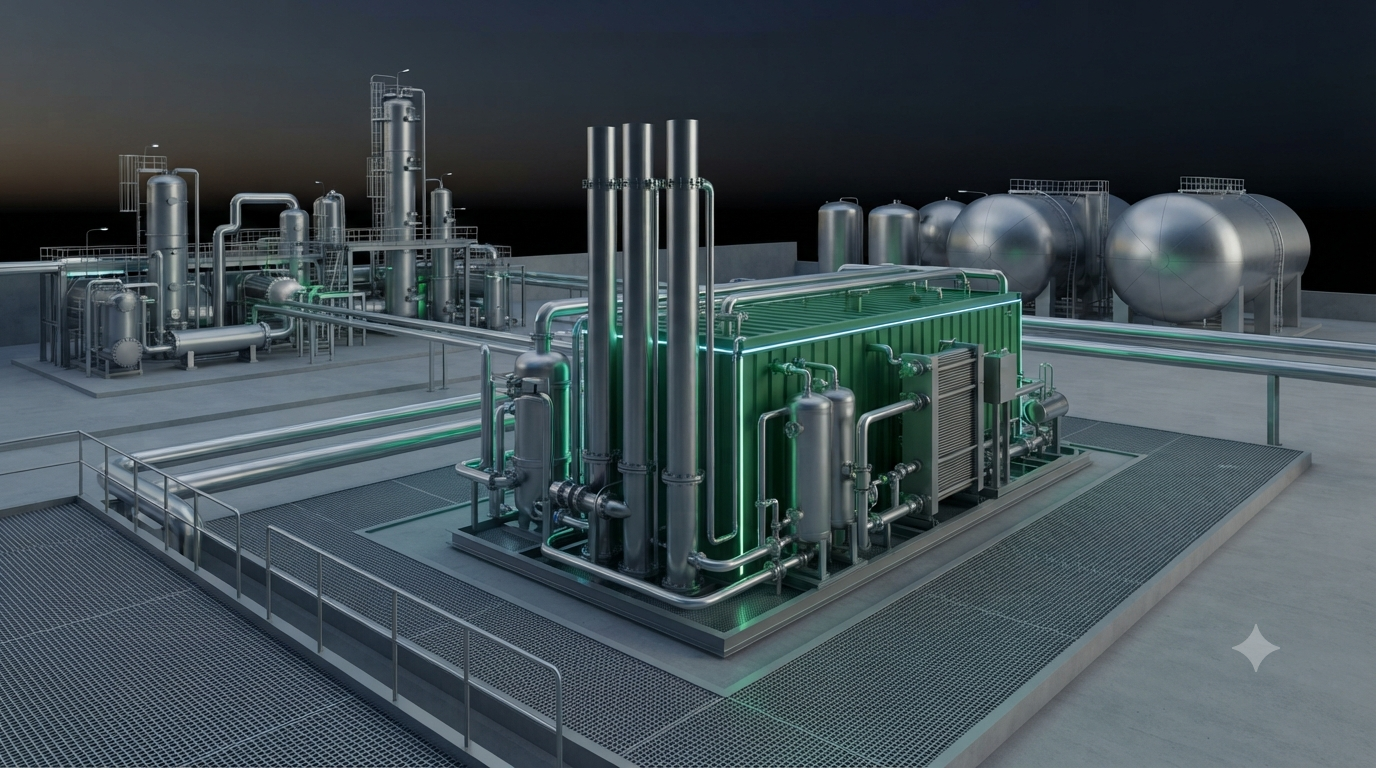
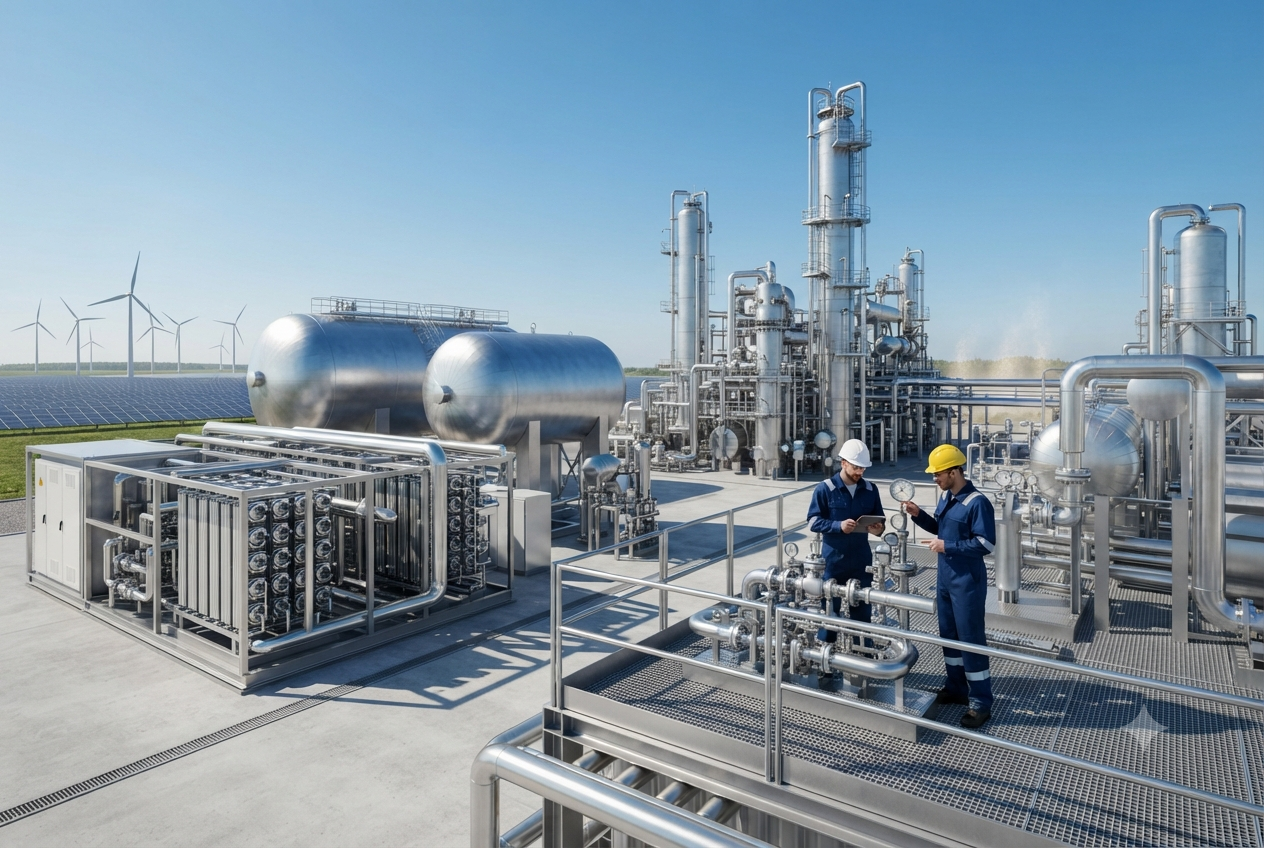
Electricity generated from renewable sources such as wind or solar powers an electrolyser that splits water into hydrogen and oxygen. Because renewable electricity drives the process, hydrogen production can occur with minimal direct carbon emissions.
The overall production chain involves several stages.
Renewable electricity powers industrial electrolysers.
Water separates into hydrogen and oxygen through electrolysis.
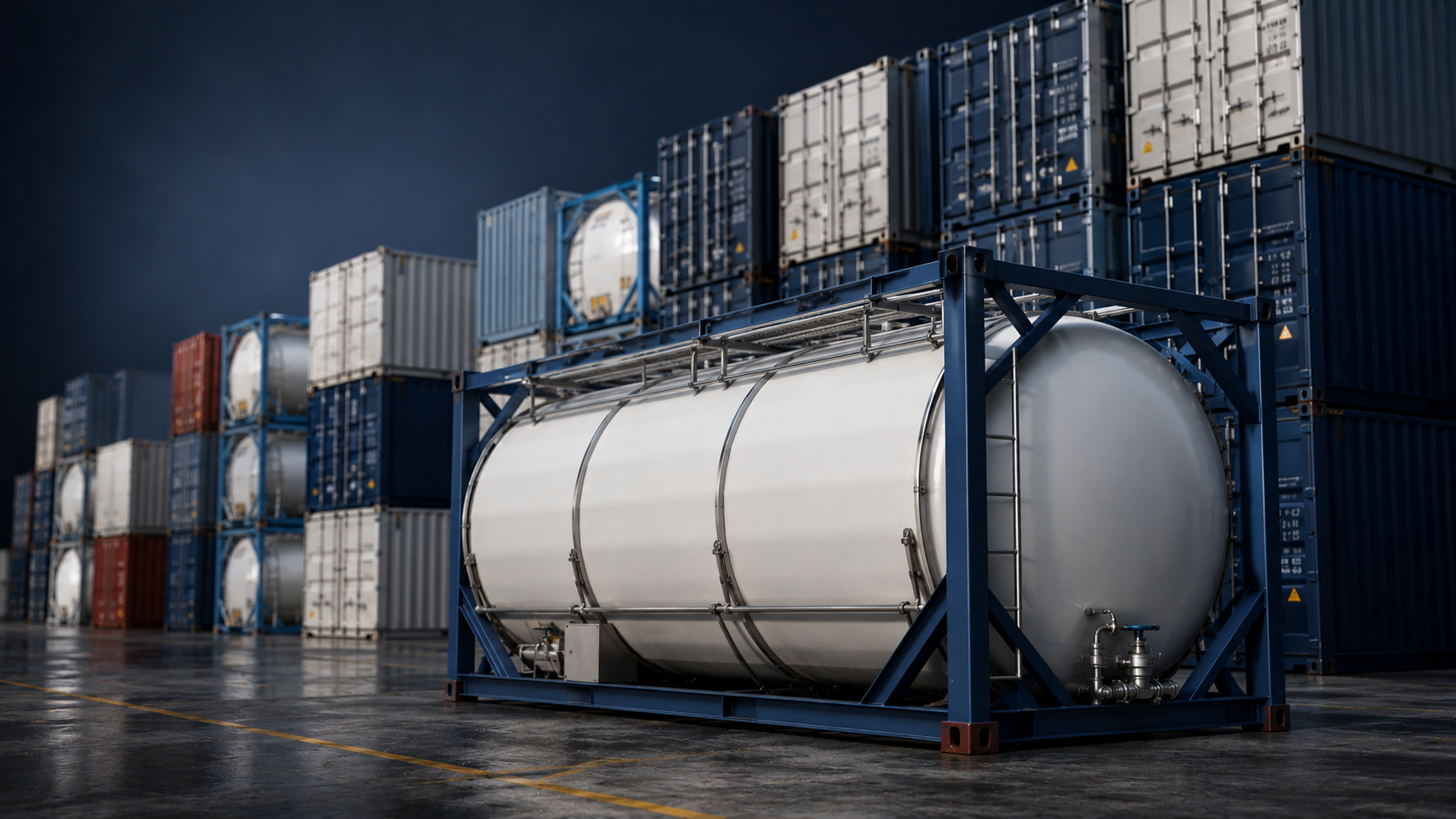
Hydrogen undergoes purification and compression before storage or transport.
Chemical manufacturers consume the hydrogen in ammonia, methanol and other industrial processes.
While technically straightforward, each stage introduces costs that continue to challenge commercial competitiveness.
Why Green Hydrogen Remains More Expensive
The biggest obstacle facing green hydrogen is not technical feasibility. It is economics.
Electricity accounts for a substantial share of green hydrogen production costs. Even as renewable energy becomes more affordable, electrolysis requires large amounts of continuous power to achieve competitive production volumes.
Capital investment presents another challenge. Large-scale electrolysers require significant upfront spending, while supporting infrastructure such as hydrogen storage, pipelines and compression systems adds further expense.
Several cost drivers continue slowing widespread adoption.
Renewable electricity prices remain highly variable across regions.
Electrolyser manufacturing capacity continues expanding but has not yet achieved the economies of scale seen in conventional chemical equipment.
Hydrogen storage and transportation infrastructure remains limited outside major industrial clusters.
Financing costs remain elevated for many first-generation commercial projects.
Together, these factors keep production costs above those of fossil-derived hydrogen in many global markets.
Why Fossil Routes Still Dominate in 2026
Despite rapid technological progress, conventional hydrogen production continues to supply the overwhelming majority of industrial demand.
Steam methane reforming remains the preferred option because it benefits from decades of operational experience, mature infrastructure and relatively low production costs where natural gas remains affordable.
For many producers, replacing existing assets before the end of their operating life is difficult to justify financially. Even companies with ambitious sustainability targets often choose phased transitions that combine operational efficiency improvements with selective investments in renewable hydrogen capacity.
This gradual approach reflects commercial reality rather than a lack of commitment to decarbonisation.
What Procurement Teams Should Monitor
Procurement professionals should view hydrogen as an increasingly strategic purchasing consideration rather than simply another production input.
As renewable hydrogen projects move toward commercial scale, purchasing decisions will increasingly incorporate environmental performance alongside traditional commercial criteria.
Key indicators worth monitoring include:
Renewable electricity prices, which remain the largest operating cost for green hydrogen production.
Electrolyser manufacturing capacity and technology improvements that could reduce capital expenditure.
Government incentive programmes supporting hydrogen investment and industrial decarbonisation.
Expansion of hydrogen transport, storage and export infrastructure.
Long-term natural gas price trends that continue influencing the competitiveness of fossil-derived hydrogen.
Monitoring these developments enables procurement teams to anticipate future supply changes instead of reacting after market conditions shift.
The Outlook Beyond 2026
Industry projections continue pointing toward substantial growth in green hydrogen throughout the remainder of the decade. Declining renewable energy costs, larger electrolyser manufacturing capacity and expanding government support are expected to improve project economics year after year.
However, the transition will not follow a single global timeline. Some regions will reach commercial competitiveness much sooner than others depending on renewable resources, industrial infrastructure and policy support.
Chemical manufacturers are therefore likely to operate mixed production portfolios for several years, combining conventional hydrogen, carbon capture technologies and renewable hydrogen to balance sustainability objectives with commercial performance.
For buyers, the opportunity lies in understanding how these production pathways affect future availability, pricing and supplier capabilities. Companies that begin evaluating hydrogen strategies today will be better positioned as low-carbon chemicals become a larger part of global trade.
Preparing for the Next Generation of Chemical Feedstocks
Green hydrogen is no longer a distant concept. It has become a strategic component of investment plans across the chemical industry, particularly in ammonia and methanol production. Yet the gap between ambitious 2030 projections and the commercial realities of 2026 remains substantial.
Lower renewable electricity costs, continued innovation in electrolysers and stronger hydrogen infrastructure will determine how quickly this gap narrows. Until then, procurement professionals should balance long-term sustainability goals with today's economic realities while tracking emerging suppliers and evolving market conditions.
Ready to source Ammonia Anhydrous from verified global suppliers? Explore competitive offers on our platform today.