March 2026 PVC Price Spike Reversed Within Months | ChemicalsBlog.com
Rankings & Industry Intelligence
schedule3 Min Read
Intelligence Check: How Steep Was March 2026's PVC Price Spike, and How Fast Did It Reverse?
terminal
prodchem
Aug 5, 2026
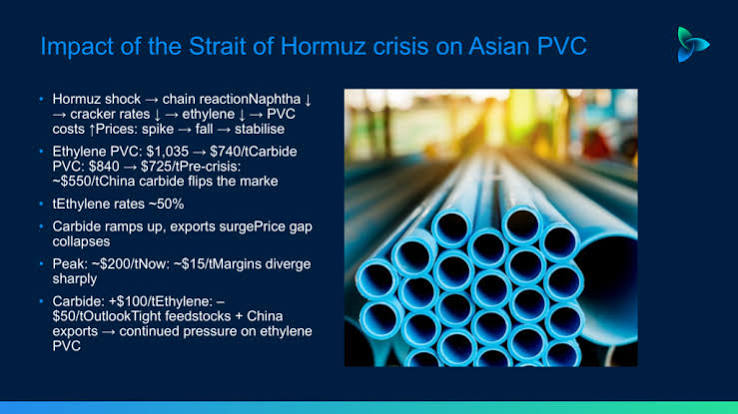
The global PVC market witnessed one of its most dramatic pricing swings in 2026. March 2026 recorded what market participants described as the steepest and largest PVC price increase on record, driven by supply concerns, higher feedstock costs, logistics disruptions, and strong short-term buying activity. However, the rally proved to be short-lived. By late June and July 2026, virtually all of those gains had disappeared as market fundamentals shifted back toward oversupply and softer demand.
The rapid reversal highlights how quickly sentiment can change in commodity polymer markets. For manufacturers, distributors, and procurement teams, the episode serves as an important reminder that temporary supply shocks do not always translate into sustained price strength.
Why the PVC Price Reversal Matters
PVC pricing is influenced by a combination of supply-demand fundamentals, feedstock costs, energy prices, freight rates, and construction activity. While sudden disruptions can trigger sharp price increases, long-term pricing is generally determined by broader market fundamentals.
The March-July price cycle demonstrates several important market dynamics:
Supply disruptions can trigger rapid price spikes.
Overcapacity can quickly offset temporary shortages.
Global production capacity continues to pressure pricing.
Market sentiment can shift rapidly within a few months.
Procurement timing remains critical in volatile markets.
The speed of the correction illustrates how oversupplied markets can rapidly return to equilibrium once short-term disruptions ease.
PVC production relies on key upstream materials including Vinyl Chloride Monomer (VCM), Ethylene Dichloride (EDC), Chlorine, and Caustic Soda. Changes in feedstock availability, production costs, and supply-demand balances for these products can significantly influence PVC pricing, making upstream market intelligence essential for procurement planning.
The elimination of March's gains by early summer reflects the continued structural challenges facing the global PVC industry.
Potential market impacts include:
Greater price volatility throughout 2026
Increased competition among global PVC suppliers
Continued pressure from excess production capacity
More cautious inventory management
Improved buying opportunities after price corrections
Increased focus on demand recovery rather than supply shortages
The episode also reinforces expectations that long-term market direction will depend more on construction demand and capacity utilization than on temporary disruptions.
Procurement Considerations
PVC buyers should avoid making procurement decisions based solely on short-term market movements.
Recommended strategies include:
Monitor both supply disruptions and underlying demand trends
Balance contract purchasing with spot market opportunities
Diversify supplier networks across multiple regions
Avoid panic buying during temporary price spikes
Track feedstock and freight cost developments
Maintain flexible inventory management strategies
Disciplined procurement planning can help businesses reduce exposure to sudden price swings while improving long-term purchasing efficiency.
Looking Ahead
Although March 2026 demonstrated how quickly PVC prices can surge during periods of market uncertainty, the equally rapid decline by late June and July underscores the industry's persistent overcapacity. Until global demand strengthens enough to absorb additional production capacity, temporary rallies are likely to remain vulnerable to equally sharp corrections.
For manufacturers, distributors, and procurement professionals, combining real-time market intelligence with disciplined sourcing strategies will remain essential for managing risk in an increasingly volatile PVC market.
Key Takeaways
March 2026 recorded one of the steepest PVC price increases on record.
By late June and July 2026, nearly all of those gains had been eliminated.
Persistent global overcapacity continues to limit sustained price growth.
Short-term supply disruptions can trigger volatility, but long-term fundamentals remain decisive.
Procurement teams should combine market intelligence with flexible sourcing strategies.
B2B chemical procurementSupply chainIndustrial ChemicalsGlobal Ingredient MarketPetrochemicalsPolymer and Resin ProductionprocurementPVC ResinPolymer IndustryPolymerPolyvinylidene FluoridePolymer ImportsTradeChem