Intelligence Check: How Tight Are Global Lithium Markets Right Now?
Global lithium consumption grew 45% year over year through May 2026, according to Albemarle, far outrunning the company's own forecast range of 15% to 40%. Inventories across the supply chain are now sitting near historic lows. For anyone buying lithium carbonate, lithium hydroxide or related battery chemicals, that combination is the clearest signal yet that the years long lithium glut is closing fast.
This piece breaks down what is actually driving the surge, how supply is responding, and what buyers should watch heading into the rest of the year.
What Is Actually Driving the Surge
The obvious assumption is that electric vehicle sales are behind this jump. That assumption does not hold up well this year. Chinese EV sales actually fell 13% in the first half of 2026, yet lithium demand kept climbing anyway.
The real driver is stationary battery storage. Grid scale battery energy storage systems, known as BESS, deployed 108 gigawatts globally in 2025, up 40% year over year. That growth has continued into 2026, pulled along by two forces that have little to do with car sales.
Grid stabilization needs are rising as more renewable generation comes online and utilities need buffer capacity to manage variable output.
Data center power demand is creating a new and largely unforecasted call on battery storage, with battery based uninterruptible power supply capacity reaching 45 gigawatts in 2025, up 30% year over year.
Both of these demand sources are tied to infrastructure investment cycles rather than consumer subsidy programs, which makes them considerably less sensitive to the policy swings that have historically driven EV demand volatility.
How Tight Has Supply Actually Gotten
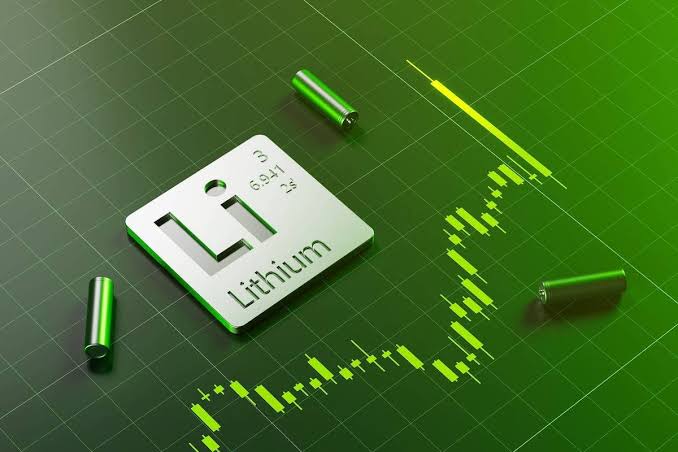
Pricing tells the story most clearly. Lithium carbonate prices are up close to 94% year over year, a far sharper move than most base metals have seen in the same period. Fastmarkets has responded by raising its 2026 lithium carbonate forecast to $23.80 per kilogram, up from an earlier estimate of $17.40, and its 2027 forecast to $31.40 per kilogram, up from $22.65.
The supply side explanation is straightforward. Between 2022 and 2024, a wave of new production out of Australia and China created a surplus that peaked around 154,000 tonnes in 2024. Prices collapsed by more than 80% in response, and producers reacted the way commodity producers always do when prices fall below cost. Capacity got curtailed, exploration budgets got cut, and new project development slowed.
That supply retrenchment is now colliding with demand that refused to slow down. The result is inventories drawing down faster than almost anyone modeled heading into 2026.
The Chemistry Mix Matters Too
Not all lithium demand is created equal, and the current tightening is concentrated in specific product forms. Lithium iron phosphate, commonly shortened to LFP, now accounts for nearly all of the energy storage system market and requires no nickel input. That has decoupled lithium and nickel pricing sharply this year, with lithium carbonate up roughly 94% year over year against just 10% for nickel.
For buyers, this distinction matters more than the headline consumption figure. Demand growth is running hottest in battery grade lithium carbonate and hydroxide feeding LFP cell production, not in the broader basket of lithium compounds used across ceramics, glass and specialty applications. Buyers in those non-battery segments may see less acute tightness even as headline lithium news reads uniformly bullish.
What Could Slow This Down
The tightening cycle is not guaranteed to hold indefinitely. A few factors could ease pressure over the next year or two.
China is set to raise its lithium ion battery consumption tax to 4% in 2027, a policy shift that could dampen demand growth if it lands as currently structured.
Producers who curtailed capacity during the 2022 to 2024 downturn can restart relatively quickly once prices justify it, unlike upstream mining projects that take years to bring online.
Sustainability requirements are adding a new pricing dimension, with roughly 45% of demand now expected to be met by recycled or ESG compliant lithium by 2026, creating a two tier market that could complicate simple supply and demand comparisons.
None of these factors point to an imminent reversal, but they are worth tracking for anyone locking in multi-year supply agreements at current price levels.
What Procurement Teams Need to Know
The practical takeaway for buyers is that this tightening looks structurally different from prior lithium price spikes. It is being driven by infrastructure scale demand rather than consumer EV subsidy cycles, which makes it less likely to reverse quickly if EV sales soften further.
That has a few direct implications for sourcing strategy.
Contracts negotiated on the assumption of a continued lithium glut should be revisited, particularly for battery grade material feeding LFP production.
Buyers with volume flexibility may benefit from locking in supply sooner rather than later, given inventories are already near historic lows.
Non-battery grade lithium buyers should watch whether tightness spreads beyond battery chemistries or stays concentrated there, since the two markets are currently moving at different speeds.
The Bottom Line for Chemical Buyers
Global lithium markets have moved from oversupply to genuine tightness faster than most forecasts anticipated, and the driver is not the one most buyers were watching. Stationary storage and data center power demand, not electric vehicles, are pulling inventories down and pushing prices higher through 2026.
Buyers should treat the 45% consumption growth figure as confirmation that this is a real structural shift rather than a short lived spike, while keeping an eye on the policy and capacity factors that could eventually slow it down.
Ready to source lithium carbonate and related chemicals from verified global suppliers? Explore competitive offers on our platform today.

Acrylic Acid (Glacial) - China
Found this useful?