ISO 14001 Environmental Management Systems: What Supplier Certification Means for Procurement
Environmental performance has become a key consideration in supplier selection across the global chemical industry. Many procurement teams now require suppliers to hold ISO 14001 certification before they qualify for approved vendor lists or long-term supply agreements. Although the certification is widely recognised, misconceptions remain about what it actually demonstrates and how much confidence buyers should place in it.
For chemical procurement professionals, understanding the scope of ISO 14001 is essential. The certification confirms that an organisation has implemented an Environmental Management System, commonly referred to as an EMS. It does not certify that a company has achieved a particular level of environmental performance or that it produces environmentally superior products.
What Is ISO 14001?
ISO 14001 is the internationally recognised standard for Environmental Management Systems. It provides organisations with a structured framework for identifying environmental impacts, managing environmental responsibilities and continuously improving environmental management practices.
Rather than focusing on a specific industry, ISO 14001 applies to organisations of every size and sector. Manufacturers, distributors, laboratories, logistics providers and chemical processors can all implement the standard according to their operations.
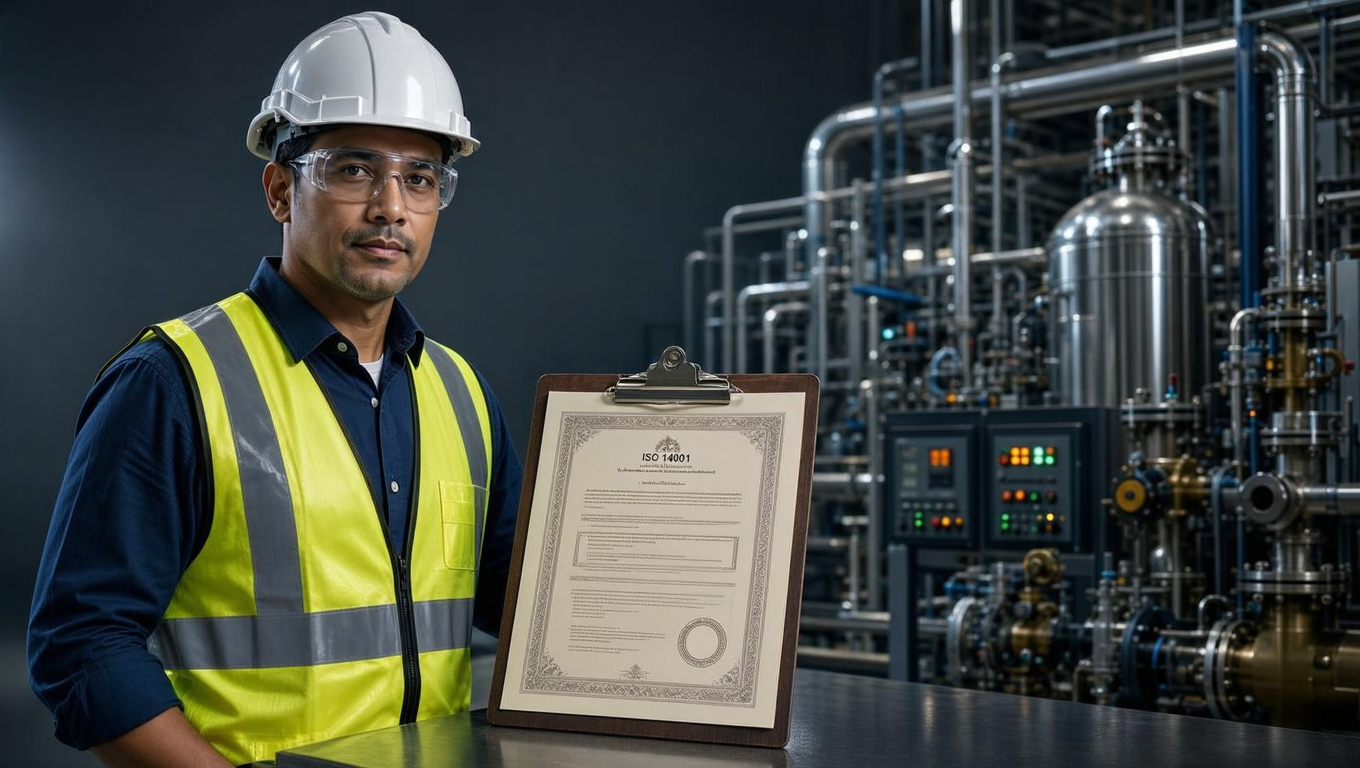
Certification is granted by an accredited third-party certification body after assessing whether the organisation's Environmental Management System satisfies the standard's requirements.
What the Standard Requires
ISO 14001 focuses on building a systematic approach to environmental management instead of prescribing fixed environmental targets.
A certified Environmental Management System typically includes:
An environmental policy approved by senior management.
Identification of environmental risks and opportunities.
Environmental objectives supported by action plans.
Operational controls for significant environmental activities.
Monitoring and measurement of environmental performance.
Internal audits and corrective actions.
Periodic management reviews to evaluate continual improvement.
These requirements help organisations establish consistent environmental management processes throughout their operations.
What ISO 14001 Does Not Certify
One of the most common misunderstandings is that ISO 14001 guarantees excellent environmental performance. The standard does not make that promise.
Certification does not confirm:
Specific greenhouse gas emission levels.
Compliance with every environmental regulation in every jurisdiction.
Low carbon manufacturing.
Zero pollution or zero waste.
Sustainable sourcing of raw materials.
Superior environmental performance compared with competitors.
Instead, ISO 14001 confirms that an organisation has implemented a structured management system designed to identify, control and improve environmental aspects of its activities.
Understanding this distinction allows procurement teams to evaluate certification appropriately rather than expecting outcomes the standard was never designed to verify.
Why Procurement Teams Value ISO 14001
Despite its limitations, ISO 14001 remains one of the most widely requested supplier qualifications in chemical procurement.
Certification demonstrates that a supplier has invested in formal environmental governance and follows recognised management practices. This often improves consistency, documentation and internal accountability throughout manufacturing operations.
For procurement professionals, ISO 14001 can also simplify supplier prequalification by providing independent verification that an environmental management framework exists.
However, certification should be viewed as the starting point of environmental due diligence rather than its conclusion.

Combining Certification With Performance Metrics
The strongest supplier assessments combine ISO 14001 certification with measurable environmental performance indicators.
Procurement teams should also request information such as:
Greenhouse gas emissions.
Energy and water consumption.
Waste generation and recycling performance.
Environmental compliance history.
Product-specific sustainability data where available.
Progress toward published environmental targets.
These metrics provide evidence of actual environmental performance while ISO 14001 demonstrates that systems exist to manage and improve those outcomes.
Using both forms of evaluation creates a more balanced supplier assessment.
Questions Buyers Should Ask Certified Suppliers
ISO 14001 certification opens the door to deeper conversations about environmental management.
Useful procurement questions include:
Which operations are covered by the certification?
Which certification body issued the certificate?
When was the most recent surveillance or recertification audit completed?
How are environmental objectives measured?
What environmental performance improvements have been achieved during recent years?
How does the Environmental Management System support regulatory compliance?
These discussions help buyers understand how the management system operates beyond the certificate itself.
What Procurement Teams Should Do Now
ISO 14001 remains one of the most valuable environmental management certifications available to the chemical industry because it demonstrates that suppliers have implemented structured processes for managing environmental responsibilities. While the certification does not guarantee low emissions, regulatory compliance in every jurisdiction or superior environmental performance, it provides independent confirmation that environmental management forms part of the organisation's operational framework.
Procurement professionals should therefore treat ISO 14001 as one component of supplier evaluation rather than the only requirement. Combining certification with measurable environmental performance data, regulatory compliance records and ongoing supplier engagement provides a more complete picture of environmental capability and long-term supply chain reliability.
Ready to source specialty chemicals from verified global suppliers? Explore competitive offers on our platform today.
Hydrogen Peroxide (35%) - Thailand
Found this useful?