
Japan's 15-Year Rare Earth Diversification Campaign: Progress Against Original Goals
Japan's 15-year rare earth diversification campaign is entering a critical stage as deep-sea exploration moves from resource assessment toward larger-scale technical testing. The effort offers an intelligence benchmark for measuring how far Japan has progressed from its original objective of reducing vulnerability to concentrated overseas rare earth supply.
The strategy began with a broad portfolio rather than a single solution. Japan pursued overseas investment, strategic stockpiles, recycling, processing capabilities and alternative sources, while deep-sea resources around Minamitorishima Island emerged as a potentially important domestic option.
For chemical traders, importers and industrial buyers, the progress matters because rare earth security depends on more than identifying deposits. Mining, separation, refining, chemical conversion and logistics must work together before a resource becomes dependable commercial supply.
What Japan Originally Wanted From Rare Earth Diversification
Japan's original strategy responded to a structural supply vulnerability. Before diversification efforts accelerated, the country relied heavily on China for rare earth imports, creating concern about the effect of geopolitical tensions or export restrictions on Japanese industry.
The policy response focused on reducing concentration rather than attempting to create complete domestic self-sufficiency. Overseas partnerships, strategic inventories and recycling formed important parts of the approach.
That distinction remains important when assessing progress. The campaign should not be judged solely by whether Japan can produce every rare earth domestically, but by whether manufacturers have more resilient access to critical materials from multiple sources.
How Far Has Japan Reduced Supply Concentration?
Japan has made meaningful progress in developing alternative supply relationships and strengthening its position further down the rare earth value chain. Its involvement with Australian resources, including the Mt Weld project, helped establish alternative access to neodymium, praseodymium and other important rare earth materials.
Japan has also developed strong capabilities in high-purity separation, advanced permanent magnet technology and recycling. These capabilities provide strategic value because supply security does not depend exclusively on increasing raw material extraction.
The result is a more diversified system than the one Japan faced when its dependence on China became a major strategic concern. However, diversification remains incomplete because China continues to hold a dominant position in global mining and especially in processing and refining.
Why Minamitorishima Matters to the Strategy
The deep-sea deposits around Minamitorishima Island provide Japan with a potentially significant domestic resource. Research has identified rare earth and yttrium-rich mud in the region, including concentrations of heavy rare earth elements that are strategically important for advanced industrial applications.
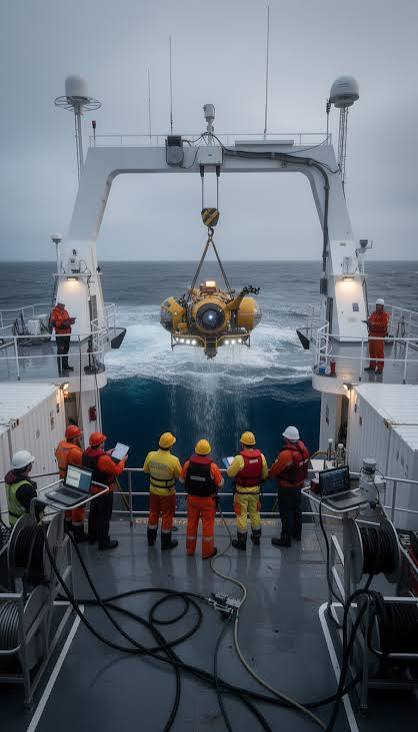
The project gained practical significance in 2026 when Japan successfully recovered rare-earth-rich sediment from approximately 6 km below the ocean surface. The operation demonstrated that continuous retrieval from the deep-sea environment is technically possible, moving the project beyond resource mapping alone.
However, successful extraction does not yet equal commercial production. Japan's Ministry of Economy, Trade and Industry has emphasized that industrialization still requires verification of the complete process from mining through separation and refining, together with an assessment of economic feasibility.
The Deep-Sea Project Tests the Campaign's Next Phase
The Minamitorishima project is now testing whether Japan can convert geological potential into a usable supply source. That is a much harder objective than demonstrating that rare earths exist in the seabed.
Japan plans a larger mining trial in February 2027, with a target of dredging up to 350 tonnes of mud per day. The recovered material is expected to undergo dewatering and mainland processing so that the complete extraction and refining chain can be evaluated. A broader feasibility assessment is scheduled for completion by March 2028.
These milestones provide procurement professionals with concrete indicators to monitor. Until the entire chain demonstrates technical reliability and acceptable economics, deep-sea mud should be viewed as an emerging strategic resource rather than an established replacement for imported supply.
Economic Viability Remains a Major Benchmark
One of the biggest tests for Japan's original diversification goals is cost. A resource can be strategically valuable while remaining commercially unattractive if extraction and processing costs exceed prevailing market economics.
Research published in 2026 characterizes Minamitorishima's deep-sea resource as more likely to function initially as a strategic buffer than as a near-term substitute for China's established supply chain. The analysis highlights significant techno-economic challenges associated with extraction and processing.
This creates an important distinction for chemical buyers. Strategic availability can provide insurance against severe supply disruption, while routine commercial supply requires competitive costs, predictable quality and dependable logistics.
Japan therefore has to prove not only that it can recover the material, but also that it can process it efficiently enough to support industrial users.
Processing Capacity Is as Important as Resource Access
Rare earth supply security does not end at the mine or extraction site. Producers must separate individual elements and convert them into forms suitable for downstream applications.
Japan has an advantage in this area because it has developed high-purity separation and advanced downstream capabilities. That expertise can reduce the gap between resource extraction and industrial utilization if the deep-sea project reaches commercial scale.
For traders, this is a critical part of supplier evaluation. A new mining source with no reliable separation or refining pathway cannot immediately replace an integrated supply chain.
Procurement teams should therefore map suppliers across the full value chain:
Resource ownership: Identify where the mineral originates.
Concentration: Determine where raw material receives its initial processing.
Separation: Identify the facilities producing individual rare earth products.
Refining: Assess where high-purity materials are produced.
Conversion: Determine where oxides, metals or other industrial forms are manufactured.
Logistics: Evaluate the routes connecting each stage with the end user.
This approach provides a more realistic measure of diversification.
Recycling Supports Japan's Original Goals
Japan's diversification campaign has never depended entirely on new mining. Recycling forms another part of the strategy by recovering rare earth materials from products such as hard disk drives, traction motors and other end-of-life equipment.
Recycling can reduce exposure to primary mining and provide a secondary source of strategically important materials. It also aligns supply security with resource efficiency.
The challenge remains scale. Secondary rare earth supply currently represents only a small portion of overall demand, so recycling complements rather than replaces primary supply.
For chemical traders, this trend could create new opportunities around separation chemicals, processing inputs and materials used to recover high-value elements from industrial waste streams.
What Has Worked Best So Far?
Measured against its original objectives, Japan's diversification effort shows its strongest results in areas where technology, international partnerships and government policy can reinforce each other.
The clearest gains include:
Alternative overseas supply: Partnerships have reduced reliance on a single geographic source.
Strategic stockpiling: Inventories can provide protection against temporary supply interruptions.
Advanced processing: Japanese expertise supports high-purity rare earth production.
Recycling: Secondary supply provides another route to critical materials.
Magnet innovation: More efficient use of heavy rare earths can reduce material intensity.
Deep-sea exploration: The Minamitorishima project offers a potential domestic strategic reserve.
Japan's experience suggests that diversification works best as a portfolio. No single project needs to eliminate supply dependence if several measures collectively reduce exposure.
Where the Strategy Still Falls Short
The campaign has not removed Japan's exposure to global rare earth supply chains. China continues to dominate major parts of the industry, particularly processing and refining, which means downstream manufacturers remain exposed to developments outside Japan.
Deep-sea extraction also remains unproven as a commercially competitive source. Technical challenges, costs and environmental considerations must be addressed before the resource can become a dependable industrial supply stream.
The remaining gap therefore lies between strategic diversification and full supply-chain resilience. Japan has built more options, but those options do not yet provide complete independence from external processing and international markets.
What This Means for Rare Earth Procurement
Industrial buyers should interpret Japan's progress as a reason to diversify their own sourcing strategies. The country's experience demonstrates that supply resilience requires multiple layers rather than a single alternative supplier.
Procurement teams can apply several lessons:
Avoid single-origin dependence. A supplier in a different country provides greater protection when the original source faces disruption.
Look beyond mine ownership. Processing and refining location can create hidden supply dependencies.
Track emerging projects carefully. Distinguish operational capacity from announced or experimental capacity.
Evaluate recycled supply. Secondary materials may provide another route for reducing exposure to primary supply.
Build technical specifications early. Alternative suppliers may provide different grades, purities or chemical forms.
Monitor government policy. Critical mineral strategies can affect trade flows, investment and availability.
These measures can help importers and exporters prepare for increasingly strategic rare earth markets.
The Trade Outlook Through 2028
Japan's deep-sea exploration creates a new set of milestones for the next phase of its diversification campaign. The planned 2027 large-scale trial and 2028 feasibility assessment should provide much stronger evidence about whether Minamitorishima can support commercial production.
Until those results emerge, the project is best understood as a strategic option. Its value may come not only from future production volumes but also from demonstrating that Japan has an additional domestic source available if international supply conditions deteriorate.
At the same time, overseas partnerships, recycling and downstream technological improvements will remain essential. A diversified supply portfolio can reduce the pressure on any individual project to solve Japan's entire rare earth security challenge.
The Bottom Line for Rare Earth Buyers
Japan's 15-year rare earth diversification campaign has achieved meaningful progress, particularly through overseas partnerships, strategic supply measures, recycling and advanced downstream capabilities. The deep-sea Minamitorishima project now provides a major test of whether that strategy can progress from diversification planning toward domestic resource development.
The original goal was not simply to find another rare earth deposit. It was to create a supply system capable of withstanding geopolitical disruption, processing bottlenecks and concentrated global production.
For chemical traders and procurement managers, Japan's experience reinforces the value of diversified sourcing, full supply-chain visibility and early qualification of alternative suppliers. The next major benchmarks will be the 2027 extraction trial and the 2028 feasibility assessment, which should clarify the commercial role of Japan's deep-sea resources.
Ready to source Magnesium Oxide from verified global suppliers? Explore competitive offers on our platform
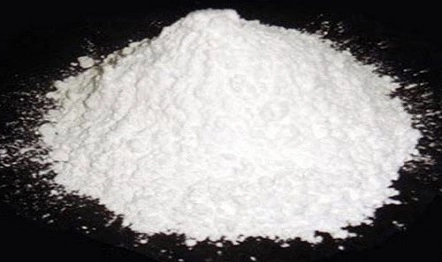
Magnesium Oxide
Found this useful?