L-Lysine HCl Market 2026: Applications, Buyers & 20-Year Industry Outlook
Introduction
L-Lysine HCl, a core amino acid and essential platform chemical, continues to anchor global feed and nutrition industries in 2026. As a foundational building block for protein synthesis, it plays a critical role in optimizing feed efficiency and reducing crude protein dependency in livestock production. The market is evolving rapidly, shaped by industrial-scale fermentation, tightening feed regulations, and expanding protein demand. With global supply chains maturing and bio-based production scaling, L-Lysine HCl is positioned as a strategic input across multiple industrial value chains, not just animal nutrition but also pharmaceuticals and food fortification.
Applications in Animal Nutrition Demand Surge
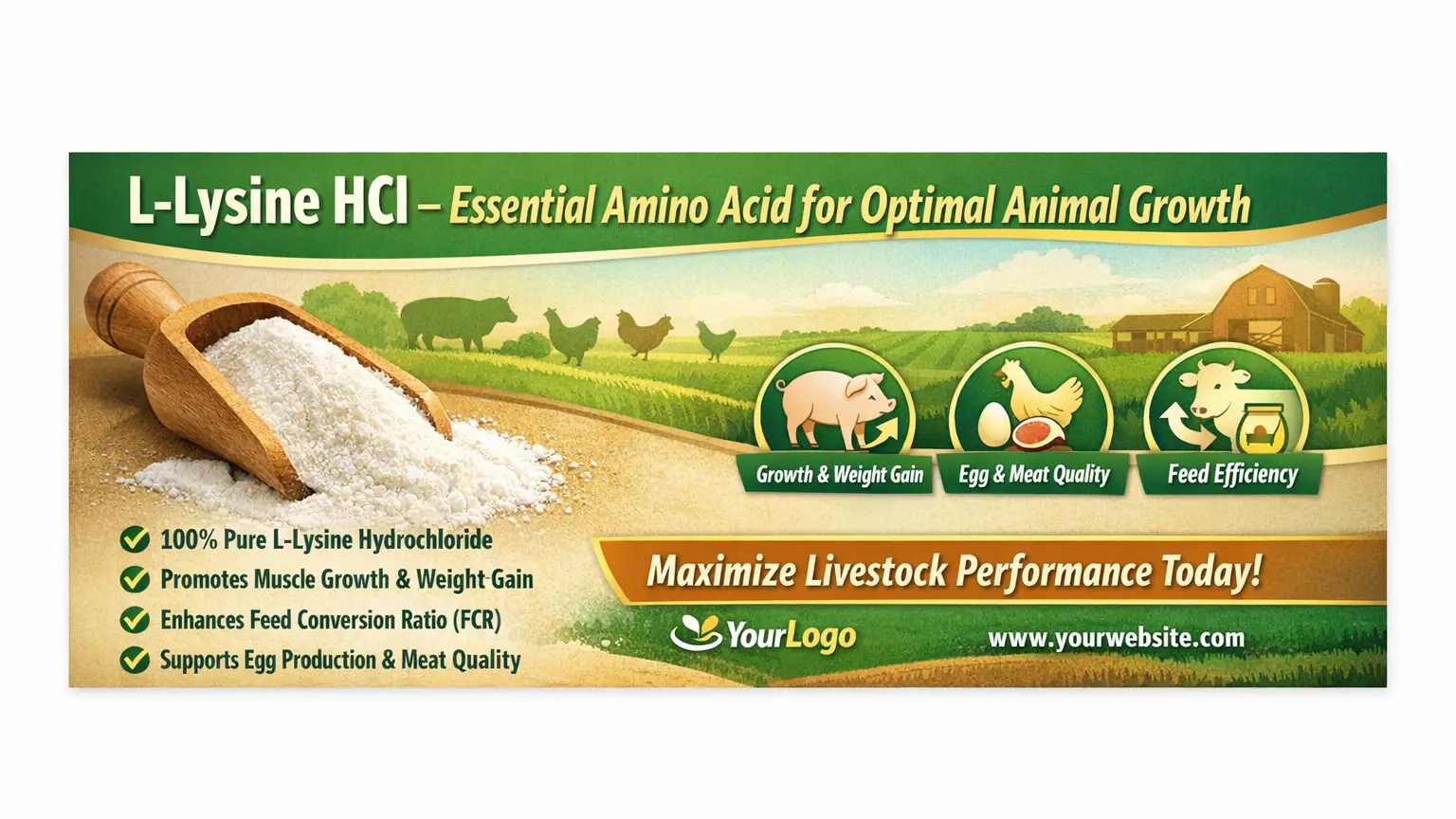
The dominant demand driver remains animal feed, particularly swine and poultry nutrition, where L-Lysine HCl enhances growth performance and feed conversion ratios. In 2026, global consumption is aligned with a market CAGR of 6.8%, supported by rising protein demand in Asia-Pacific and Latin America. Livestock integrators increasingly prefer amino acid supplementation to reduce soybean meal dependency, improving formulation efficiency while lowering nitrogen emissions.
Feed Industry Buyers and Procurement Shifts
Feed manufacturers and integrated agribusiness groups remain the largest buyers, accounting for over 70% of global demand. Procurement strategies are shifting toward long-term contracts and direct sourcing from fermentation producers in China, Europe, and the U.S. Bulk purchasing is increasingly tied to volatility management, as feed formulators seek price stability within a fluctuating supply environment. Global demand volumes are estimated at approximately 4.2 million MT across lysine derivatives, reinforcing its industrial scale.
Pharmaceutical and Food Grade Expansion
Beyond feed, pharmaceutical and nutraceutical industries are expanding their consumption footprint. L-Lysine HCl is widely used in dietary supplements, intravenous nutrition, and clinical formulations supporting immune health and tissue repair. Food fortification initiatives in developing economies are also accelerating uptake, particularly in regions addressing malnutrition. This diversification is gradually stabilizing demand cycles and reducing reliance on livestock-only consumption.
Pricing Dynamics and Global Production Footprint
The L-Lysine HCl market is characterized by moderate price volatility, with average global pricing ranging between USD 1,350–1,750/MT in 2026. Pricing is heavily influenced by corn feedstock costs, energy inputs, and fermentation efficiency. China remains the largest production hub, supported by integrated bio-fermentation clusters, while new capacity expansions in Southeast Asia and South America are reshaping trade flows. Supply-side consolidation among major producers is also influencing global pricing discipline.
Conclusion
As a critical platform chemical, L-Lysine HCl continues to bridge agricultural efficiency and industrial biotechnology, reinforcing its strategic relevance in global value chains. Its expanding applications across feed, food, and pharmaceutical sectors highlight a structurally resilient demand outlook. In this evolving landscape, companies seeking consistent supply, competitive pricing, and diversified sourcing increasingly turn to integrated solution providers. Tradeasia International stands as a global sourcing partner, enabling seamless access to amino acid derivatives like L-Lysine HCl through its extensive supplier network and logistics expertise, supporting industrial buyers in navigating a complex but opportunity-rich market environment.
Sources
Found this useful?