Industrial Gas Business Model Explained | ChemicalsBlog | ChemicalsBlog.com
Rankings & Industry Intelligence
schedule5 Min Read
Linde's Modest Sales Increase: The Industrial Gas Business Model as a Chemical Sector Outlier
terminal
prodchem
Jul 8, 2026
Among the world's largest chemical companies, one result stands out.
While many commodity petrochemical producers reported declining chemical revenues during 2025, Linde recorded a modest increase in sales. Although the improvement was relatively small, it highlights an important distinction between industrial gases and most other segments of the chemical industry.
For procurement professionals, understanding this difference is valuable because industrial gases operate under a commercial model that differs fundamentally from commodity chemicals. Revenue stability is driven not only by product demand but also by the structure of customer contracts.
Industrial Gases Are a Different Type of Chemical Business
Companies such as Linde, Air Liquide and Air Products supply products including:
Nitrogen.
Oxygen.
Argon.
Hydrogen.
Carbon dioxide.
Specialty process gases.
Unlike many commodity chemicals that are traded through spot markets or short-term contracts, industrial gases are frequently supplied through long-term commercial agreements integrated directly into customer operations.
Many large industrial facilities depend on continuous gas supply for daily production, making reliability a critical part of the commercial relationship.
Why Revenue Is More Stable
One reason industrial gas companies demonstrate comparatively stable financial performance is the widespread use of take-or-pay contracts.
Under this commercial structure:
The supplier commits to maintaining reliable production and delivery capacity.
The customer agrees to purchase a defined minimum quantity—or pay for that minimum volume even if actual consumption is lower.
This arrangement creates greater revenue visibility for suppliers while supporting long-term investment in production infrastructure.
On-Site Production Strengthens Supply Security
Many industrial gas contracts extend beyond product delivery.
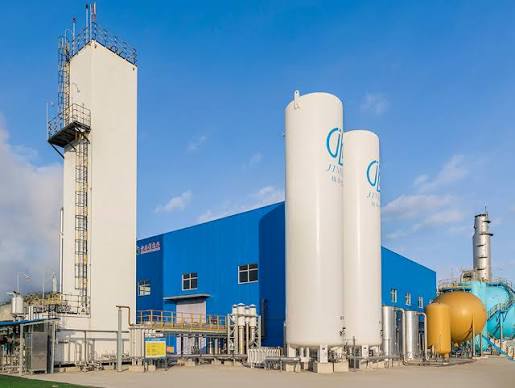
For large manufacturing customers, suppliers often build and operate:
On-site air separation units.
Hydrogen production facilities.
Pipeline distribution systems.
Bulk storage infrastructure.
These assets are specifically designed for long-term customer operations and frequently remain in service for decades.
Because both parties invest in the relationship, contracts are generally structured to support operational continuity rather than short-term price competition.
The Benefits for Suppliers
From the supplier's perspective, take-or-pay agreements provide several advantages:
Predictable revenue.
Stable cash flow.
Higher utilisation of production assets.
Reduced exposure to short-term demand fluctuations.
Greater confidence when investing in new infrastructure.
These characteristics help explain why industrial gas companies often perform differently from more cyclical chemical businesses.
The Benefits for Buyers
Procurement professionals also receive important advantages through these arrangements.
Long-term agreements help secure:
Reliable gas availability.
Dedicated production capacity.
Reduced supply interruption risk.
Long-term operational planning.
Strong technical support.
For industries where production depends upon continuous gas supply, reliability may be considerably more valuable than achieving the lowest possible spot-market price.
Procurement Teams Should Structure Take-or-Pay Carefully
Although take-or-pay agreements improve supply security, procurement teams should negotiate minimum purchase commitments carefully.
Setting minimum volumes significantly above realistic consumption can create unnecessary financial exposure during periods of reduced production.
Before finalising long-term industrial gas agreements, procurement professionals should evaluate:
Historical consumption patterns.
Expected production schedules.
Seasonal demand variation.
Planned capacity expansions.
Maintenance shutdowns.
Business continuity scenarios.
The objective is to establish minimum commitments that support supplier investment while remaining achievable under normal operating conditions.
Long-Term Partnerships Create Mutual Value
Unlike many commodity chemical transactions, industrial gas contracts often evolve into long-term strategic partnerships.
Because suppliers frequently invest substantial capital in customer-specific infrastructure, both parties benefit from:
Stable commercial relationships.
Collaborative production planning.
Joint maintenance scheduling.
Continuous operational improvement.
Long-term investment confidence.
This partnership approach helps reduce supply interruptions while supporting efficient operation of highly capital-intensive production assets.
Contract Design Matters More Than Price Alone
Industrial gas agreements typically involve multiple commercial elements beyond the unit price of the gas itself.
Procurement teams should carefully review:
Minimum purchase obligations.
Pricing adjustment mechanisms.
Energy pass-through provisions.
Capacity reservation clauses.
Maintenance responsibilities.
Force majeure provisions.
Performance guarantees.
Contract renewal and termination conditions.
Understanding these provisions is often more important than negotiating a small reduction in headline pricing.
Lessons for Procurement Professionals
The industrial gas sector demonstrates that resilient supply chains are built through balanced commercial structures rather than transactional purchasing.
When evaluating industrial gas suppliers, procurement teams should assess:
Supply reliability.
Infrastructure capability.
Technical support.
Financial stability.
Contract flexibility.
Long-term investment commitment.
A well-designed agreement should protect both parties by providing dependable supply for the customer while allowing the supplier to recover its substantial infrastructure investment.
Looking Ahead to H2 2026
Linde's ability to achieve modest sales growth while many larger commodity chemical producers experienced declining revenues highlights the resilience of the industrial gas business model. Long-term take-or-pay agreements, dedicated production assets and customer-specific infrastructure create more stable commercial relationships than those typically found in commodity chemical markets. These characteristics help industrial gas suppliers maintain predictable revenue while supporting continuous investment in production and distribution capacity.
For procurement professionals, the lesson extends beyond industrial gases themselves. Contract structure can be just as important as product pricing. Well-designed take-or-pay agreements provide reliable supply security for buyers while giving suppliers the confidence to invest in critical infrastructure. However, minimum volume commitments should always reflect realistic operational requirements rather than optimistic production forecasts, ensuring that contracts remain commercially sustainable throughout changing business conditions.
As H2 2026 progresses, organisations purchasing nitrogen, oxygen, hydrogen, argon or other industrial gases should continue viewing these agreements as long-term strategic partnerships rather than conventional commodity purchases. Balancing supply security, operational flexibility and commercially realistic volume commitments will strengthen resilience for both buyers and suppliers over the full life of the contract.
Ready to source industrial gases and specialty chemicals from verified global suppliers? Explore competitive offers on our platform today.