Louisiana's Blue Ammonia Collapse and What It Signals for US Low-Carbon Fertilizer Feedstock
Introduction
The collapse of the Louisiana Clean Energy Complex is not a one-off story. Air Products walked away after concluding the roughly $9 billion project no longer met its financial expectations, and that decision lands inside a broader pattern of US blue hydrogen and ammonia projects losing momentum. For buyers who had been counting on a growing wave of low-carbon fertilizer feedstock, the picture is getting more complicated.
Rising costs, permitting delays and thin customer demand have hit several major projects over the past year. Louisiana is the largest casualty so far, but it is not the only one.
What Air Products Walked Away From
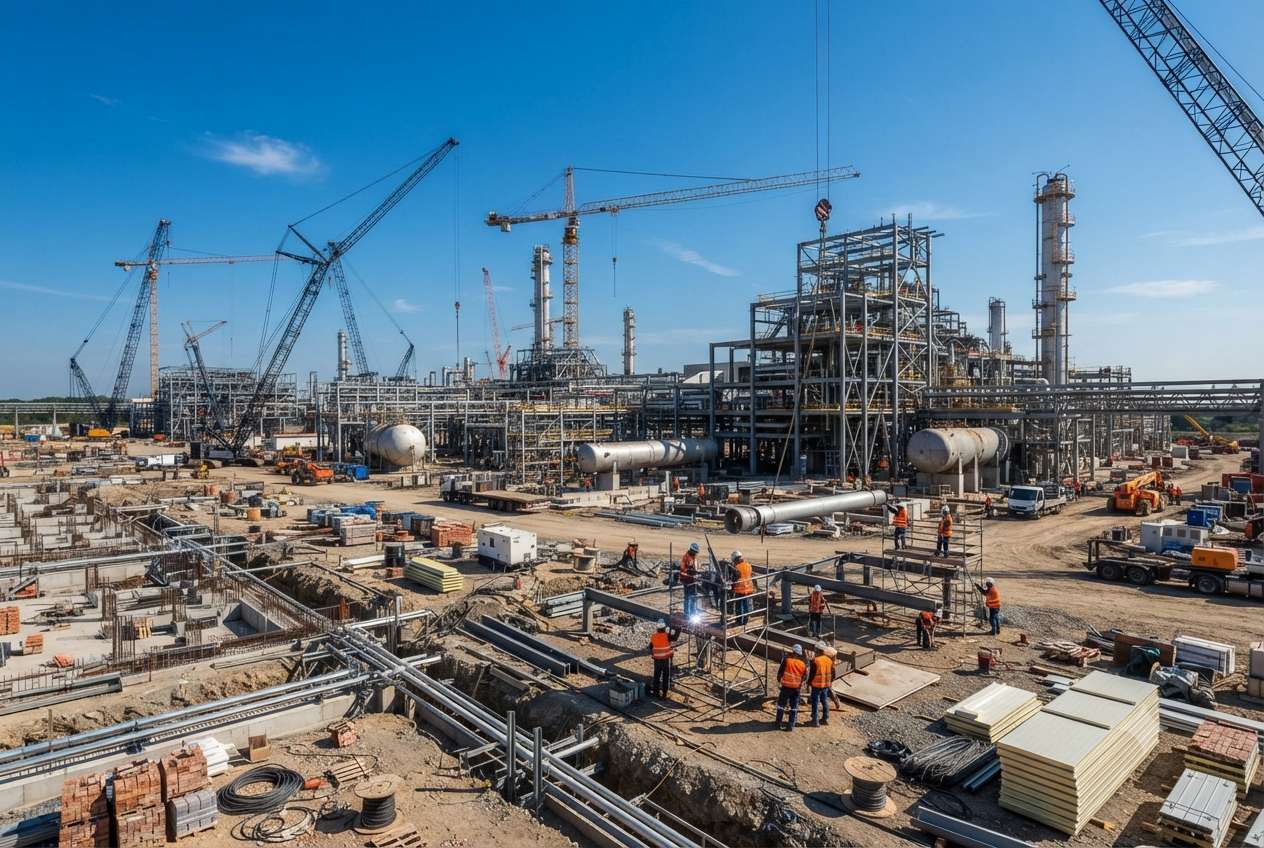
The Louisiana project was designed to be one of the largest blue hydrogen and ammonia facilities in the world. It targeted more than 750 million standard cubic feet of low-carbon hydrogen per day, with 95 percent of the CO2 generated during production captured for permanent underground sequestration, more than 5 million tonnes annually.
Air Products had already taken a $2.9 billion write-down tied to the project, more than half of its overall cost, before formally canceling it. The stated reasons included weakening financial viability and difficulty securing enough committed customers for what remained a fairly speculative market segment.
Yara, which had been in advanced negotiations to acquire the ammonia production, storage and shipping assets for around 25 percent of total project costs, redirected that capital toward the Gulf Coast Ammonia plant in Texas City instead, a conventional facility with no carbon capture component.
A Pattern Bigger Than One Project
Industry tracking firms have flagged Louisiana as part of a wider retreat. One widely cited estimate puts more than $45 billion in US blue hydrogen, ammonia and methanol projects under active tracking, with a majority carrying a low probability of hitting their original start dates.
A few factors are showing up across multiple cancelled or delayed projects:
Cost inflation on capture and sequestration infrastructure, which has pushed several projects well past their original budgets.
Weak offtake demand, since many buyers have been reluctant to commit to long-term contracts for a product that still carries a premium over conventional ammonia.
Regulatory and policy uncertainty, which has made some developers hesitant to commit further capital until the incentive landscape stabilizes.
The Projects Still Moving Forward
The retreat is not universal, and buyers should not read it as the end of US blue ammonia altogether. A handful of projects are still progressing.
Philbro's Wabash Low-Carbon Ammonia project in Indiana began construction and is designed to produce 500,000 tons of blue ammonia per year, sequestering up to 1.65 million tonnes of CO2 annually.
CF Industries has moved forward with partners Mitsui and JERA on a project targeting low-carbon ammonia production by 2029, working alongside a separate sequestration partnership for CO2 storage in Louisiana.
ExxonMobil continues to promote its proposed Baytown project, though it remains at an earlier stage than the Wabash and CF Industries efforts.
Why This Matters for Ammonia Buyers
Buyers who had built sourcing strategies around an expanding supply of low-carbon ammonia now face a narrower and less certain pipeline. Projects that survive this shakeout are likely to carry more scrutiny on financing and offtake commitments before reaching final investment decisions.
This has a few practical implications for procurement planning:
Expect longer lead times before new blue ammonia capacity becomes commercially available at scale.
Price premiums for verified low-carbon ammonia may persist or grow if fewer projects reach completion.
Supplier diversification across both conventional and low-carbon sources remains important, since relying on projects still years from final investment decision carries real execution risk.
How Suppliers Are Adjusting Strategy
Companies exposed to this shift are responding differently. Yara chose to redirect capital toward an operating conventional asset rather than wait out a capture-based project with an uncertain timeline. Others, like CF Industries, appear to be pressing ahead with capture-based projects but pairing them with dedicated sequestration partners to de-risk execution.
This divergence is worth watching closely. It suggests the market is sorting itself into companies willing to absorb near-term capital risk for a long-term low-carbon position, and companies prioritizing proven capacity and faster returns instead.
What Procurement Teams Should Watch Next
Teams tracking low-carbon ammonia availability should treat announcements case by case rather than assuming the segment is either thriving or collapsing uniformly. Some practical steps can help:
Monitor final investment decisions on the projects still active, since delays or cancellations remain a real possibility across the sector.
Reassess any sustainability commitments that assumed a specific volume of blue ammonia would be available on a given timeline.
Stay in direct contact with suppliers about which specific facility, conventional or low-carbon, is fulfilling a given order.
The Bottom Line for Buyers Tracking Low-Carbon Feedstock
Louisiana's cancellation is a significant setback, and it sits inside a wider pullback across US blue hydrogen and ammonia development. That said, the sector has not gone quiet entirely, with a smaller set of projects still working toward completion later this decade.
Buyers should plan around a more selective and slower moving low-carbon ammonia pipeline rather than the faster growth trajectory that seemed likely a year ago. Ready to source ammonia from verified global suppliers? Explore competitive offers on our platform today.
Ammonia Anhydrous
Found this useful?