Lutianhua's First Ammonia Synthesis Unit Begins a 15-Day Major Overhaul
Lutianhua's First Ammonia Synthesis Unit Begins a 15-Day Major Overhaul
Sichuan Lutianhua Company Limited has taken its first ammonia synthesis unit offline for a scheduled 15-day major overhaul. The unit was safely shut down at the end of August and is targeted to be ready for restart by around 20 September, according to the company’s own project timeline. The work forms part of the annual maintenance program for the synthetic ammonia facilities and is designed to eliminate defects, address safety and environmental items, complete statutory inspections, and strengthen the basis for long-cycle stable operation.
Lutianhua is one of the established gas-based ammonia and urea producers in Southwest China. In a region where natural-gas availability and cost directly influence operating rates, planned turnarounds are timed to balance maintenance needs with feedstock conditions and market demand. The current 15-day window for the first synthesis unit reflects that careful scheduling.
Scope of the Overhaul
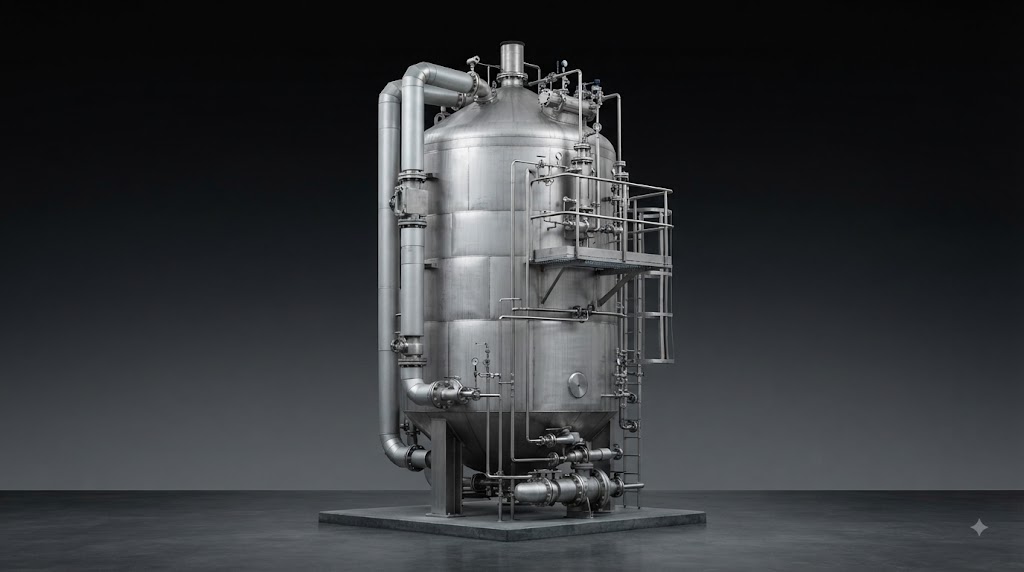
The campaign covers the first ammonia synthesis unit together with associated utilities and infrastructure, including a cooling tower, substations and related systems. Core mechanical work centres on major rotating equipment—most notably the hydrogen-nitrogen compressor and the ammonia compressor—alongside extensive inspection of pressure vessels and pipelines. Dozens of vessels and more than a hundred pipeline sections are scheduled for preventive testing, while large numbers of safety valves are being overhauled and calibrated and rupture discs replaced.
Additional items include gas-distribution station inspection, pipeline modifications on the synthesis-to-ammonia-storage route, interlocking system upgrades, and main transformer testing. In total the program comprises well over a hundred major items and more than a thousand individual tasks. The breadth of the work underlines that this is a full statutory and reliability-focused turnaround rather than a limited opportunistic shutdown.
Objectives: Reliability, Safety and Compliance
Company statements frame the overhaul around three overlapping goals: preventive elimination of defects, rectification of safety and environmental hazards, and completion of compliance inspections and tests. The explicit aim is to raise operating efficiency and create the conditions for extended stable runs once the unit returns to service. In continuous-process ammonia plants, the cost of unplanned downtime far exceeds the cost of thorough planned maintenance; the 15-day investment is intended to reduce the probability of forced outages in the coming operating cycle.
High ambient temperatures during the early September work window have added practical difficulty, yet the project is being managed through on-site command structures, parallel work fronts and strict quality hold points to keep progress aligned with the mid-September restart target.
Context for Gas-Based Ammonia in Southwest China
Southwest China’s gas-based ammonia and urea producers have faced a challenging margin environment, with natural-gas allocation, feedstock cost and regional demand all influencing utilization. Many plants in the broader Sichuan–Chongqing–Guizhou cluster have operated at reduced rates or staggered maintenance to manage gas availability and cash costs. Against that backdrop, a well-executed turnaround that improves reliability and energy efficiency supports both operational resilience and the ability to respond when gas supply and market conditions improve.
Lutianhua’s decision to proceed with a comprehensive 15-day program on the first synthesis unit indicates confidence that the maintenance investment will be recovered through higher on-stream time and lower unplanned losses in the subsequent period.

Market and Supply Implications
A 15-day outage on a single synthesis unit is manageable at national scale but is visible at regional level. Ammonia and downstream urea availability from the site will be reduced for the duration of the work and the subsequent restart and stabilization period. Buyers who normally source from Lutianhua will have covered the shortfall through inventory, alternative domestic suppliers or adjusted logistics. Once the unit returns and achieves stable rates, those temporary arrangements will unwind.
Because the outage is planned and of limited duration, it is unlikely to trigger sustained price effects unless it coincides with other regional outages or a sudden tightening of gas supply. The more important signal is operational: the plant is investing in the mechanical integrity required for reliable output in the seasons ahead.
Restart and Post-Overhaul Performance
The stated target is to complete the work and be in a position to begin the start-up sequence before 20 September. Restart of an ammonia synthesis loop involves careful purge, catalyst conditioning, compressor alignment and progressive feed introduction. Early performance indicators—time to stable rates, energy consumption, on-stream factor and any rework—will show whether the intensive inspection and repair program has delivered the intended reliability improvement.
Customers and observers typically watch the first four to six weeks after a major turnaround for confirmation that the unit has settled into normal operation. A clean restart followed by high utilization would validate the scope and quality of the 15-day campaign.
Outlook
Lutianhua’s first ammonia synthesis unit overhaul is a routine but substantial piece of asset management in a gas-based fertilizer complex. By concentrating preventive mechanical work, statutory inspections and safety upgrades into a defined 15-day window, the company aims to protect long-cycle operation and reduce the risk of costly unplanned stops. In the broader Southwest China ammonia and urea sector, where feedstock constraints and margin pressure remain real, such reliability investments are an essential part of remaining competitive and able to meet regional agricultural demand when conditions allow.
The market will treat the unit as offline until the restart is confirmed and stable rates are re-established. Thereafter, attention will shift to post-overhaul performance and to the scheduling of any remaining maintenance across the rest of the ammonia system.
Sources
Pea Starch
Found this useful?