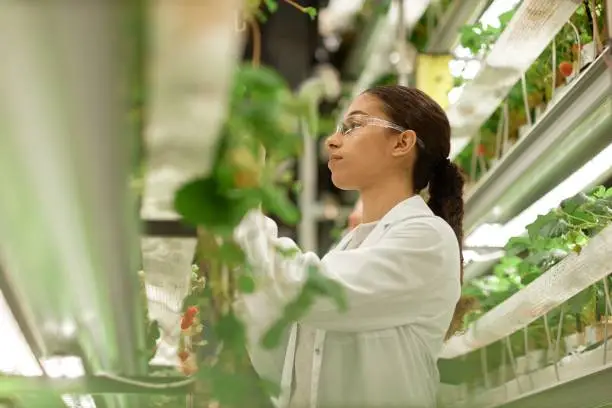
Microbial PFAS Remediation Research Carries Direct Relevance to Contaminated Agricultural Soils
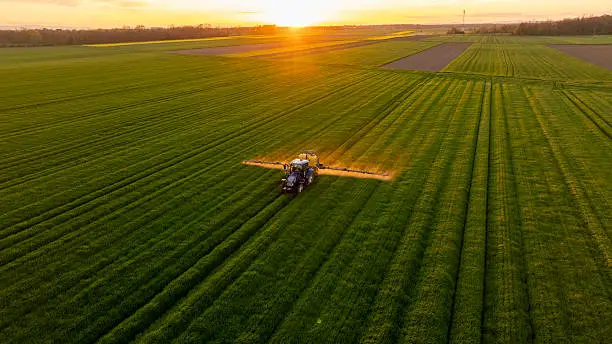
Microbial PFAS Remediation Research Carries Direct Relevance to Contaminated Agricultural Soils
Introduction
Research into microbial remediation of per- and polyfluoroalkyl substances (PFAS) is increasingly relevant to agriculture as scientists investigate how “forever chemicals” can be managed in contaminated soils. PFAS contamination can enter agricultural systems through several pathways, including the application of contaminated biosolids, irrigation with affected water, atmospheric deposition, and movement from nearby contaminated sites. Once present in soil, PFAS can persist, migrate into groundwater, and in some cases become available for plant uptake.
This creates a difficult challenge for agriculture because remediation cannot focus only on removing PFAS from water. Contaminated soils may require technologies capable of reducing chemical mobility, limiting crop exposure, or ultimately destroying PFAS. Microbial and molecular approaches are therefore attracting attention as a potential lower-impact complement to conventional remediation technologies.
Why PFAS Contamination Matters for Agricultural Soils
Agricultural soils can become PFAS reservoirs when contaminated materials are repeatedly introduced into the soil environment. Biosolids are an important example because they can contain PFAS that remain after wastewater treatment. When such materials are applied to agricultural land, PFAS can enter soil and potentially migrate into water or become available for plant uptake.
Recent research also shows that PFAS uptake by crops is influenced by several factors, including soil characteristics, biosolids properties and the use and type of soil amendments. A 2026 study examining PFAS uptake found that soil type, biochar type and application rate can significantly affect plant exposure.
This means remediation strategies cannot rely on a single treatment approach. Soil chemistry, PFAS chain length, contamination concentration, crop type and hydrological conditions all need to be considered.
The Microbial Remediation Opportunity
Microbial remediation attempts to use microorganisms or their biological processes to transform contaminants. For PFAS, the concept is considerably more difficult than conventional biodegradation because the carbon-fluorine bond is exceptionally strong.
Nevertheless, research is beginning to identify microorganisms and microbial processes capable of transforming certain PFAS structures under specific environmental conditions. A 2026 review of microbial and molecular approaches describes the evidence for microbially mediated PFAS transformation as limited but emerging, with research examining organisms including Pseudomonas and other microbial groups.
The objective is not simply to make PFAS disappear from an analytical measurement. A successful remediation process would ideally demonstrate meaningful transformation accompanied by defluorination and, ultimately, destruction of the contaminant rather than merely transferring it elsewhere.
Soil Microbiomes Could Become Part of the Remediation Strategy
Agricultural soils already contain complex microbial communities. PFAS contamination can alter these communities, potentially affecting microbial diversity, soil functions and ecosystem processes. Recent research has therefore begun examining not only whether microbes can transform PFAS, but also how PFAS exposure changes the soil microbiome itself.
This opens several potential research directions.
Microbial Biostimulation
Existing microbial populations could potentially be encouraged through changes in nutrients, electron donors, environmental conditions or other factors that support transformation activity.
Bioaugmentation
Specific microorganisms with demonstrated PFAS transformation capabilities could potentially be introduced into controlled remediation systems.
Enzyme-Based Treatment
Instead of introducing living organisms into farmland, researchers could isolate or engineer enzymes responsible for chemical transformation and use them in contained treatment systems.
Engineered Microbial Consortia
Multiple microorganisms could potentially be combined so that different organisms perform complementary stages of a remediation pathway. This approach may eventually be more practical than relying on a single microbial strain.
However, these approaches remain largely developmental for PFAS, particularly for contaminated agricultural soils. Current evidence does not support treating microbial remediation as a commercially proven solution for widespread PFAS-contaminated farmland.
The Critical Difference Between Removal and Destruction
One of the most important considerations in PFAS remediation is distinguishing removal from destruction.
A technology may reduce the measured PFAS concentration in soil by transferring the chemicals into another material, concentrating them in a treatment medium, or changing their chemical form. That does not necessarily mean the PFAS has been destroyed.
For agricultural applications, this distinction is particularly important. A remediation technology that simply transfers PFAS from soil into biomass, water or another waste stream could create a secondary management problem.
Researchers therefore need to evaluate:
Defluorination
Fluoride release
Transformation products
Toxicity of intermediates
Persistence of remaining compounds
Mass balance of PFAS before and after treatment
Potential groundwater migration
Crop uptake after remediation
This verification requirement is likely to become a major factor in commercial adoption.
Agriculture May Favor Controlled Remediation Systems
Directly releasing engineered microorganisms into agricultural soils would introduce additional environmental and regulatory questions. These include microbial persistence, ecological effects, horizontal gene transfer, interactions with native soil communities and long-term control of the introduced organisms.
For this reason, a more practical near-term pathway may be contained biological treatment.
For example, contaminated soil could be excavated or treated through a controlled process, while PFAS-rich water or concentrated waste streams are directed toward microbial or enzymatic reactors. Such systems could provide greater control over operating conditions and allow researchers to measure transformation products and destruction efficiency.
A hybrid approach could also combine physical separation, adsorption, biochar or other amendments with biological treatment. The U.S. Department of Agriculture has already highlighted biochar-based approaches as one area of research for managing PFAS in agricultural systems.
Implications for Soil Health and Crop Production
PFAS management in agriculture is not simply an environmental cleanup issue. It can become a production and supply-chain issue when contaminated land affects crop selection, water use, livestock exposure or the ability to market agricultural products.
The 2026 literature increasingly emphasizes the interaction between PFAS, soil properties, microbial communities and plant uptake.
Consequently, future remediation programs may need to combine:
Soil testing to determine contamination levels.
PFAS profiling to identify specific compounds.
Hydrological assessment to understand movement into groundwater.
Crop testing to evaluate plant uptake.
Microbial analysis to determine the condition of soil communities.
Remediation trials under realistic soil conditions.
Post-treatment monitoring to verify that PFAS has actually been reduced or destroyed.
This creates opportunities for environmental laboratories, analytical chemistry providers, remediation companies and agricultural monitoring platforms.
Emerging Market Opportunities
As PFAS contamination becomes a greater concern for agricultural land management, demand could emerge across several parts of the environmental-services market.
Potential areas include:
PFAS soil-testing services
Microbiome analysis
PFAS analytical standards
Environmental monitoring
Engineered microbial cultures
PFAS-degrading enzymes
Bioreactor systems
Biochar and treatment media
Soil amendments
Groundwater monitoring
Crop and livestock testing
Remediation consulting
PFAS fate-and-transport modeling
Destruction-verification technologies
For chemical and agricultural marketplaces, this could create a new category of environmental remediation products and services alongside conventional crop inputs.
Procurement Considerations
Agricultural organizations evaluating PFAS remediation technologies should avoid selecting solutions based solely on treatment cost.
Important procurement criteria will increasingly include:
PFAS compounds covered
Demonstrated destruction mechanism
Defluorination performance
Treatment time
Soil compatibility
Impact on soil health
Crop safety
Transformation-product profile
Regulatory acceptance
Field-scale evidence
Waste generated during treatment
Monitoring requirements
Total lifecycle cost
Technologies with strong laboratory results but limited field validation should be distinguished from commercially proven solutions.
Outlook
The connection between microbial PFAS research and agriculture is becoming increasingly important because contaminated soils present a fundamentally different remediation challenge from contaminated water.
Recent reviews indicate that microbial and molecular approaches are advancing, but the evidence base remains limited. The biggest scientific challenge remains demonstrating reliable transformation of PFAS rather than simple removal or redistribution.
For agriculture, the most promising future may therefore involve integrated remediation systems rather than a single microbial product. Physical separation, soil amendments, phytoremediation, microbial processes and enzymatic treatment could potentially be combined depending on contamination conditions. A 2026 PNAS study, for example, is examining an integrated strategy combining phytoremediation, biomass pyrolysis and enhanced weathering for PFAS-contaminated agricultural systems.
Conclusion
Microbial PFAS remediation research has direct relevance to contaminated agricultural soils because PFAS can persist in soil, migrate through water systems and potentially enter crops and food chains. The challenge is particularly significant where contamination originates from biosolids, irrigation water or nearby industrial sources.
Microorganisms, microbial consortia and engineered enzymes could eventually provide lower-impact tools for PFAS management. However, the technology remains at an emerging research stage, and successful commercialization will depend on proving actual PFAS destruction, controlling transformation products and demonstrating performance under real agricultural conditions.
For the agricultural and chemical industries, PFAS remediation is therefore evolving from a niche environmental issue into a potential market for soil testing, biological treatment, remediation technologies and long-term environmental monitoring. The companies that can demonstrate reliable, measurable and scalable PFAS destruction are likely to have the strongest position as contaminated-land management requirements become more sophisticated.

Bakery Meal
Found this useful?