
Microbial Polysaccharides for Food Thickening and Stability
Food manufacturers increasingly need ingredients that deliver consistent texture, stable formulations and reliable processing performance across different product categories. Microbial polysaccharides offer a versatile approach to these requirements because microorganisms can produce carbohydrate-based polymers with properties suited to thickening, stabilisation, water retention and gel formation.
For food manufacturers, importers and ingredient procurement teams, these materials provide opportunities to refine formulations and explore alternatives to conventional plant-derived hydrocolloids. However, their commercial value depends on more than thickening performance. Production costs, ingredient specifications, regulatory requirements and supply consistency all influence whether a microbial polysaccharide suits a particular application.
Understanding the differences between established ingredients such as xanthan gum and emerging materials such as gellan gum, dextran and pullulan helps buyers make more informed sourcing decisions.
What Are Microbial Polysaccharides and How Are They Produced?
Microbial polysaccharides are complex carbohydrates synthesised by microorganisms, including bacteria, yeasts and fungi. Many food applications use exopolysaccharides (EPS), which microorganisms secrete outside their cells during growth.
Manufacturers produce these materials through controlled fermentation. The process generally involves selecting a suitable microbial strain, preparing a nutrient medium, managing fermentation conditions and recovering the resulting polymer.
A typical production process includes several stages:
Strain selection: Producers select microorganisms with the ability to generate the required polysaccharide and functional characteristics.
Fermentation: The microorganism grows in a controlled environment with suitable carbon sources, nutrients, temperature and pH.
Polymer recovery: Processing separates the polysaccharide from microbial cells and other components in the fermentation broth.
Purification and drying: Producers remove unwanted residues, concentrate the material and convert it into a form suitable for storage, transport and formulation.
The final properties depend on the organism, feedstock, fermentation conditions and recovery method. Changes in molecular structure can influence solubility, viscosity, gel strength and interaction with other food ingredients.
For procurement teams, this means that two materials described as microbial polysaccharides may perform very differently. Buyers should assess individual product specifications rather than treating the entire category as interchangeable.
Key Types of Microbial Polysaccharides Used in Food Formulations
Different microbial polysaccharides perform distinct functions, making ingredient selection an important part of product development.
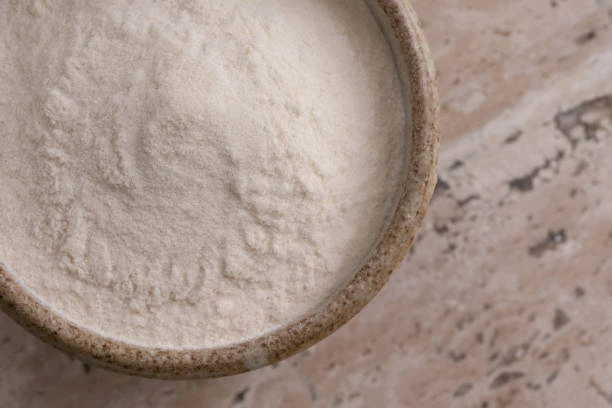
Xanthan gum: Produced through microbial fermentation, xanthan gum provides viscosity and helps suspend particles in sauces, dressings, beverages and other formulated foods. It can maintain useful thickening performance across a range of processing conditions.
Gellan gum: This polysaccharide forms gels and helps stabilise dispersed ingredients. Food manufacturers use it where they need controlled structure, suspension or a specific texture.
Dextran: Produced by certain lactic acid bacteria and other microorganisms, dextran can influence viscosity and texture in fermented foods. Its performance depends on molecular structure and the formulation.
Pullulan: This microbial polysaccharide forms films and coatings, creating opportunities in edible films and specialised food applications. Its role differs from that of conventional high-viscosity thickeners.
Lactic acid bacteria-derived polysaccharides: Some strains produce polymers during fermentation that can improve the body, mouthfeel and texture of cultured dairy products and other fermented foods.
These materials represent different functional approaches rather than direct replacements for one another. Xanthan gum may suit a sauce requiring controlled flow, while gellan gum may be more appropriate for a beverage requiring suspended particles or a structured gel.
Buyers should therefore begin with the required food performance, then identify the polysaccharide that can deliver it at an acceptable cost.
Why Food Manufacturers Are Exploring Microbial Alternatives
Interest in microbial polysaccharides reflects a need for more precise control over food texture and stability. Fermentation offers producers a controlled manufacturing route, while the diversity of microbial polymers creates opportunities to develop ingredients for specific applications.
Several factors support this interest:
Formulation flexibility: Manufacturers can evaluate polymers with different thickening, gelling and water-binding characteristics to meet specific product requirements.
Consistent processing potential: Controlled fermentation can support repeatable production, although manufacturers must verify consistency across batches and suppliers.
Efficient functionality: Some microbial polysaccharides deliver useful thickening or stabilisation at relatively low concentrations, potentially reducing the amount of ingredient needed.
Product innovation: Specialised polymers can help manufacturers develop new textures, improve suspension or refine the structure of dairy and plant-based products.
Alternative production pathways: Microbial fermentation can reduce dependence on particular agricultural raw materials, depending on the organism, feedstock and production system.
These advantages do not automatically make every microbial ingredient cheaper or more sustainable than plant-derived alternatives. Fermentation requires suitable feedstocks, energy, water and downstream processing, while commercial production costs vary considerably between polymers.

Food Applications Across Dairy, Sauces and Beverages
Microbial polysaccharides serve a range of purposes in food manufacturing. The most suitable choice depends on the desired texture, processing conditions and stability requirements throughout the product's shelf life.
Dairy and fermented products
Yogurt, cultured milk and other fermented dairy products need a texture that remains consistent during storage and distribution. Selected microbial polysaccharides can improve body, reduce unwanted separation and support a smoother mouthfeel.
Some lactic acid bacteria naturally produce exopolysaccharides during fermentation. Manufacturers can evaluate these strains as part of a fermentation strategy, although results depend on the strain, milk composition and processing conditions.
Sauces, dressings and condiments
Sauces and dressings often require a balance between thickness, pourability and ingredient suspension. Xanthan gum is particularly useful in these applications because it can increase viscosity and help maintain a more uniform mixture.
Formulators must also consider the product's acidity, salt content, temperature and mixing process. These factors influence how a thickener performs after manufacturing and during storage.
Beverages and plant-based drinks
Beverage manufacturers may use suitable polysaccharides to suspend particles, control mouthfeel and reduce visible separation. Gellan gum can provide structure and suspension in formulations where manufacturers want to keep dispersed ingredients evenly distributed.
Plant-based drinks present additional challenges because proteins, oils, minerals and other ingredients can interact with stabilisers. Testing the complete formulation is essential before changing the ingredient system.
Bakery, confectionery and specialised foods
Selected microbial polysaccharides can contribute to moisture management, texture modification and specialised coating applications. Pullulan, for example, can form films that suit certain edible coating and packaging-related uses.
The same ingredient will not necessarily perform equally well in every food category. Processing temperature, moisture level, acidity and interactions with proteins or other hydrocolloids can change the final result.
Production Costs, Supply Chains and Commercial Sourcing
For chemical traders, food ingredient distributors and procurement managers, the commercial assessment begins with availability, specifications and total delivered cost.
Fermentation-based ingredients require specialised production facilities and carefully managed processing conditions. Recovery and purification can add significantly to production costs, particularly when a product needs high purity or tightly controlled functional properties.
Several factors can affect purchasing decisions:
Feedstock availability: The cost and availability of sugars and other fermentation nutrients influence production economics.
Manufacturing capacity: Producers with limited fermentation capacity or specialised equipment may face constraints when demand increases.
Purification requirements: Different food applications require different purity levels, which can affect yield, processing costs and pricing.
Product specifications: Viscosity grade, moisture content, microbiological quality and other parameters can distinguish products sold under similar names.
Shipping and storage: Packaging, moisture protection, transport conditions and delivery lead times affect the landed cost and usability of the ingredient.
Buyers should compare suppliers using the same specification and application requirements. A lower price per kilogram does not necessarily deliver the lowest formulation cost if the material requires a higher dosage or produces inconsistent results.
For international transactions, procurement teams should also review certificates of analysis, technical data sheets, safety documentation where applicable and food-grade declarations. Importers should confirm that the supplied grade meets the destination market's requirements.
Quality Control, Regulatory Compliance and Sustainability
Food-grade microbial polysaccharides must meet the relevant requirements of the market where manufacturers intend to sell their products. Approval conditions, permitted uses, purity criteria and labelling rules can differ by jurisdiction and ingredient.
Before approving a supplier, procurement teams should review the following:
Identity and grade: Confirm the exact ingredient, food-grade designation and intended application.
Batch consistency: Request a certificate of analysis for each relevant batch and compare key parameters against agreed specifications.
Microbiological quality: Check that the supplier's controls and test results meet the applicable requirements.
Traceability: Confirm that the supplier can identify production batches and provide relevant manufacturing and origin records.
Regulatory status: Verify permitted use, applicable maximum levels and labelling requirements in the destination market.
Change control: Establish how the supplier communicates changes to feedstock, manufacturing processes or product specifications.
Sustainability also deserves careful assessment. Microbial fermentation can use renewable feedstocks and offer controlled production, but its environmental performance depends on energy consumption, water use, fermentation yield, purification requirements and waste management.
Buyers seeking sustainability improvements should request meaningful information about manufacturing practices rather than relying solely on descriptions such as bio-based or fermentation-derived. A credible assessment considers the entire production process and supply chain.
What Procurement Teams Should Prioritise Next
The commercial opportunity for microbial polysaccharides lies in matching the right ingredient to the right formulation. Buyers who understand functional performance, production constraints and supplier quality can evaluate alternatives more effectively while managing sourcing risks.
Procurement teams should focus on three priorities:
Define the technical requirement. Specify the target viscosity, gel strength, suspension performance or texture before requesting quotations. This helps suppliers recommend an appropriate grade and reduces the risk of comparing products with different functional properties.
Validate samples before committing to volume. Conduct application trials under actual manufacturing conditions, including processing, storage and shelf-life testing. Confirm that any proposed substitute meets the required performance standards.
Build reliable supplier relationships. Compare documentation, batch consistency, production capacity, lead times and landed costs alongside the quoted price. Where possible, qualify an alternative supplier to reduce dependence on a single source.
Emerging microbial polysaccharides also offer opportunities for ingredient developers to explore specialised formulations and fermentation-based production. However, established commercial ingredients such as xanthan gum remain important options for buyers seeking proven thickening and stabilisation performance.
As food manufacturers pursue better texture, reliable quality and more adaptable formulations, microbial polysaccharides will continue to attract attention across ingredient development and international trade. Selecting the right grade and establishing a dependable supply chain are essential steps towards capturing that value.
Xanthan Gum (E415)
Found this useful?