New US and Qatar ethylene and polyethylene startups
Two of the lowest-cost producers on the planet are switching fresh capacity on at the same time. New ethylene crackers and polyethylene lines in the United States and Qatar reach commercial operation through 2026, and together they add several million tonnes of gas-fed supply to a market already long of material.
The phrase buyers should track is US and Qatar ethylene startups, since each new plant lands on an already soft market. Ethane-fed operators sit at the very bottom of the global cost curve, so their new tonnes travel far and price aggressively.
For procurement teams, the startups promise cheaper film, moulding and pipe resins. For everyone else, they promise another year of pressure, and here is what the new wave means for contracts.
New US and Qatar Ethylene Startups Coming Online in 2026
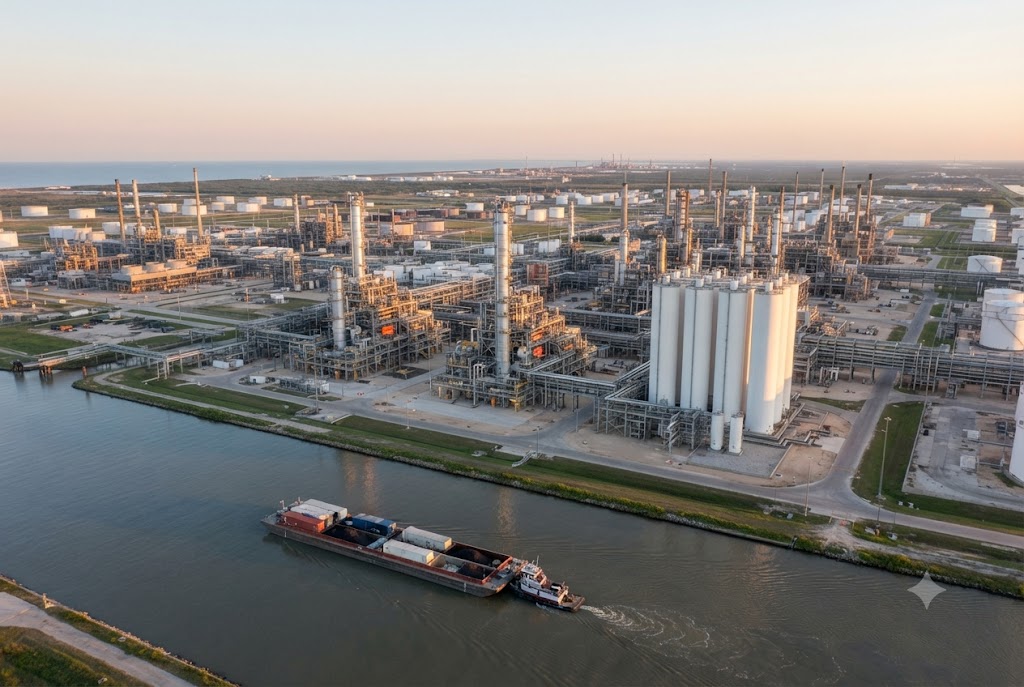
The United States leads the volume story. Gulf Coast crackers kept multiplying through the shale boom era, and the latest generation reaches nameplate output in 2026 with paired PE units that convert most of the new ethylene on site.
Qatar brings the cost story. State-backed ventures at Ras Laffan and Mesaieed finish construction of new crackers and derivative lines, and the emirate moves to nearly double its polyethylene capacity within a few years.
Both programmes share one trait. They run on ethane and associated gas that costs a fraction of naphtha, so each plant starts life at the bottom of the global cost curve.
Timelines slip in this industry, yet both programmes now sit in commissioning. First ethylene from the new US crackers lands in early 2026, and Qatari lines follow through the second half of the year as utilities and export logistics finish testing.
The combined addition matters more than any single plant. US and Qatari lines together place roughly three to four million tonnes of fresh polyethylene on the market just as Chinese overcapacity keeps exports high.
Why Ethane Feedstock Sets the Bottom of the PE Cost Curve
Ethane cracking yields roughly 75 to 80 percent ethylene, against 30 to 35 percent from naphtha. That yield gap alone decides the economics, because the plant sells more product from every tonne of feedstock it buys.
US ethane prices have traded around 20 to 25 cents per pound in recent cycles, while Qatari feedstock arrives under long-term contracts linked to gas production. Naphtha buyers in Asia and Europe pay crude-linked prices that sit far higher on an ethylene-equivalent basis.
The result is a cost gap of several hundred dollars per tonne of polyethylene between gas-fed and naphtha-fed producers. New startups widen that gap because they carry modern designs, larger single-line capacity and lower energy use.
How the Startups Reshape the Global Polyethylene Supply Map
American operators aim exports at Latin America, Asia and Europe. Freight economics favour the Atlantic basin first, so Mexico, Brazil and Northwest Europe feel the new tonnes earliest.
Qatari cargoes traditionally flow to Asia, and the new volume deepens that route. Buyers in China, Southeast Asia and India already treat Qatari PE as a benchmark for film and injection grades.
The two supply sources now overlap in nearly every importing region. A converter in Turkey can quote US Gulf Coast material, Qatari material and Chinese material on the same tender, and that triangulation caps prices everywhere.
What Fresh Supply Does to Global PE Pricing
Startup tonnes hit a market that already carries Chinese overcapacity. The combined pressure keeps polyethylene prices near the bottom of the cycle through 2026 and into 2027.
Price formation shifts to the marginal seller. Gas-fed producers can cut prices and still earn margins, so they set the floor in importing markets and force higher-cost suppliers to follow or lose volume.
Spreads between grades compress as well. New Qatari and US lines favour film and injection copolymers, which narrows the premium those grades command over commodity grades. Contract buyers already see the effect, because quarterly negotiations that once started from producer cost support now start from the cheapest available cargo.
Expect short spikes but no sustained rally. Supply disruptions or freight shocks can lift prices for a few
Who Gains and Who Loses as the New Plants Ramp Up
Converters and traders with flexible origin lists gain the most. Packaging producers in Europe and Asia can blend US, Qatari and Chinese offers to squeeze suppliers on every contract.
Naphtha-based producers lose ground. Asian and European crackers already squeezed by Chinese exports now face gas-fed pressure on their export outlets, and more idle capacity looks likely.
Even some gas-fed incumbents feel pain. Older Gulf Coast units with higher debt loads lose their cost leadership to the newest plants, and Qatari expansion adds competition inside the low-cost club itself.
Regional Price Effects Worth Watching
The startups land differently in each region.
Latin America: US material deepens its dominance, and regional producers in Brazil and Mexico defend share with discounts.
Europe: imports from the US and Qatar cap local prices, while energy-cost gaps keep European producers under pressure.
Asia: Qatari film grades and US copolymers add to Chinese volume, and buyers hold the strongest hand in years.
Middle East: neighbouring producers defend Asian market share against Qatari growth with sharper pricing.
Watch freight as the swing factor. A tight tanker market narrows arbitrage and gives regional producers brief relief, while cheap freight transmits the full startup pressure across oceans.
What Procurement Teams Should Do Now
Treat 2026 as a buyer's window and plan contracts around it. Lock volume without locking price, and keep origin options open so arbitrage works in your favour.
Index-linked contracts with quarterly reviews beat fixed-price annual deals in a falling market. Pair one gas-fed origin with one regional origin to balance cost against supply security.
The startups hand buyers leverage that rarely appears in this market. Use it while the supply wave lasts.
Ready to source linear low density polyethylene from verified global suppliers? Explore competitive offers on our platform today.
Linear-Low Density Polyethylene (LLDPE)
Found this useful?