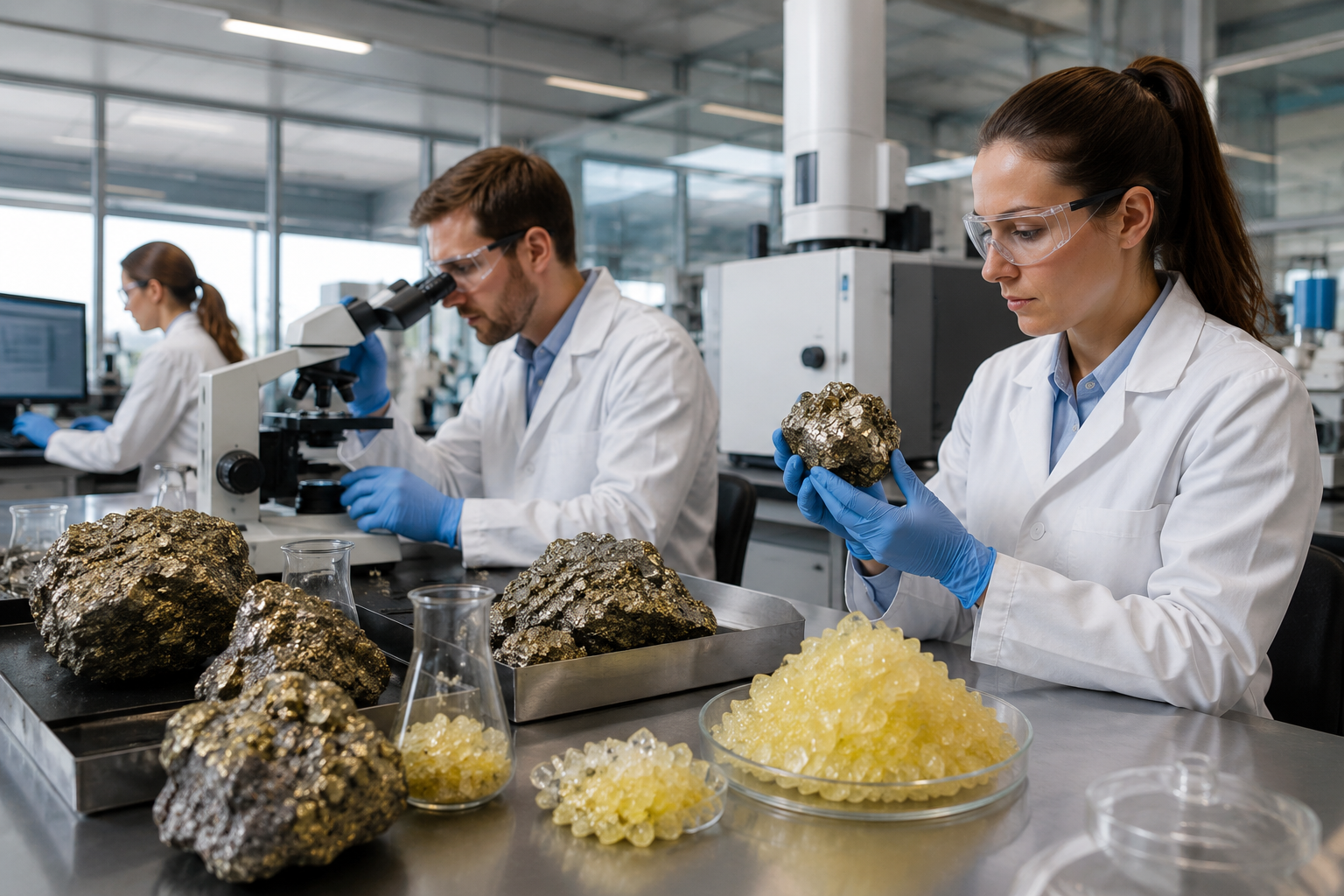
Sulfur has long been available as a by-product of crude oil refining, making refinery output an important source of raw material for sulfuric acid production. As the global energy transition continues, however, this long-standing relationship is drawing greater attention because future refinery throughput may gradually decline alongside fossil fuel demand.
Against this backdrop, OCP's pyrite sulfur research represents more than a technical development. According to C&EN's Global Top 50 2026 reporting, OCP is exploring sulfur extraction from pyrite and pyrrhotite to reduce dependence on sulfur produced as a by-product of oil refining. For fertilizer manufacturers and procurement professionals, this research highlights a broader shift toward building supply chains that are less closely tied to fossil fuel production.
Why Sulfur Matters in the Phosphate Industry
Sulfur plays a critical role in phosphate fertilizer manufacturing because it serves as the primary feedstock for sulfuric acid production.
Sulfuric acid reacts with phosphate rock to produce phosphoric acid, an essential intermediate used in numerous phosphate fertilizers. As one of the world's largest phosphate producers, OCP depends on a reliable sulfur supply to support large-scale fertilizer production.
This makes sulfur availability an important factor not only for fertilizer manufacturers but also for agricultural chemical buyers throughout the global supply chain.
The Traditional Dependence on Oil Refinery Sulfur
Most commercial sulfur available today originates as a by-product of oil and natural gas processing.
As refineries remove sulfur compounds from crude oil to meet fuel quality requirements, elemental sulfur becomes available for industrial use. This has created an efficient supply model for decades because sulfur production has largely followed refinery activity.
However, refinery sulfur availability remains linked to crude oil processing volumes rather than direct sulfur demand. As refining activity changes over time, sulfur supply may also change.
For procurement teams, this relationship introduces an important long-term supply consideration.
Why OCP Is Exploring Pyrite and Pyrrhotite
According to C&EN, OCP is researching methods to recover sulfur from pyrite and pyrrhotite.
Unlike refinery sulfur, mineral sulfur extracted from these naturally occurring ores is not dependent on crude oil refining. This creates the possibility of establishing an alternative sulfur supply independent of fossil fuel processing.
Although the research remains under development, the strategic objective is clear. Diversifying sulfur sources could improve long-term supply resilience while supporting future phosphate production.
Sustainability Benefits Beyond Supply Security
The significance of OCP's research extends beyond raw material diversification.
As countries pursue decarbonisation strategies, refinery throughput may gradually decrease over the long term. Since refinery sulfur is inherently tied to oil processing, reduced refining activity could eventually influence sulfur availability.
Mineral sulfur offers an alternative pathway because its production does not rely on crude oil refining volumes.
For sustainability professionals, this supports a broader objective of separating critical chemical supply chains from fossil fuel production where technically and economically feasible.
What This Means for Scope 3 Emissions Planning
Many fertilizer producers and agricultural chemical companies now include Scope 3 greenhouse gas emissions within broader sustainability programs.
Scope 3 reporting places greater emphasis on upstream raw materials and supply chain choices. As organizations evaluate long-term emissions reduction opportunities, the origin of critical feedstocks becomes increasingly relevant.
A sulfur source that operates independently of oil refining may support broader supply chain decarbonisation strategies over time.
While emissions performance depends on the production method ultimately adopted, the research direction aligns with efforts to diversify supply away from fossil fuel-linked production systems.
Procurement Considerations for Fertilizer Companies
Procurement teams should view this research primarily as a long-term strategic development rather than an immediate sourcing change.
Key considerations include:
Monitoring advances in alternative sulfur production technologies.
Evaluating future supplier diversification opportunities.
Understanding how sulfur sourcing may influence corporate sustainability objectives.
Following developments in phosphate industry feedstock innovation.
Considering long-term supply resilience alongside traditional cost factors.
Companies with established sustainability commitments may also monitor how alternative sulfur sources contribute to broader environmental objectives in future supply chains.
Looking Ahead for the Phosphate Supply Chain
OCP's research reflects a wider trend across the chemical industry toward strengthening supply chain resilience while supporting decarbonisation goals.
Rather than relying on a single feedstock pathway, companies are increasingly exploring diversified raw material strategies that can remain viable as global energy systems evolve.
Although commercial implementation will depend on future technical and economic outcomes, pyrite-derived sulfur illustrates how raw material innovation can contribute to both supply security and sustainability planning.
For fertilizer producers, agricultural chemical buyers and procurement professionals, developments such as these demonstrate that future competitiveness may depend not only on product quality and pricing but also on the long-term resilience of upstream raw material supply.
The Bottom Line for Procurement Teams
OCP's exploration of sulfur extraction from pyrite and pyrrhotite highlights an important strategic direction for the fertilizer industry. By investigating sulfur sources that are not linked to crude oil refining, the company is addressing both future supply resilience and long-term sustainability considerations.
For procurement and sustainability teams, the research serves as an example of how upstream raw material innovation can support evolving Scope 3 strategies and strengthen phosphate supply chains in a decarbonising economy. Monitoring these developments today can help organizations prepare for tomorrow's sourcing landscape.
Ready to source sulphur from verified global suppliers? Explore competitive offers on our platform today.