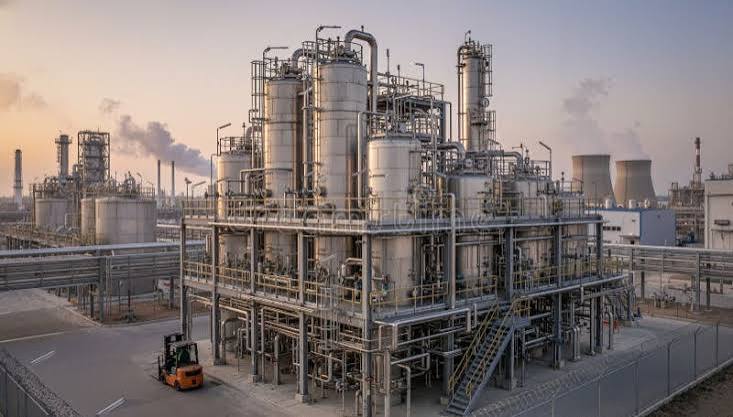
A new global emissions study puts greater visibility on the upstream chemical production systems that support agriculture, including the fertilizer and chemical value chains surrounding agrochemical manufacturing. Published in Nature Sustainability on September 9, the analysis models 37,379 production facilities, 81 large-volume chemicals and 2,043 manufacturing processes to estimate greenhouse gas emissions across the global petrochemical industry.
The study does not explicitly identify agrochemical intermediates as a separate product category, so it would be too strong to say that every pesticide or crop-protection intermediate is directly covered. Its broader scope does, however, include chemicals and fertilizers that can sit upstream of agricultural chemical production, making the findings relevant to companies evaluating the carbon footprint of agrochemical supply chains.
For manufacturers and buyers, the study provides a useful framework for understanding how emissions can accumulate across multiple stages before a chemical reaches its final agricultural application.
Agrochemical production depends on a wide network of basic and intermediate chemicals. Feedstocks can pass through several processing stages before becoming an active ingredient, formulation component or other crop-protection material.
The Nature Sustainability study specifically models primary, intermediate and downstream chemical production and tracks how embodied emissions move between these stages. It estimates that 83% of emissions attributed to downstream petrochemical products are embodied emissions originating from upstream primary and intermediate chemical production.
That finding is particularly relevant to agrochemical procurement.
A downstream manufacturer may have limited direct emissions from producing an intermediate while still carrying a substantial upstream carbon footprint through the chemicals and energy required to make that material.
This means supplier-level sustainability assessments increasingly need to look beyond the immediate manufacturing step.
What the 81-Chemical Scope Actually Covers
The study's 81-chemical dataset represents large-volume chemicals and fertilizers rather than a comprehensive inventory of every specialty chemical used in agriculture. Production data were drawn from ICIS, the International Fertilizer Association and the Food and Agriculture Organization, while the researchers modeled 2,043 production processes.
The primary chemicals covered include ammonia, methanol, ethylene, propylene, butadiene, benzene, toluene and xylenes. These materials form important building blocks for broad chemical manufacturing networks.
This distinction matters when applying the research to agrochemicals.
The study can provide useful upstream emissions context, but buyers should not assume that a particular pesticide active ingredient or intermediate is individually represented in the 81-product inventory unless the underlying dataset confirms it.
That makes the research most useful as a value-chain emissions framework, rather than as a complete carbon inventory for crop-protection chemicals.
Petrochemical Feedstocks Can Reach Agricultural Chemicals
Many agricultural chemicals depend on industrial building blocks that originate from petrochemical or natural-gas-based systems. These can include aromatic chemicals, solvents, nitrogen compounds and other intermediates used across synthesis routes.
The Nature Sustainability analysis shows how emissions associated with these upstream materials can be transferred through subsequent manufacturing stages. Its methodology distinguishes feedstock emissions, indirect energy use, direct energy use and direct process emissions.
For agrochemical manufacturers, this creates an important procurement consideration.
A material's carbon footprint cannot always be assessed solely from the energy used at the supplier's facility. The extraction and processing of upstream feedstocks can make a substantial contribution before the material reaches the intermediate production stage.
The further upstream a buyer looks, the more complete the emissions picture becomes.
Fertilizers Provide the Clearest Agricultural Connection
The study has a particularly direct connection to agriculture through its treatment of fertilizer production.
The researchers include fertilizers in their 81-product production dataset and use International Fertilizer Association data for production statistics and future projections. Ammonia is identified as one of the two largest-emitting primary chemicals, with estimated 2023 emissions of approximately 250 ± 50 million tonnes of CO2 equivalent.
This matters because fertilizer production and agrochemical manufacturing operate within overlapping industrial ecosystems.
Ammonia, for example, is central to nitrogen fertilizer production and is also an important chemical building block within the wider chemical industry. The study estimates that ammonia and ethylene were the largest-emitting primary chemicals in 2023.
For agricultural chemical buyers, this highlights the importance of separating the carbon footprint of fertilizer products from the potentially different upstream footprint of crop-protection chemicals.
One of the study's most important findings is the scale of embodied upstream emissions.
The researchers estimate that 83% of emissions attributed to downstream products are embodied emissions from upstream primary and intermediate chemical production. This means that improving the emissions profile of a downstream chemical may require changes much earlier in the supply chain.
For agrochemical intermediate producers, that creates several potential pressure points:
Feedstock selection: Different upstream feedstocks can have different emissions profiles.
Supplier selection: Producers using lower-carbon energy or feedstocks may offer a lower upstream footprint.
Process efficiency: More efficient conversion can reduce energy-related emissions.
Regional sourcing: Electricity and feedstock emissions can vary significantly between production regions.
Supply-chain transparency: Better upstream data can improve product-level carbon accounting.
These factors are becoming more relevant as agricultural chemical manufacturers respond to customer sustainability requirements.
Facility-Level Data Could Improve Supplier Assessment
The study's facility-level approach is particularly relevant for chemical procurement.
Instead of relying only on national averages, the researchers assembled information covering 37,379 individual production facilities. They combined facility capacity, production estimates and process-specific emissions factors to develop a more granular picture of emissions.
The analysis also finds that emissions are highly concentrated. Approximately 53% of 2023 petrochemical production emissions came from just 10% of facilities.
For agrochemical buyers, concentration creates an opportunity.
If a relatively small number of major production sites account for a large share of upstream emissions, targeted improvements at those facilities could potentially have an outsized effect on the emissions intensity of chemical supply chains.
It also means that supplier location and manufacturing site can matter as much as the supplier's corporate identity.
Primary chemicals often receive the most attention in discussions about industrial emissions because their production volumes are large. However, the study emphasizes that intermediate chemicals also carry embodied emissions from upstream materials.
An agrochemical intermediate may therefore inherit emissions from several production stages before it reaches the final synthesis plant.
For procurement teams, this creates a more complex calculation than simply asking a supplier for direct facility emissions.
A more useful approach is to ask suppliers for information covering raw-material origin, process energy, production location and available product-level emissions data.
This can help buyers distinguish between suppliers with similar chemical specifications but materially different upstream footprints.
The Study Shows Why Chemical Supply Chains Are Interconnected
The petrochemical sector is highly integrated, with primary chemicals feeding multiple downstream industries. The Nature Sustainability study describes a production network in which emissions are transferred between primary, intermediate and downstream conversion stages.
Agricultural chemicals are part of this wider industrial network even when a specific agrochemical product is not explicitly included in the study's 81-chemical inventory.
That interconnectedness creates both risks and opportunities.
A disruption in a major upstream chemical can affect availability and pricing for several downstream markets. Conversely, investment in cleaner feedstocks or lower-carbon production at an upstream facility can potentially reduce the embedded footprint of multiple downstream products.
For buyers, understanding these relationships can improve both supply-risk management and sustainability planning.
Energy Use Remains a Major Emissions Source
The study estimates that 45% of 2020 petrochemical production emissions came from indirect energy use, while another 34% came from feedstock extraction and processing.
This finding reinforces the importance of energy sourcing when evaluating agrochemical intermediates.
Two suppliers producing the same chemical through similar technology may still have different emissions profiles if they operate in regions with different electricity mixes or use different energy sources.
Process heat is also important for chemical manufacturing. The researchers identify energy-efficiency improvements, alternative fuels, alternative carbon feedstocks and carbon capture among the potential decarbonization measures for the sector.
For agrochemical producers, this means future emissions reductions may depend on both process improvements and changes in upstream energy systems.
What the Study Means for Agrochemical Procurement
Procurement teams increasingly need to balance chemical quality, availability, cost and sustainability.
The new study does not provide a ready-made carbon score for every agrochemical intermediate. It does, however, reinforce the importance of obtaining more detailed information from suppliers.
Useful supplier questions include:
Where is the intermediate manufactured? Production location can affect electricity and feedstock emissions.
What are the primary feedstocks? Upstream material choices can influence the embedded footprint.
What process technology is used? Different production routes can have different energy requirements.
What energy sources power the facility? Electricity and process-heat sources can materially affect emissions.
Can the supplier provide product-level emissions data? More specific data can support better procurement comparisons.
These questions can also improve supplier transparency beyond carbon accounting.
How Agrochemical Producers Could Respond
Manufacturers of crop-protection chemicals can use upstream emissions data to identify where decarbonization efforts are most likely to have the greatest impact.
The first step is mapping critical intermediates and their upstream feedstocks. Once the supply chain is understood, manufacturers can compare suppliers based on production technology, energy intensity and available emissions information.
Potential actions include:
Prioritize high-impact materials: Focus assessment efforts on intermediates with significant upstream footprints.
Request better supplier data: Encourage suppliers to provide product-level emissions information.
Evaluate alternative feedstocks: Lower-carbon feedstocks may reduce embedded emissions.
Consider regional sourcing: Compare production locations as part of sustainability assessments.
Track process improvements: Monitor whether key suppliers are adopting cleaner energy or more efficient technologies.
Integrate carbon into sourcing decisions: Include emissions alongside price, quality and reliability where commercially appropriate.
The objective is not necessarily to replace existing suppliers. Better information can first identify where the largest improvement opportunities exist.
What the Study Says About Future Chemical Demand
The researchers project that petrochemical production emissions could rise from approximately 2.0 ± 0.8 gigatonnes of CO2 equivalent in 2023 to 3.0 ± 1.2 gigatonnes by 2050 under a business-as-usual scenario.
The study also notes that primary chemical production is expected to continue growing, with ammonia, methanol and olefin-based chemicals remaining important components of the global chemical system.
For agrochemical manufacturers, the implication is that upstream chemical demand is unlikely to disappear simply because emissions reduction becomes a priority.
Instead, the industry may face increasing pressure to produce the same essential chemical building blocks with lower emissions.
That could influence future supplier investment, feedstock choices and the availability of lower-carbon chemical alternatives.
Decarbonization Could Shift Supplier Competitiveness
As carbon accounting becomes more detailed, production efficiency could become a competitive factor alongside traditional cost measures.
The study recommends prioritizing high-emitting facilities through efficiency improvements, alternative fuels and feedstocks, while also addressing electricity-grid emissions and demand.
For agrochemical intermediate suppliers, successful implementation of these measures could improve their position with customers seeking lower-emission supply chains.
However, lower emissions may come with higher capital requirements. Producers investing in new equipment, alternative feedstocks or carbon-management systems may face higher costs before achieving long-term efficiency gains.
Buyers should therefore evaluate sustainability claims alongside technical documentation and commercial fundamentals.
Data Quality Will Matter More to Buyers
The study also highlights a significant limitation: facility-level production and process information is not consistently available. The researchers note that publicly available data often do not specify the exact manufacturing process used at individual facilities.
This limitation is relevant to agrochemical procurement because specialty and intermediate chemical supply chains can be particularly complex.
A company may know the chemical identity and manufacturing location of an intermediate without having complete visibility into its upstream feedstocks or process technology.
Better supplier disclosure can help close this gap.
For buyers, this means emissions estimates should be treated according to their data quality. A supplier-specific verified footprint is generally more useful for procurement decisions than a broad industry average.
The Nature Sustainability study provides a detailed view of global petrochemical emissions across 37,379 facilities, 81 large-volume chemicals and 2,043 manufacturing processes. It also includes fertilizers and explicitly models the flow of embodied emissions from primary and intermediate chemicals into downstream products.
The study does not establish that all agrochemical intermediates are directly included in its 81-chemical scope. Its value for the agrochemical sector is instead in showing how upstream chemical production can account for a substantial share of downstream emissions.