PVC Market Outlook 2026: Supply Tightness & Regional Pricing
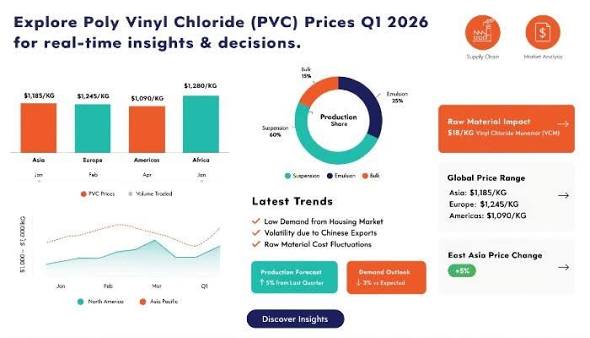
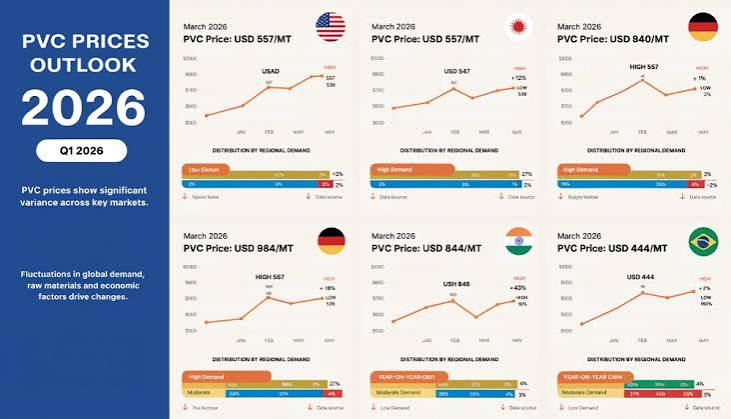
The global Polyvinyl Chloride (PVC) market has experienced a notable recovery in 2026, with prices rising by approximately 12% during the year due to temporary supply tightness, stronger-than-expected demand across Asia, and higher feedstock costs. While the first half of the year reflected improving market sentiment, most industry forecasts suggest that PVC prices are likely to remain soft to stable during the remainder of 2026.
The primary factor limiting further price increases is the continued availability of low-cost Chinese carbide-route PVC, which continues to add competitive supply to global markets. For manufacturers, distributors, and procurement professionals, balancing regional demand growth against abundant production capacity will remain central to sourcing and pricing decisions.
Why PVC Prices Are Rising
Several market factors have supported PVC prices in 2026:
Temporary supply tightness in key producing regions
Strong construction and infrastructure demand across Asia
Increased demand from pipe, cable, and packaging manufacturers
Higher logistics and transportation costs
Stable demand from water infrastructure and housing projects
Feedstock cost fluctuations affecting production economics
Despite these drivers, the market remains well supplied globally, preventing a sustained price rally.
Procurement teams sourcing PVC Resin, EDC, VCM, Caustic Soda, Calcium Carbide, HCl, and other petrochemical raw materials should monitor Chinese export activity, feedstock price movements, freight costs, and regional supply conditions while maintaining diversified sourcing strategies to reduce procurement risk.

Calcium Carbonate (Feed Grade)
Market Implications
Current market conditions are expected to result in:
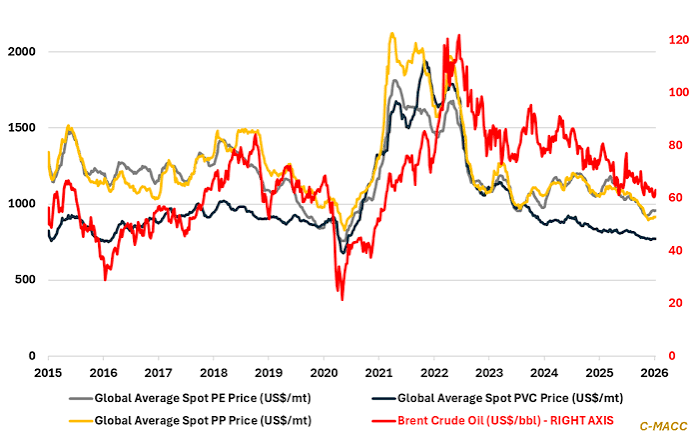
Stable-to-soft PVC pricing through the remainder of 2026
Continued influence of Chinese exports on global prices
Regional price differences driven by freight and local demand
Competitive procurement opportunities for international buyers
Moderate margins for PVC producers
Ongoing investment in downstream plastic manufacturing
Asian demand continues to support the market, while abundant production capacity limits the potential for significant long-term price increases.
Procurement Considerations
Procurement professionals should:
Monitor Chinese export volumes and pricing trends
Track feedstock costs, particularly ethylene and calcium carbide
Diversify sourcing across multiple regions
Review freight costs and shipping availability
Secure long-term contracts where pricing is favorable
Monitor construction sector demand, which significantly influences PVC consumption
A balanced procurement strategy can help businesses manage both pricing volatility and supply continuity.
Looking Ahead
The PVC market is expected to remain relatively balanced through the rest of 2026. While regional supply disruptions or stronger-than-expected infrastructure spending could temporarily support prices, abundant global production capacity—particularly from China—is expected to prevent sustained price spikes.
For procurement teams, close monitoring of regional pricing, export policies, and construction demand will remain essential for securing competitive supply agreements and managing procurement costs.
Key Takeaways
Global PVC prices have increased by approximately 12% in 2026.
Supply tightness and strong Asian demand supported prices in the first half of the year.
Low-cost Chinese carbide-route PVC is expected to cap further price increases.
The overall market outlook remains soft to stable for the remainder of 2026.
Procurement teams should monitor export trends, feedstock costs, and regional demand patterns.
Found this useful?