Ranking 2026's Biggest Pharma Venture Arm Co-Investments by Combined Round Size
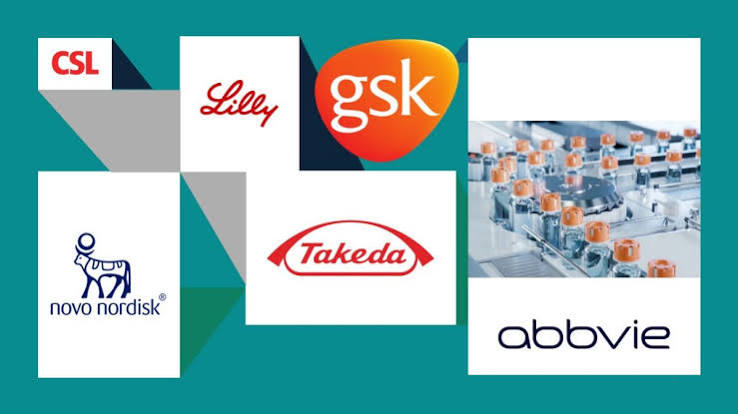
InduPro's $77 million financing, backed jointly by three major pharmaceutical venture arms, stands out among 2026's notable corporate-backed biotech rounds. The deal provides a useful benchmark for assessing how pharmaceutical companies are increasingly combining venture investments to support emerging drug-development platforms.
For biotech founders, investors and pharmaceutical companies, the size and structure of these co-investments offer insight into where strategic capital is flowing and how large pharma is positioning itself around promising technologies.
Why Pharma Venture Co-Investments Matter
Pharmaceutical companies increasingly use corporate venture arms to gain exposure to emerging technologies without immediately acquiring the underlying companies.
These investments can provide access to:
New drug platforms
Novel therapeutic targets
Early-stage pipelines
Scientific talent
Emerging technologies
Potential future licensing opportunities
For startups, participation from multiple pharmaceutical investors can provide both capital and strategic credibility.
InduPro's $77 Million Round
InduPro's $77 million financing provides a useful 2026 benchmark because the round includes backing from three major pharmaceutical venture arms.
A multi-investor structure of this scale indicates that interest is not limited to a single strategic investor.
Instead, several pharmaceutical organizations are willing to allocate capital toward the same emerging opportunity.
Co-Investment Creates a Different Funding Dynamic
Traditional venture rounds may involve several financial investors.
Pharma-backed rounds can be different because corporate investors may bring strategic objectives alongside financial returns.
A pharmaceutical venture arm may be interested in:
Pipeline access
Technology validation
Future partnerships
Licensing opportunities
Competitive intelligence
This makes the composition of a financing round important, not just its headline value.
Why $77 Million Is a Useful Benchmark
A $77 million round gives a company meaningful development capital while potentially reducing the need for another financing immediately.
For biotechnology companies, larger rounds can help fund:
Preclinical development
Clinical trials
Manufacturing
Regulatory activities
Platform expansion
The ability to finance several milestones from one round can be particularly valuable in capital-intensive drug development.
Three Pharma Investors Increase Strategic Reach
Having three major pharmaceutical venture arms involved can broaden the company's strategic network.
Each investor may provide different:
Scientific expertise
Commercial relationships
Development experience
Geographic access
Partnership opportunities
This can create value beyond the capital itself.
Corporate Venture Capital Is Becoming More Strategic
Pharma venture arms are increasingly important participants in the biotechnology financing ecosystem.
Rather than waiting until a technology reaches late-stage clinical development, pharmaceutical companies can invest earlier and monitor emerging platforms over time.
This approach allows them to build relationships before valuations potentially increase.
Co-Investments Can Reduce Individual Risk
Biotechnology investment carries significant scientific and clinical uncertainty.
A corporate venture investor participating alongside other pharmaceutical investors can share some of the financing burden.
Instead of one company providing the majority of the capital:
Multiple strategic investors → Shared exposure → Broader support
This can make larger financing rounds easier to structure.
The Signal for Biotech Founders
For biotech companies seeking capital, pharma-backed co-investment can be an important credibility signal.
A startup supported by multiple pharmaceutical investors may have greater visibility among:
Future investors
Potential licensing partners
Pharmaceutical business-development teams
Institutional investors
However, founders must also consider governance and strategic alignment when multiple corporate investors participate.
What Investors Should Compare
To rank large pharma co-investments meaningfully, investors should look beyond round size.
Important metrics include:
Combined Round Size
How much capital was raised?
Number of Pharma Investors
How many strategic investors participated?
Investor Quality
How significant are the participating pharmaceutical venture arms?
Stage
Is the company preclinical, clinical-stage or commercial?
Technology
What platform or therapeutic area attracted the capital?
Strategic Potential
Could the investment eventually lead to a partnership, licensing deal or acquisition?
Platform Technologies May Attract Larger Rounds
Companies developing platform technologies can be particularly attractive to strategic investors.
A successful platform can potentially generate multiple drug candidates rather than a single product.
This can increase the strategic value of early investment.
For pharma companies, the opportunity is therefore not necessarily limited to one asset.
Large Rounds Also Reflect Rising Development Costs
The size of biotech financing rounds should also be viewed against increasing costs.
Clinical development requires substantial spending on:
Trial recruitment
Manufacturing
Regulatory submissions
Clinical operations
Data analysis
Larger financing rounds can therefore reflect both stronger investor confidence and the increasing amount of capital required to reach meaningful milestones.
Implications for Pharmaceutical Companies
For pharma companies, co-investment can provide an efficient way to monitor emerging technologies.
Instead of acquiring every promising startup, venture arms can build portfolios of strategic investments.
Over time, these investments can create optionality around:
Licensing
Partnerships
Acquisitions
Technology access
This makes venture capital a strategic extension of pharmaceutical R&D.
Implications for Biotech Suppliers
The growth of heavily funded biotech companies can also create opportunities for specialty suppliers.
Well-funded startups may increase demand for:
Research chemicals
High-purity solvents
Laboratory reagents
Pharmaceutical intermediates
Manufacturing inputs
As financing translates into development activity, supplier demand can follow.
What Procurement Teams Should Watch
Procurement teams supporting pharmaceutical R&D should monitor financing announcements because funding can provide an early indication of future purchasing activity.
A large financing round can signal upcoming investment in:
Laboratory infrastructure
Contract research
Clinical manufacturing
Analytical testing
Specialty chemicals
Funding intelligence can therefore become a useful procurement signal.
2026 Co-Investment Trends
The broader 2026 financing environment suggests that strategic capital remains important for biotechnology companies developing complex technologies.
The most interesting rounds are not necessarily those with the largest total value.
They are often the rounds where:
Large capital + Multiple strategic investors + Strong technology
come together.
These structures can provide startups with both financial runway and strategic optionality.
Looking Ahead
InduPro's $77 million round offers a useful benchmark for evaluating the growing role of pharmaceutical venture arms in biotechnology financing.
The involvement of three major pharma investors demonstrates how corporate venture capital can move beyond passive financial participation toward a broader strategic model.
For biotech founders, the opportunity is access to capital and industry expertise.
For pharmaceutical companies, it is early access to potentially valuable technologies.
For investors, these rounds can reveal where major drug developers see emerging strategic value.
The larger trend is clear: pharmaceutical venture capital is becoming an increasingly important bridge between early-stage innovation and the industry's future drug-development pipeline.
Key Takeaways
InduPro's $77 million round provides a useful benchmark for large pharma-backed biotech financings in 2026.
Three major pharmaceutical venture arms participated in the financing.
Co-investment allows multiple strategic investors to share exposure to emerging technologies.
Pharma venture capital can provide startups with more than funding, including expertise and partnership opportunities.
Large financing rounds can provide biotech companies with greater development runway.
Platform technologies may attract strategic capital because they can generate multiple future products.
Corporate venture investment gives pharmaceutical companies early exposure to emerging pipelines.
Funding announcements can provide useful signals for suppliers and procurement teams.
Large co-investments may create future opportunities for licensing, partnerships or acquisitions.
The growing role of pharma venture arms highlights the increasing connection between corporate strategy and biotech financing.

Methanol
Found this useful?