Ranking 2026's Bio-Based Feedstock Innovations: Corn-Derived Bio-Acetone Joins the List
For a decade, bio-based chemicals have been stuck in the same loop: great lab yield, terrible scale-up economics, and a product that needs customers to change their process.
That loop just broke. On July 28, 2026, two giants solved it.
Lallemand Biofuels & Distilled Spirits (LBDS) and Braskem today announced an innovative bio-acetone production platform for the corn-ethanol industry that enables producers to generate a new coproduct alongside ethanol.
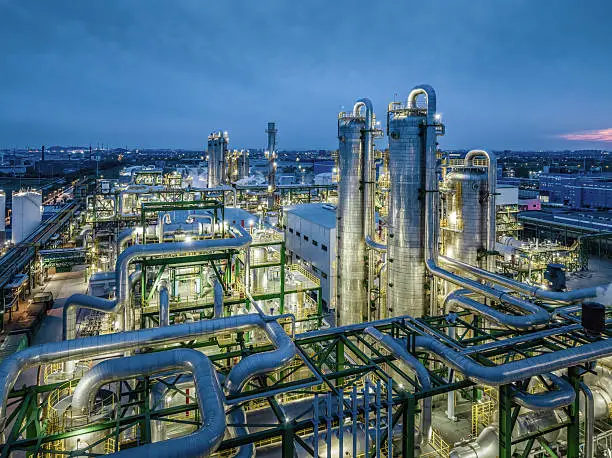
This is not another pilot. This is a retrofit for 200+ existing US ethanol plants.
Why This One Ranks So High
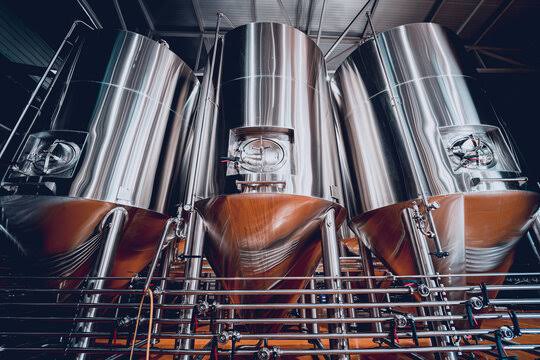
After five years of collaborative development and validation, the companies have engineered an innovative yeast strain to enable bio-acetone production during fermentation, without affecting performance. Braskem developed bolt-on technology to separate the resulting bio-acetone from ethanol.
That phrasing matters:
No Yield Penalty: LBDS' proprietary fermentation technology allows bio-acetone production during fermentation without affecting ethanol performance. For an ethanol plant operating on 2 cent margins, that's everything.
Bolt-On, Not Build New: Braskem's separation tech is bolt-on separation technology - a modular piece of equipment that can be added onto an existing plant. No greenfield $500M capex.
Guaranteed Offtake: Braskem will be responsible for all bio-acetone sales and market development, providing access to a guaranteed demand for all bio-acetone produced.
Drop-In Spec: Bio-acetone is a drop-in replacement for fossil-based acetone and can be used in cosmetics, paints and coatings, acrylics, adhesives, and personal care applications. It is 100% renewable, benzene-free, phenol-free and verifiable through a C14 test.
Acetone is a mature market with global demand of over 8 million tons per year, serving segments that are seeking new solutions from renewable sources. Today, 90% of that is made via the cumene phenol process - tied to benzene, high energy, and fossil propylene. This is the first corn-based route that is chemically identical but not phenol-dependent.
Ranking 2026's Top 5 Bio-Based Feedstock Innovations
#1. Corn-Derived Bio-Acetone (LBDS + Braskem) - The Retrofit Winner
Innovation: Yeast engineering + bolt-on separation
Feedstock: Corn ethanol fermentation (existing asset base)
Why #1: It doesn't ask the industry to build anything new. It monetizes 1-2% of the fermentation that was previously CO2/ethanol loss into a $1,400/ton product. For a 100M gal ethanol plant, that's $15-20M new revenue. Expect 10-15 plants to adopt by end-2027.
#2. Sugarcane Bio-Ethylene to Bio-PE (Braskem Model Expanding)
Braskem remains the industry front-runner, leveraging its world-scale sugarcane-based ethanol capacity to generate more than 300 kt of bio-ethylene annually. TotalEnergies has invested heavily in its hybrid model blending fossil and renewable ethanol for 200 kt/year. This remains the largest volume bio-based feedstock by far, projected to grow from USD 0.65 billion in 2026 to USD 1.11 billion by 2034. But it's not new - it's scaling.
#3. Corn Stover to FDCA / Bio-Aromatics

The market is advancing from first-generation products such as bio-ethanol toward higher-value intermediates including FDCA, bio-based monoethylene glycol, 1,3-propanediol, and biobased aromatics. New engineered microbes like Novosphingobium aromaticivorans are now showing 375% improvement in titers from corn stover alkaline deconstruction. This is the future, but still at pilot.
#4. Bio-Butanol for DAFCs and Fuel
Emergence of Bio-Butanol in Direct Alcohol Fuel Cells: research institutions in Japan and Germany have demonstrated prototype DAFCs that utilize bio-butanol as a direct feedstock, offering power densities comparable to hydrogen. Plus bio-butanol offers higher energy density and compatibility with existing fuel infrastructure vs ethanol. LanzaTech and Gevo commanding ∼55% of this niche.
#5. Biomass Syngas to Acetone via Acetogens (DOE route)
The DOE-backed route - production of acetone directly from biomass syngas via a novel energy conserving route in engineered acetogenic bacteria - offers a safer and more environmentally-friendly production method than the current phenol-dependent method. This is the long-term play for non-food biomass, but CAPEX is still 3x higher than the corn-yeast route.
The Bottom Line
What makes corn-derived bio-acetone different from the graveyard of bio-based chemicals is simple: it follows the money, not the mission.
It doesn't ask a cosmetics company to reformulate. It's a drop-in. It doesn't ask an ethanol producer to take ethanol yield risk. It doesn't affect performance. And it doesn't ask an investor to fund a new biorefinery.
It takes the biggest existing bio-based asset in the US - 15 billion gallons of corn ethanol capacity - and turns it into a dual-product bio-refinery overnight.
In a year when the Rhine is dry and oil routes are blocked, that's the kind of feedstock innovation that actually matters
Betaine Anhydrous
Found this useful?