Ranking 2026's Fatal US Chemical Plant Incidents by Casualty Count
Chemical plant safety remains a critical industry intelligence issue, particularly when a single incident can result in fatalities, dozens of injuries, production disruption and renewed regulatory scrutiny.
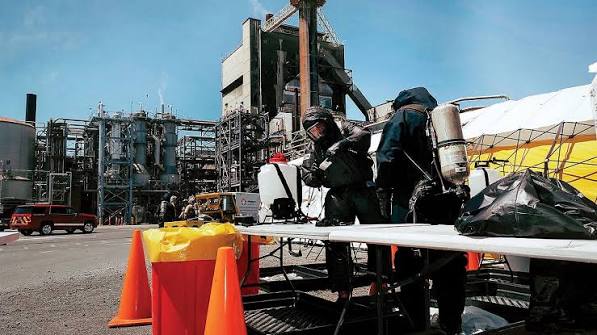
The April 22, 2026 incident at a chemical facility in Institute, West Virginia, stands out as a significant 2026 safety event. A chemical reaction during tank decommissioning resulted in two deaths and around 30 injuries, making it an important benchmark for comparing fatal chemical-plant incidents across the United States.
For chemical manufacturers, plant operators, insurers and procurement teams, casualty data provides more than a record of individual accidents. It can reveal recurring weaknesses in process safety, maintenance, emergency response and hazardous-material management.
The Institute Incident Provides a Major 2026 Benchmark
The Institute incident occurred during work to decommission a chemical storage tank.
Authorities reported that a reaction involving chemicals generated hazardous fumes, including hydrogen sulfide, exposing workers at the facility. Two people died and approximately 30 others were injured or treated following the incident.
The scale of the casualties makes the event particularly significant.
It combines:
Fatalities
Multiple hospitalizations
Hazardous-gas exposure
Emergency-response activity
Community shelter-in-place measures
A chemical decommissioning operation
That combination makes it an important case study for industrial safety analysis.
Why Casualty Count Matters
Ranking incidents by fatalities and injuries can help identify which accidents have had the greatest human impact.
However, casualty count alone does not explain why an accident occurred.
Two incidents with similar numbers of casualties can involve completely different causes, such as:
Equipment failure
Chemical reaction
Fire
Explosion
Toxic-gas release
Maintenance activity
Process-control failure
This makes the circumstances surrounding each incident just as important as the final numbers.
Decommissioning Creates Its Own Safety Risks
The Institute incident highlights a particularly important area: decommissioning and maintenance work.
Facilities being shut down or dismantled may contain:
Residual chemicals
Contaminated equipment
Pressurized systems
Unexpected chemical mixtures
Confined spaces
Hazardous vapors
These conditions can create risks that differ from those encountered during normal production.
For plant operators, decommissioning therefore requires the same level of process-safety discipline as active manufacturing.
Hydrogen Sulfide Exposure Is Especially Dangerous
Hydrogen sulfide is a highly hazardous gas capable of causing severe health effects at sufficient concentrations.
The Institute incident demonstrates how quickly a chemical reaction can create an emergency when hazardous gases are unexpectedly generated.
This reinforces the importance of:
Gas detection
Ventilation
Respiratory protection
Chemical compatibility assessments
Emergency response plans
Worker training
Emergency Responders Can Also Become Exposed
The consequences of a chemical incident can extend beyond plant employees.
Reports from Institute indicated that emergency responders were among those treated following exposure.
This creates an important safety consideration.
Emergency teams entering a chemical facility need accurate information about:
What chemical was released?
How much was released?
What reaction is occurring?
What protective equipment is required?
Incomplete information can increase the risk to first responders.
Community Impact Adds Another Dimension
Chemical incidents can also affect surrounding communities.
Following the Institute incident, precautionary shelter-in-place orders were issued for nearby schools and West Virginia State University before being lifted.
This means the impact of an industrial accident can extend beyond:
Workers → emergency responders → local residents → surrounding businesses.
For chemical companies, community emergency preparedness is therefore an increasingly important part of operational risk management.
Historical Incidents Show the Importance of Process Safety
The Institute region has experienced other serious chemical incidents.
A 2008 explosion at a Bayer CropScience facility in Institute killed two employees and injured eight, while the broader Kanawha Valley has experienced several significant chemical accidents over the years.
The recurrence of serious incidents in major chemical-manufacturing regions demonstrates why process safety must remain a continuous priority.
Fatalities Are Only One Safety Indicator
A company should not assess safety performance purely by counting deaths.
Other indicators can provide earlier warnings:
Near misses
Process deviations
Unplanned releases
Equipment failures
OSHA violations
Emergency shutdowns
Chemical exposure events
Maintenance incidents
A facility with zero fatalities can still have significant underlying process-safety weaknesses.
Near-Miss Data Can Be More Valuable
Near misses provide an opportunity to correct hazards before they result in injuries or fatalities.
Chemical manufacturers can use near-miss reporting to identify:
Recurring equipment problems
Unsafe procedures
Training gaps
Poor chemical segregation
Weak maintenance practices
Strong safety cultures treat near misses as valuable intelligence rather than simply minor incidents.
Process Safety Management Remains Critical
Chemical plants handle materials that can create catastrophic consequences when controls fail.
Process safety programs therefore need to address:
Hazard identification
Operating procedures
Mechanical integrity
Management of change
Emergency planning
Worker training
Contractor management
These controls become particularly important during non-routine operations such as maintenance, cleaning and decommissioning.
Contractors Can Create Additional Risk
Chemical plants frequently rely on contractors for:
Maintenance
Tank cleaning
Construction
Equipment removal
Decommissioning
These activities can introduce workers who may be less familiar with a facility's hazards.
Strong coordination between plant operators and contractors is therefore essential.
Safety Performance Can Affect Supply Chains
A major chemical accident can create consequences beyond worker safety.
An affected facility may experience:
Production shutdowns
Equipment damage
Regulatory investigations
Insurance claims
Customer supply disruptions
Force majeure declarations
Higher operating costs
For chemical buyers, this creates a direct procurement risk.
Procurement Teams Should Monitor Plant Safety
Supplier intelligence should not stop at price and capacity.
Procurement professionals can also monitor:
Major plant incidents
Safety records
Production shutdowns
Regulatory actions
Facility inspections
Insurance developments
Alternative production sites
A supplier with repeated operational incidents may represent greater continuity risk even when its pricing remains competitive.
Chemical Traders Face Similar Risks
Traders should pay particular attention to facilities producing chemicals with concentrated production bases.
If only a small number of plants supply a particular product, one serious incident can quickly affect:
Availability → Pricing → Lead times → Freight flows → Customer inventories.
Safety intelligence can therefore become a form of supply-chain intelligence.
What Investors Should Watch
Investors evaluating chemical companies should consider:
Incident Frequency
Are serious incidents becoming more common?
Severity
Are incidents resulting in fatalities or large numbers of injuries?
Shutdown Duration
How long does production remain offline?
Regulatory Response
Does an incident trigger major enforcement?
Capital Spending
Is management investing adequately in safety and equipment modernization?
Insurance Costs
Are recurring incidents increasing liability and insurance exposure?
The Broader Industry Lesson
The Institute incident demonstrates that chemical safety risks can emerge even during activities that are not part of normal production.
A tank being cleaned or decommissioned can contain unexpected chemical hazards.
This makes non-routine operations an important area for safety benchmarking.
Companies should therefore apply rigorous hazard analysis not only to production processes but also to:
Shutdowns
Startups
Maintenance
Cleaning
Waste handling
Decommissioning
Looking Ahead
The 2026 Institute incident provides a significant benchmark for evaluating fatal chemical-plant safety events in the United States.
Its combination of two fatalities and approximately 30 injuries makes it one of the year's most consequential chemical incidents by casualty count.
But the broader lesson is more important than the ranking itself.
Chemical safety depends on managing risk throughout the entire facility lifecycle—not only while production is running.
For manufacturers, this means stronger process-safety systems.
For procurement teams, it means incorporating supplier safety and operational resilience into sourcing decisions.
For investors, it means treating major incidents as potential indicators of deeper operational and financial risk.
And for the industry as a whole, every fatal incident provides another opportunity to identify weaknesses before they produce the next one.
Key Takeaways
The April 2026 Institute, West Virginia chemical incident resulted in two deaths and approximately 30 injuries.
The incident occurred during a tank-decommissioning operation involving a hazardous chemical reaction.
Hydrogen sulfide exposure was among the major hazards involved.
Emergency responders were also among those treated following the incident.
Nearby schools and West Virginia State University implemented precautionary shelter-in-place measures.
Decommissioning, maintenance and other non-routine operations require rigorous process-safety controls.
Casualty counts provide useful benchmarking data but should be combined with incident causes and operational context.
Procurement teams can use safety intelligence to evaluate supplier reliability and supply-chain risk.
Major chemical accidents can create production shutdowns, regulatory exposure and market disruptions.
Near-miss reporting and process-safety indicators can help identify risks before catastrophic incidents occur.

Activated Carbon (Powder) - China
Found this useful?