Ranking 2026's Most-Watched Economic Data Releases for Chemical Industry Intelligence
For chemical-industry analysts, not all economic data releases carry equal information value.
Some indicators describe the economy months after conditions have already changed. Others provide an early signal about orders, production, inventories, purchasing activity and customer confidence before those trends appear in corporate earnings.
The August 31 release of China's manufacturing PMI and the latest German Ifo business-climate data illustrate exactly why these indicators matter. China's official manufacturing PMI improved from 49.2 in July to 49.8 in August, while new orders moved back above 50 and production remained in expansion. Germany's chemical-industry business climate simultaneously jumped from -26.3 to -2.4, with current conditions turning positive for the first time since 2022.
Together, these releases provide a useful snapshot of two different parts of the global chemical-demand equation: China as a major manufacturing and chemical-consumption engine, and Germany as a critical European industrial and chemical-production hub.
Ranking the Most Important Economic Releases for Chemical Intelligence
Rank | Economic release | Region | Chemical intelligence value | What it tells analysts |
|---|---|---|---|---|
1 | China Manufacturing PMI | China | Very High | Industrial demand, production, orders and purchasing |
2 | Germany Chemical Ifo Business Climate | Germany | Very High | Chemical-sector orders, sentiment and near-term production expectations |
3 | U.S. ISM Manufacturing PMI | United States | Very High | Industrial demand, new orders, input prices and inventory cycle |
4 | Eurozone Manufacturing PMI | Eurozone | High | Regional manufacturing recovery and chemical customer demand |
5 | China Industrial Production | China | High | Actual industrial output and chemical-consuming activity |
6 | U.S. Nonfarm Payrolls / Employment Data | U.S. | High | Macro demand, labor costs and monetary-policy direction |
7 | Germany Industrial Production | Germany | High | Actual output across Europe's industrial base |
8 | China Producer Prices (PPI) | China | High | Chemical pricing pressure and deflation/inflation |
9 | Eurozone/German Inflation | Europe | Medium-High | Energy costs, margins and ECB policy risk |
10 | Global trade/export data | Global | Medium-High | Cross-border chemical demand and supply-chain direction |
The ranking is based on timeliness, direct connection to chemical-consuming industries and ability to influence pricing, volumes or inventory decisions.
1. China Manufacturing PMI: The Most Important Early Chemical-Demand Signal
China's official manufacturing PMI remains the most important monthly indicator for monitoring the global chemical demand cycle.
The August 2026 reading was 49.8, up 0.6 points from July. Although still below the 50 expansion threshold, the internal details were significantly more encouraging: production reached 50.4 and new orders jumped to 50.6, up 2.1 points from July.
This distinction is crucial.
A headline PMI below 50 could suggest continued weakness, but the combination of expanding production and new orders points toward a less negative near-term industrial environment.
For chemical producers, new orders are particularly important because they provide an early indication of whether downstream manufacturers are actually increasing purchasing requirements.
China's equipment-manufacturing PMI was 51.4 and high-tech manufacturing PMI was 52.9, both remaining in expansion. However, traditional and energy-intensive industries remained weaker.
Why Chemical Analysts Watch It
China is simultaneously:
a major chemical producer,
one of the world's largest chemical consumers,
a major exporter of manufactured goods,
and a major source of global chemical capacity.
Consequently, a sustained improvement in Chinese manufacturing activity can influence chemical volumes, feedstock demand, freight flows, polymer consumption and international pricing.
The August reading therefore deserves a high watch rating, but not yet a full recovery rating.
Intelligence score: 9.5/10
2. Germany's Chemical Ifo Business Climate: The Most Direct European Signal
For European chemical intelligence, Germany's chemical-specific Ifo survey may actually be more useful than the broader German economic indicator.
The chemical-industry business climate rose to -2.4 in August from -26.3 in July. The current-conditions balance jumped from -14.6 to +11.6, marking the first positive assessment of current conditions since July 2022.
This is an unusually large monthly improvement.
However, analysts should be careful about interpreting it as a normal cyclical recovery.
Ifo attributed much of the improvement to supply disruptions in Asia and the Middle East. Disruptions caused by the conflict and shipping problems temporarily reduced competing Asian chemical supplies, creating additional export opportunities for German producers.
That makes the August signal particularly interesting.
German chemical sentiment improved, but part of the improvement came from competitor disruption rather than a clean recovery in underlying European demand.
Why This Matters for Chemical Intelligence
The survey gives analysts information that broad GDP data cannot provide quickly enough:
current chemical business conditions,
expectations,
order momentum,
export opportunities,
production sentiment,
capacity utilization,
and employment intentions.
Germany's chemical production remains around 20% below 2021 levels, while capacity utilization is only about 73.2%, compared with a long-term average of 80.4%.
Therefore, the August Ifo jump should be treated as a turning-point signal to monitor, rather than proof that Germany's structural chemical problems have disappeared.
Intelligence score: 9.3/10
3. U.S. ISM Manufacturing PMI: The Global Demand and Pricing Benchmark
The U.S. ISM manufacturing PMI is another critical release because the United States remains one of the world's largest industrial economies and chemical markets.
August's PMI fell to 54.6 from 55.6 in July, but remained firmly above the 50 expansion threshold. New orders also continued to expand, while the prices-paid index remained elevated at 71.1.
For chemical companies, this creates a mixed signal.
The demand side remains positive.
The cost side is becoming more difficult.
Manufacturers are reporting elevated input prices, supply-chain problems and geopolitical uncertainty, including pressures affecting metals, electronics and transportation. Chemicals were among the industries facing profitability concerns from higher costs.
This makes the ISM particularly valuable because it can simultaneously indicate:
volume growth + purchasing activity + inventory conditions + inflation pressure.
Intelligence score: 9.0/10
4. Eurozone Manufacturing PMI: Europe's Recovery Test
Eurozone manufacturing PMI is increasingly important in 2026 because European manufacturing has started showing stronger momentum.
August's eurozone manufacturing PMI reached 52.7, its strongest level in more than four years. Germany and France were important contributors, although performance remained uneven across the region.
For chemicals, this matters because European chemical demand depends heavily on downstream manufacturing.
Automotive production, machinery, construction materials, electrical equipment and industrial goods all consume substantial quantities of chemicals and polymers.
The key question is therefore no longer simply whether European PMI is above 50.
It is whether the improvement translates into actual chemical orders and capacity utilization.
Intelligence score: 8.6/10
5. China's Industrial Production: Confirming the PMI Signal
PMI provides an early survey-based signal.
Industrial production provides confirmation.
This makes China's industrial-production release an important second-stage indicator for chemical analysts.
If PMI improves but industrial production remains weak, the market may be seeing sentiment stabilization without a meaningful production recovery.
If both improve simultaneously, the signal becomes substantially stronger.
The August PMI already showed production at 50.4 and new orders at 50.6, suggesting that the next industrial-output readings will be particularly important for determining whether the improvement is translating into actual economic activity.
Intelligence score: 8.4/10
6. U.S. Employment Data: The Demand and Interest-Rate Connection
Employment data may appear less directly connected to chemicals than PMI, but it has an important second-order effect.
Strong employment supports consumer spending, construction and industrial demand.
Weak employment can produce the opposite effect.
At the same time, strong employment can keep inflationary pressure elevated and influence Federal Reserve policy. That affects borrowing costs, investment decisions and the valuation of cyclical chemical companies.
This is particularly relevant in 2026 because inflation expectations remain sensitive to energy prices.
The September U.S. policy outlook is already being shaped by manufacturing prices and geopolitical inflation risks.
Intelligence score: 8.0/10
7. German Industrial Production: Turning Sentiment Into Output
Germany's industrial-production data is important because sentiment can sometimes improve before actual production does.
That distinction is especially relevant in the current chemical cycle.
Germany's August chemical sentiment improved dramatically, but chemical production remained structurally weak and capacity utilization stayed below its long-term average.
Therefore, industrial production is the confirmation mechanism.
If German industrial output begins accelerating alongside chemical-sector confidence, the August Ifo improvement becomes more credible.
If output remains stagnant, the sentiment improvement may prove temporary.
Intelligence score: 7.8/10

8. China's PPI: The Chemical Pricing Signal
China's Producer Price Index deserves special attention from chemical companies because it helps reveal whether manufacturers are gaining or losing pricing power.
The August PMI showed the purchasing-price index for major raw materials rising to 56.6, up 3.4 points, while the ex-factory price index increased to 50.4. The official data linked part of the increase to higher crude-oil and non-ferrous-metal prices.
That combination is important.
If input prices rise faster than selling prices, chemical margins can deteriorate.
If both rise together, producers may retain pricing power.
If selling prices rise faster, the chemical sector can experience margin expansion.
PPI therefore complements PMI by answering a different question:
Is improving demand actually improving chemical pricing power?
Intelligence score: 7.7/10
9. European Inflation: The Energy-to-Chemicals Transmission Mechanism
Inflation data matters because energy prices remain one of Europe's biggest chemical-industry variables.
The August European market demonstrated this clearly: higher oil prices pushed bond yields higher and increased expectations for tighter monetary policy, even as manufacturing indicators improved.
For chemical companies, this creates a three-way pressure:
higher feedstock costs → higher selling prices → higher inflation → higher interest rates.
If the chain becomes persistent, industrial investment can weaken even when manufacturing PMI initially remains positive.
This is why chemical analysts should never interpret a stronger PMI without simultaneously checking energy and inflation indicators.
Intelligence score: 7.5/10
10. Global Trade and Export Data: The Reality Check
Global trade data ranks tenth not because it is unimportant, but because it is generally less timely than PMI and sentiment surveys.
For chemical intelligence, however, trade flows can reveal whether apparent demand improvements are genuinely broad-based.
China's recent manufacturing improvement has been supported partly by export-oriented and high-tech demand rather than a full recovery in domestic consumption. Reuters noted that weak domestic spending, property-market problems and structural imbalances remain important constraints.
This creates an important distinction:
manufacturing growth does not automatically equal domestic chemical-demand recovery.
Trade data helps analysts identify whether the chemical cycle is being driven by domestic consumption, exports, inventory rebuilding or supply substitution.
Intelligence score: 7.2/10
China's PMI and Germany's Ifo Tell Two Different Stories
The most useful insight from the latest releases is that China and Germany are not sending identical signals.
China's August PMI indicates stabilization without full expansion.
Germany's chemical Ifo indicates a dramatic improvement in sentiment and current conditions.
Yet the reasons are different.
Indicator | Latest signal | Main driver | Chemical interpretation |
China manufacturing PMI | 49.8 | Improved production/orders | Stabilization, not full recovery |
China new orders | 50.6 | Stronger demand | Positive early signal |
China production | 50.4 | Higher factory activity | Positive |
China raw-material prices | 56.6 | Higher commodity costs | Margin risk |
German chemical Ifo | -2.4 | Strong improvement | Major sentiment rebound |
German chemical current conditions | +11.6 | Export/supply disruption benefit | Positive but potentially temporary |
Eurozone manufacturing PMI | 52.7 | Broad industrial improvement | Positive regional demand |
U.S. ISM manufacturing PMI | 54.6 | Continued expansion | Positive demand, higher costs |
The result is a global chemical picture that is better than the headline China PMI alone suggests, but not yet strong enough to call a synchronized chemical recovery.
The Most Important Data Combination Is Not One Indicator
Chemical intelligence becomes more reliable when analysts combine indicators.
A useful monthly dashboard should therefore track five layers:
Layer 1: Demand
China PMI new orders
U.S. ISM new orders
Eurozone manufacturing PMI
German chemical Ifo
Layer 2: Production
China industrial production
Germany industrial production
U.S. industrial production
Layer 3: Pricing
China PPI
Chemical product prices
Brent crude
European natural gas
Layer 4: Inventory
Manufacturer inventories
Chemical distributor inventories
Customer stock levels
PMI inventory sub-indices
Layer 5: Financial Conditions
Interest rates
Bond yields
Inflation
Currency movements
The most reliable chemical-demand signal appears when several layers move in the same direction.
What Chemical Companies Should Watch Next
The August releases create a clear monitoring framework for September and the fourth quarter.
China
The key question is whether the 49.8 PMI can cross back above 50.
More importantly, analysts should watch whether new orders remain above 50 and whether the improvement spreads from high-tech and export-oriented industries into traditional manufacturing.
Germany
The critical test is whether the extraordinary improvement in chemical sentiment survives normalization of Asian supply chains.
If German chemical orders remain strong after disrupted competitors return to the market, the August Ifo signal becomes much more convincing.
United States
The key question is whether the U.S. manufacturing PMI can remain above 50 while prices-paid pressure remains elevated.
A combination of strong demand and rising costs would create a very different environment from a synchronized global manufacturing slowdown.
Europe
The eurozone's 52.7 manufacturing PMI is encouraging, but the chemical industry still needs to convert improved manufacturing activity into higher utilization and sustainable order growth.
Ranking the Data Releases by Decision Value
For chemical companies making purchasing, production and inventory decisions, the ranking can be simplified:
Tier 1 — Immediate demand indicators
China Manufacturing PMI
Germany Chemical Ifo
U.S. ISM Manufacturing PMI
Tier 2 — Confirmation indicators
Eurozone Manufacturing PMI
China Industrial Production
German Industrial Production
Tier 3 — Margin and macro indicators
China PPI
European inflation
U.S. employment data
Tier 4 — Structural confirmation
Global trade/export data
This hierarchy is more useful than simply following whichever economic release receives the most media coverage.
The Bigger Intelligence Signal: The Chemical Cycle Is Becoming More Divergent
The latest data suggests that 2026 is not producing a simple global boom-or-bust chemical cycle.
Instead, different regions are being driven by different forces.
China is showing an improvement in manufacturing momentum but remains below the 50 PMI threshold.
Germany's chemical industry is experiencing an unusually strong sentiment rebound, but part of that rebound is linked to temporary supply disruptions elsewhere.
The United States remains in manufacturing expansion, but input-price inflation is becoming a more important constraint.
Europe overall is improving, with eurozone manufacturing reaching its strongest level in more than four years.
For chemical companies, this means regional data matters more than a single global growth assumption.
A producer selling into Chinese electronics, German automotive manufacturing and U.S. industrial markets could simultaneously experience weak, improving and strong demand conditions.
The Intelligence Takeaway
China's August 31 PMI and Germany's latest Ifo chemical reading deserve to rank among 2026's most important economic data points for chemical-industry intelligence, but they tell different stories.
China's 49.8 PMI shows that manufacturing contraction is easing, with production at 50.4 and new orders at 50.6. That is an encouraging early signal, but it remains below the expansion threshold.
Germany offers a more dramatic signal: chemical-industry sentiment improved from -26.3 to -2.4, while current conditions jumped into positive territory. But the improvement is partly connected to supply disruptions benefiting German exporters, meaning analysts must determine whether the gain survives normalization.
The most important lesson for chemical intelligence is therefore:
Do not follow one economic indicator. Follow the sequence from orders → production → pricing → inventories → margins.
When all five begin moving together, the chemical cycle is turning.
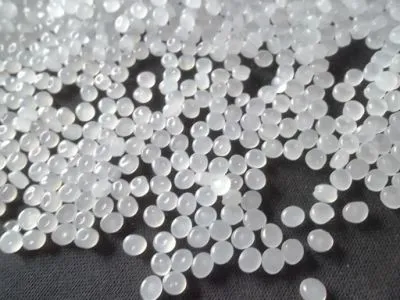
Low Density Polyethylene (LDPE)
Found this useful?