Ranking AdvanSix's Plant Nutrients Weakness Against Broader 2026 Fertilizer Sector Trends
AdvanSix's Plant Nutrients business faced a significant volume setback in Q2 2026, with sales falling 16% year over year to $131.4 million. The weakness was primarily linked to softer ammonium sulfate demand as challenging farmer economics reduced in-season fertilizer purchases.
For fertilizer producers, traders, agricultural-input suppliers and procurement teams, the result provides a useful benchmark for assessing whether AdvanSix's weakness reflects company-specific conditions or a broader 2026 slowdown in fertilizer demand.
Plant Nutrients Became AdvanSix's Biggest Drag
Plant Nutrients was one of the clearest areas of weakness in AdvanSix's Q2 results.
Sales declined from $156.8 million to $131.4 million, representing a 16% year-over-year decrease. The company attributed the decline primarily to lower sales volumes.
The weaker performance also contributed significantly to the company's adjusted EBITDA decline.
Ammonium Sulfate Demand Softened
The most important factor was weaker ammonium sulfate demand during the second quarter.
AdvanSix said demand softened after strong early-season purchases, as farmers prioritized nitrogen applications during the peak planting period. Later in the season, growers increasingly relied on fertilizer already purchased and held within the distribution channel.
This created a meaningful gap between early-season purchasing and actual in-season demand.
Farmer Economics Are Driving Fertilizer Consumption
The weakness cannot be separated from agricultural economics.
Higher grower input costs combined with relatively weak crop and grain prices reduced farmer profitability and encouraged more cautious fertilizer purchasing.
AdvanSix specifically identified challenging farmer economics as a key reason for reduced fertilizer consumption during the quarter.
For fertilizer producers, this highlights how quickly changes in farm profitability can translate into downstream demand pressure.
The Volume Decline Was More Important Than the Revenue Figure
AdvanSix's overall sales actually increased 3% to $421.3 million in Q2.
However, this was achieved despite a 15% decline in total sales volume, because pricing increased 18%.
The contrast is important.
It shows that reported revenue can remain relatively resilient even while underlying fertilizer volumes weaken.
Pricing Partially Offset the Volume Pressure
Plant Nutrients benefited from higher nitrogen pricing, particularly as sulfur input costs increased.
AdvanSix reported a 5% improvement in market-based pricing, with Plant Nutrients contributing to the increase.
However, higher pricing could not fully compensate for lower volumes.
This creates an important distinction between pricing strength and underlying market demand.
Sulfur Costs Are Adding Another Layer of Pressure
Sulfur has become a major cost variable for the fertilizer industry.
AdvanSix reported that sulfur prices reached record levels, with the Tampa sulfur marker reaching $705 per long ton in Q3, compared with $655 per long ton in Q2.
The company estimates that every $100-per-ton change in sulfur pricing has an approximately $35 million annual impact on its costs.
This makes sulfur prices an important indicator for fertilizer producers and buyers alike.
AdvanSix Still Had a Strong Fertilizer Year Overall
The quarterly weakness should not be interpreted as a collapse in AdvanSix's entire fertilizer business.
Management said the company finished the fertilizer year with near-record domestic granular ammonium sulfate volume performance, despite weaker in-season sales.
This suggests the Q2 weakness was partly related to timing and channel inventory, rather than simply a structural loss of market demand.
Inventory Timing Matters
The fertilizer market can experience significant differences between when products are purchased and when they are actually applied.
Strong early-season purchases can build inventory throughout the distribution channel.
Later purchases may then decline as farmers consume existing stocks.
For suppliers, this means quarterly sales figures need to be evaluated alongside channel inventories and planting-season timing.
How This Compares With the Broader Fertilizer Sector
AdvanSix's results provide an interesting benchmark against larger fertilizer producers such as Mosaic and CF Industries.
The broader sector is also navigating:
Agricultural commodity prices
Farmer profitability
Nitrogen demand
Sulfur costs
Global fertilizer trade
Regional supply availability
Inventory cycles
The key question for industry analysts is whether the weakness seen in AdvanSix's ammonium sulfate business represents a broader demand pattern or a product-specific effect.
Nitrogen Demand Remains More Resilient
One important signal from AdvanSix is that growers prioritized nitrogen applications during the peak of the season.
The company specifically noted that ammonia was prioritized over other nutrients, including ammonium sulfate.
This suggests fertilizer demand is not moving uniformly across product categories.
Farmers may continue prioritizing nutrients perceived as most immediately important to crop yields while reducing or delaying purchases of secondary nutrients when economics become difficult.
AdvanSix Is Expanding Its Ammonia Optionality
AdvanSix expects its full-year 2026 ammonia sales volume to increase approximately 30% from 2025, supported by its integrated production platform and record first-half shipments.
This provides the company with another potential route to offset weakness in ammonium sulfate.
The ability to shift product allocation based on market economics could become increasingly valuable during volatile fertilizer cycles.
Procurement Teams Should Watch Sulfur and Nitrogen Together
For fertilizer buyers, monitoring a single commodity is no longer sufficient.
Procurement teams should track:
Sulfur prices
Ammonia prices
Nitrogen demand
Ammonium sulfate availability
Farmer purchasing patterns
Regional inventory
Import competition
Crop and grain prices
These indicators can help buyers distinguish temporary seasonal weakness from a broader demand deterioration.
The Supply Outlook Could Change in 2027
AdvanSix expects sulfur prices to potentially decline entering 2027, while management also anticipates a potentially tighter domestic ammonium sulfate supply environment.
If those conditions develop, fertilizer economics could improve even without a dramatic recovery in agricultural demand.
Lower sulfur costs would reduce production pressure, while tighter ammonium sulfate supply could provide greater pricing support.
Looking Ahead
AdvanSix's Plant Nutrients weakness provides a useful 2026 fertilizer-sector intelligence benchmark.
The 16% decline in Plant Nutrients sales and softer ammonium sulfate demand reflect challenging farmer economics and weaker in-season purchasing.
However, the company's near-record domestic granular ammonium sulfate volume for the overall fertilizer year suggests the quarterly decline should be interpreted carefully.
For fertilizer producers, the key variables will be farmer profitability, nitrogen demand, sulfur costs and channel inventories.
For procurement teams, the most important question is whether weaker ammonium sulfate purchasing remains a temporary seasonal adjustment or develops into a broader demand trend.
The answer will become clearer as 2026 progresses toward the next planting cycle, particularly if sulfur prices ease and domestic ammonium sulfate availability tightens.
Key Takeaways
AdvanSix Plant Nutrients sales fell 16% year over year to $131.4 million.
Ammonium sulfate demand softened significantly during Q2.
Challenging farmer economics reduced in-season fertilizer purchases.
AdvanSix's total sales still increased 3% because pricing offset much of the volume decline.
Nitrogen products were prioritized during the peak planting period.
Sulfur prices reached record levels and remain a major fertilizer cost factor.
AdvanSix estimates a $100/ton sulfur-price change creates roughly $35 million of annual cost impact.
Despite Q2 weakness, AdvanSix reported near-record domestic granular ammonium sulfate volume for the full fertilizer year.
Full-year ammonia sales volume is expected to increase approximately 30%.
Fertilizer buyers should closely monitor farmer economics, sulfur prices, nitrogen demand and channel inventories.
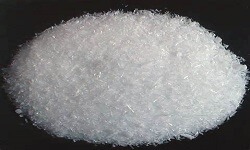
Urea (Granular) - Egypt
Found this useful?