Ranking Air Liquide's 2026 US Capital Commitments: Arizona Joins a Growing List
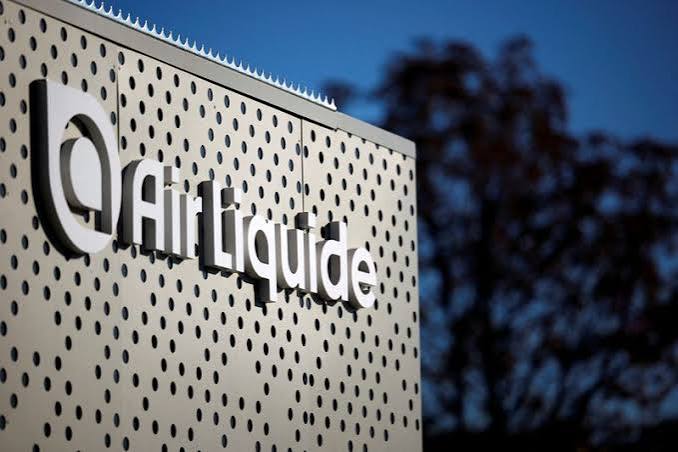
Air Liquide's $160 million investment in Arizona adds to a growing series of capital commitments the company has made toward U.S. industrial gas infrastructure supporting the semiconductor manufacturing ecosystem.
Taken together, these investments provide useful industry intelligence on the scale and direction of industrial-gas capital flowing into the United States in 2026. They also provide a benchmark for comparing Air Liquide's investment pace with major competitors such as Linde and Air Products as semiconductor manufacturers continue expanding domestic production.

Why Air Liquide's Investment Matters
Semiconductor fabrication facilities require reliable supplies of high-purity industrial and specialty gases. As the United States expands domestic chip manufacturing, gas suppliers are investing alongside semiconductor producers to build localized production and distribution infrastructure.
Air Liquide's Arizona commitment highlights:
Continued investment in U.S. semiconductor infrastructure
Expansion of localized industrial-gas capacity
Long-term confidence in domestic chip manufacturing
Greater proximity to semiconductor customers
Increasing importance of high-purity gas supply chains
Growing competition among global industrial-gas suppliers
The cumulative value of these investments is an important indicator of the industry's confidence in U.S. semiconductor growth.
emiconductor fabrication depends on reliable supplies of high-purity gases including Nitrogen, Oxygen, Argon, Hydrogen, Helium, and Hydrogen Chloride (HCl). Localized gas infrastructure can help semiconductor manufacturers maintain continuous production while reducing exposure to long-distance logistics disruptions.

Hydrogen Peroxide (35%) - Thailand
Ranking the Investment Trend
Rather than evaluating the Arizona project in isolation, industry analysts can track Air Liquide's individual U.S. capital commitments throughout 2026.
This approach provides insight into:
1. Investment Scale
The value of individual projects helps measure the capital intensity of semiconductor-related gas infrastructure.
2. Geographic Expansion
The location of new facilities indicates where semiconductor manufacturing clusters are developing.
3. Customer Proximity
Local production and distribution can improve reliability for high-volume semiconductor customers.
4. Competitive Positioning
Comparing Air Liquide's investments with commitments from Linde and Air Products can help benchmark competitive strategies in the U.S. industrial-gas market.
Market Implications
The expansion of semiconductor-related industrial-gas infrastructure could have wider effects across the U.S. chemical and manufacturing supply chain.
Potential market impacts include:
Increased demand for high-purity industrial gases
Expansion of local gas production infrastructure
Greater investment around U.S. semiconductor clusters
Stronger competition among industrial-gas suppliers
Increased demand for specialized transportation and storage
Growth in supporting chemical and manufacturing services
As semiconductor fabs become operational, demand for reliable, high-specification gas supply is expected to remain strategically important.
Competitive Intelligence
Air Liquide's capital commitments can be compared with investment activity from Linde and Air Products to assess relative positioning in the U.S. semiconductor market.
Useful benchmarks include:
Total 2026 capital commitments
Number of semiconductor-related projects
Geographic coverage
Production capacity
Customer relationships
Investment per facility
Expansion into emerging semiconductor clusters
Tracking these indicators can reveal which industrial-gas suppliers are taking the most aggressive position in U.S. chip manufacturing.
Procurement Considerations
Semiconductor manufacturers and industrial procurement teams should monitor investment announcements because new gas infrastructure can influence regional supply availability and sourcing options.
Recommended strategies include:
Evaluate local industrial-gas production capacity
Maintain multiple qualified gas suppliers
Monitor new semiconductor cluster investments
Review long-term supply agreements
Assess transportation and storage capabilities
Track high-purity gas availability by region
For critical semiconductor inputs, proximity and supply reliability can be just as important as unit pricing.
Looking Ahead
Air Liquide's Arizona investment provides another data point in the broader expansion of industrial-gas infrastructure supporting U.S. semiconductor manufacturing. Tracking these investments collectively can provide a clearer picture of where the industry expects future chip-production growth to occur.
For market-intelligence teams, comparing Air Liquide's 2026 investment pace with Linde and Air Products can help identify competitive shifts, emerging production hubs, and future procurement opportunities across the semiconductor supply chain.
Key Takeaways
Air Liquide's Arizona investment is valued at $160 million.
The project adds to the company's broader 2026 U.S. capital commitments.
Semiconductor expansion is driving investment in localized industrial-gas infrastructure.
Air Liquide's activity can be benchmarked against Linde and Air Products.
Procurement teams should monitor regional gas capacity, infrastructure, and supplier diversification.
Found this useful?