Ranking Celanese's Q2 2026 EPS as Its Best in Nearly Three Years
Celanese delivered a notable earnings recovery in the second quarter of 2026, with adjusted earnings per share reaching $2.45, the company's highest quarterly adjusted EPS in nearly three years. CEO Scott Richardson described the result as a reflection of stronger commercial execution, flexible manufacturing and supply-chain capabilities, and progress across the company's growth initiatives.
For chemical investors, suppliers and market-intelligence teams, the result provides an important benchmark for assessing whether Celanese's recent improvement represents a temporary earnings rebound or a broader recovery in its specialty-materials and acetyl businesses.

A Clear Earnings Recovery Signal
Celanese's $2.45 adjusted EPS represents a significant improvement from the $1.43 reported in the second quarter of 2025, according to earnings data.
The company also reported approximately $2.75 billion in quarterly sales, with revenue increasing both sequentially and year over year.
The improvement was supported by:
Pricing actions
Volume growth
Favorable product mix
Commercial execution
Manufacturing flexibility
Supply-chain optimization
This combination makes the quarter more significant than an earnings increase driven by a single isolated factor.
The Highest EPS in Nearly Three Years
The most notable benchmark is the duration of the recovery.
Richardson specifically described Q2's $2.45 adjusted EPS as Celanese's highest in nearly three years.
That makes the quarter an important reference point for evaluating the company's turnaround following a difficult period for chemical demand, pricing and portfolio economics.
For investors, the question now shifts from whether earnings have recovered to whether Celanese can sustain a higher earnings base.
Pricing Played a Major Role
Pricing was an important contributor to the quarter.
Celanese reported a 14% sequential increase in price, alongside a 4% increase in volume.
The Acetyl Chain was particularly important, with pricing and volume gains contributing to a substantial sequential increase in sales.
This demonstrates the importance of commercial execution in an environment where underlying chemical demand remains uneven.
The Acetyl Chain Strengthened the Recovery
The Acetyl Chain generated approximately $1.33 billion in second-quarter sales, up 28% sequentially.
Its adjusted EBIT reached $321 million, supported by pricing opportunities, higher volumes and the company's integrated global production network.
For Celanese, the performance illustrates how supply reliability and geographic integration can become competitive advantages when market conditions change quickly.
Engineered Materials Also Improved
The Engineered Materials segment generated approximately $1.45 billion in sales, up 9% sequentially.
Adjusted EBIT reached $234 million, with performance supported by pricing, mix and growth in strategic platforms including medical and electronics applications.
These higher-value applications are particularly important because they can provide greater differentiation than traditional commodity chemical markets.
Cost Reduction Remains Part of the Strategy
Celanese's earnings improvement is also connected to portfolio and footprint restructuring.
The company completed the closure of its Ulsan, South Korea, Engineered Materials compounding unit and completed its nylon 6,6 manufacturing network optimization ahead of schedule.
Together with other actions, these initiatives are expected to deliver more than $50 million in annualized fixed-cost savings.
This means the earnings recovery is not dependent solely on stronger market conditions.
Deleveraging Remains a Major Priority
Despite the stronger quarter, Celanese continues to face significant balance-sheet considerations.
Management has emphasized cash generation and deleveraging as strategic priorities, while maintaining its 2026 adjusted EPS outlook at approximately $6.00 and free-cash-flow guidance of $700 million to $800 million.
The ability to convert improved earnings into cash will therefore be critical.
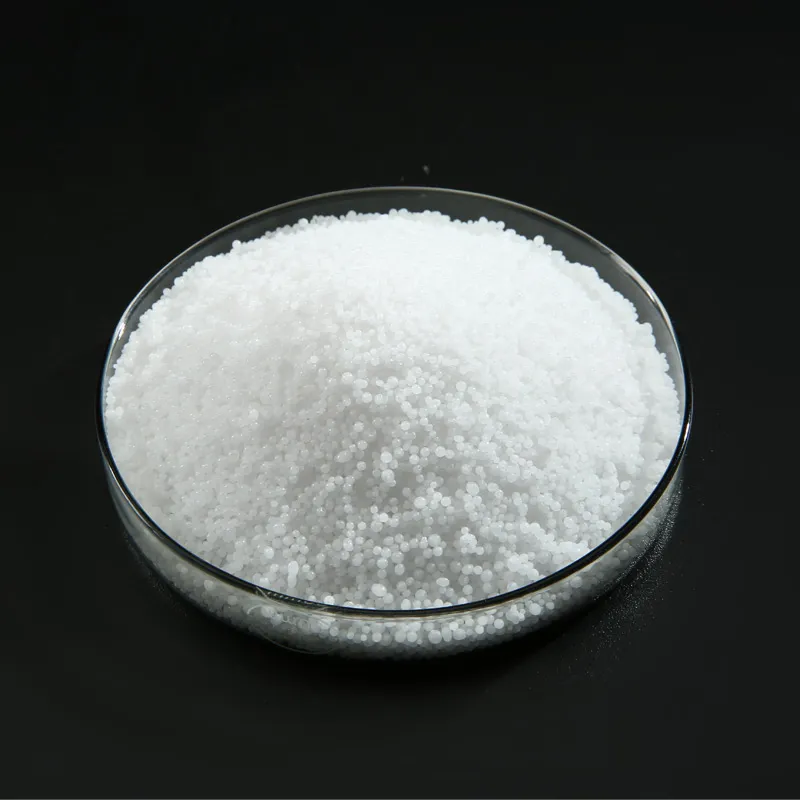
Caustic Soda Pearls - China
The Market Still Sees Risks
The earnings improvement does not eliminate Celanese's challenges.
The company continues to operate in an environment characterized by:
Uneven industrial demand
High leverage
Portfolio restructuring
Capacity optimization
Regional supply disruptions
Volatile chemical pricing
Market reaction to the results also showed that investors remain focused on leverage and cash generation rather than earnings growth alone.
Why the Result Matters for the Chemical Industry
Celanese's quarter provides a useful example of how chemical companies can improve earnings without relying entirely on a broad demand recovery.
The company combined:
Pricing + volume + portfolio optimization + manufacturing flexibility + cost reduction
to strengthen profitability.
This model could become increasingly relevant for chemical producers operating through a prolonged period of uneven demand.
What Investors Should Watch Next
The next important indicators include:
Whether pricing gains remain sustainable
Acetyl Chain margins
Engineered Materials demand
Operating cash flow
Free cash flow
Debt reduction
Growth-platform contribution
Additional footprint optimization
The third quarter will be particularly useful for determining how much of Q2's earnings strength can carry forward.
What Procurement Teams Should Watch
For customers and procurement teams, Celanese's improved performance can also provide market signals.
Areas to monitor include:
Pricing behavior
Product availability
Production-network changes
Plant closures
Contract negotiations
Regional supply reliability
A stronger financial position could support supply reliability, while continued restructuring may alter sourcing patterns for certain materials.
Looking Ahead
Celanese's Q2 2026 performance represents more than a strong quarterly number.
The $2.45 adjusted EPS, described by management as the company's highest in nearly three years, provides a measurable benchmark for its ongoing earnings recovery.
The quarter also demonstrates how commercial execution, pricing, manufacturing flexibility and cost restructuring can combine to improve results even when broader chemical demand remains challenging.
The key question for the remainder of 2026 is therefore not simply whether Celanese can produce another strong quarter.
It is whether the company can turn this three-year earnings high into a sustainable new earnings baseline while reducing leverage and strengthening its long-term portfolio.
Key Takeaways
Celanese reported $2.45 adjusted EPS in Q2 2026, its highest quarterly level in nearly three years.
Earnings benefited from pricing, volume, mix and stronger commercial execution.
The Acetyl Chain delivered particularly strong sequential improvement.
Engineered Materials also benefited from pricing and growth in medical and electronics applications.
Portfolio restructuring and manufacturing optimization are expected to generate more than $50 million in annualized fixed-cost savings.
Celanese maintained its 2026 adjusted EPS outlook at approximately $6.00.
Free cash flow guidance remains at $700 million to $800 million.
Deleveraging remains an important priority despite the improved earnings profile.
The next major benchmark is whether Q2's earnings strength can be sustained through the remainder of 2026.
Found this useful?