Ranking Dopant-Free COF Synthesis Against Conventional Semiconducting Framework Methods
A newly demonstrated dopant-free synthesis approach for semiconducting covalent organic frameworks (COFs) offers an important alternative to conventional strategies that rely on chemical doping to introduce or enhance electronic conductivity.
The development is particularly relevant because COFs combine molecularly programmable structures with high surface areas, ordered pores, and tunable electronic properties. These characteristics make them attractive for applications spanning energy storage, sensing, catalysis, optoelectronics, and electronic devices.
The central question for materials developers is whether dopant-free synthesis can deliver sufficiently strong and controllable electronic performance while simplifying material composition and improving structural stability.

Why Dopant-Free COFs Matter
Many semiconducting organic frameworks require some form of electronic-property engineering before they become practically useful.
Chemical doping can introduce additional charge carriers, but it can also create complications involving:
Dopant distribution
Charge-transfer efficiency
Material purity
Long-term stability
Reproducibility
Processing complexity
Interface compatibility
A dopant-free approach attempts to build the desired electronic behavior directly into the framework rather than relying on a separate dopant component.
That could provide a simpler materials platform if performance can be maintained.
How Conventional Doped Frameworks Work
Traditional approaches often modify conductivity through p-type or n-type doping.
The basic strategy is:
Framework synthesis → dopant introduction → charge transfer → enhanced electronic behavior
Dopants can alter:
Carrier concentration
Fermi-level position
Charge density
Electrical conductivity
Optical properties
This approach has been widely used across organic semiconductors and other electronic materials.
However, adding a second chemical component can introduce additional variables into materials development.
The Dopant-Free Alternative
The emerging approach instead seeks to produce semiconducting behavior through the intrinsic electronic structure of the COF.
The simplified pathway becomes:
Molecular design → framework synthesis → intrinsic semiconducting behavior
This could offer several potential advantages:
Fewer chemical components
Improved compositional uniformity
Simpler synthesis
Reduced post-synthetic processing
Potentially better reproducibility
Easier characterization
The significance therefore lies not simply in eliminating dopants, but in moving electronic-property engineering upstream into molecular and framework design.
Ranking the Two Approaches
#1 — Dopant-Free COFs: Simplicity and Materials Control
The strongest potential advantage is reduced compositional complexity.
If electronic properties can be achieved intrinsically, researchers may have greater control over:
Molecular structure
Framework topology
Charge transport pathways
Porosity
Chemical composition
This could simplify optimization for applications where material consistency matters.
#2 — Conventional Doped COFs: Established Property Engineering
Doping remains attractive because it provides a well-understood mechanism for modifying electronic behavior.
Its advantages include:
Flexible carrier control
Established chemical strategies
Tunable electronic properties
Compatibility with existing semiconductor concepts
For applications requiring aggressive conductivity enhancement, conventional doping may therefore remain difficult to displace.
The Key Trade-Off: Simplicity Versus Tunability
The comparison ultimately comes down to a central materials-engineering trade-off.
Dopant-free synthesis
Offers:
Simpler composition
Intrinsic electronic behavior
Potentially improved reproducibility
Doped synthesis
Offers:
Greater tunability
Additional control over carrier concentration
More established electronic-property engineering
The better approach will depend on the performance requirements of the application.
Why COFs Are Interesting for Electronics
COFs offer an unusual combination of structural characteristics.
Their frameworks can provide:
Ordered molecular architectures
Large internal surface areas
Adjustable pore sizes
Programmable functional groups
Extended π-conjugation
Potential charge-transport pathways
This makes them attractive as alternatives or complements to conventional inorganic semiconductors in selected applications.
Potential uses include:
Sensors
Photodetectors
Organic electronics
Electrochemical devices
Catalytic electrodes
Energy-storage materials
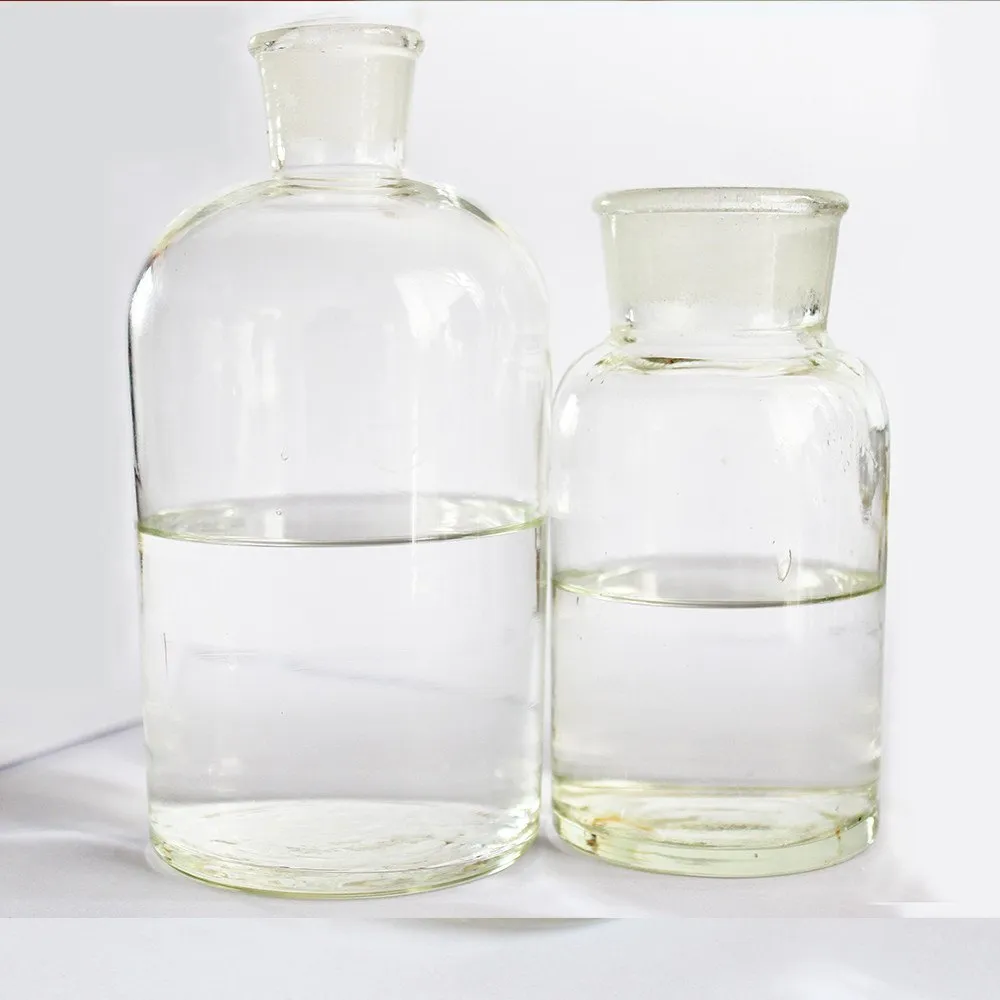
Methanol
Battery Applications
Dopant-free semiconducting COFs could be particularly interesting for energy storage.
Their ordered structures can potentially support:
Ion transport
Electron transport
Redox-active sites
High interfacial area
Tunable electrode chemistry
For battery developers, the challenge is balancing electronic conductivity with other requirements such as chemical stability, mechanical integrity, ion accessibility, and cycling performance.
A highly conductive material is not automatically a better battery electrode.
Electronics Applications
In electronics, the requirements are different.
Important metrics include:
Carrier mobility
Conductivity
Band structure
Charge-transfer behavior
Environmental stability
Film formation
Device integration
Dopant-free materials could offer advantages if their intrinsic electronic structure remains stable during device operation.
However, practical deployment will require demonstrating performance in actual devices rather than only in bulk material measurements.
Manufacturing Implications
A dopant-free synthesis strategy could potentially simplify manufacturing.
Conventional materials may require:
Framework synthesis
Purification
Dopant incorporation
Doping-level optimization
Additional characterization
A successful intrinsic approach could reduce some of these steps.
Potential benefits include:
Fewer processing stages
Lower material complexity
Easier quality control
Reduced batch-to-batch variation
Potentially lower manufacturing costs
Whether those benefits materialize will depend on synthesis yield, reaction conditions, scalability, and precursor costs.
Reproducibility Could Be a Major Advantage
One of the less obvious benefits of dopant-free materials is potentially improved reproducibility.
Doping introduces another variable into the manufacturing process.
Small differences in:
Dopant concentration
Mixing
Reaction time
Temperature
Processing history
can influence final electronic properties.
An intrinsically semiconducting framework could reduce some of this variability.
For commercial materials, reproducibility can be just as important as peak laboratory performance.
What Could Limit Dopant-Free COFs?
The approach also faces meaningful challenges.
Conductivity
Intrinsic conductivity may not match the highest levels achievable through optimized doping.
Carrier Control
Doping provides a direct mechanism for adjusting carrier concentration.
Scalability
Laboratory synthesis does not automatically translate to industrial-scale production.
Device Integration
Powder materials must often be converted into films, coatings, electrodes, or structured components.
Long-Term Stability
Electronic performance must remain stable during real-world operation.
Competitive Intelligence Framework
Materials companies tracking semiconducting COFs should monitor:
Electronic Performance
Compare conductivity and carrier mobility against doped alternatives.
Structural Stability
Evaluate whether intrinsic electronic properties remain stable over time.
Synthesis
Track reaction yield, precursor availability, solvent requirements, and processing conditions.
Scalability
Monitor whether synthesis can move from laboratory batches to commercially relevant production.
Device Performance
Prioritize demonstrations in batteries, sensors, transistors, or other functional devices.
Intellectual Property
Track patents around framework structures, synthesis methods, and electronic applications.
A Better Benchmark Than Conductivity Alone
The success of dopant-free COFs should not be judged solely by electrical conductivity.
A more useful comparison considers:
Metric | Dopant-Free COF | Conventional Doped COF |
|---|---|---|
Composition | Simpler | More complex |
Carrier control | Potentially limited | Strong |
Processing | Potentially simpler | Additional doping step |
Reproducibility | Potential advantage | Dopant-dependent |
Conductivity optimization | Intrinsic design | Chemical doping |
Scalability | Needs validation | More established |
Device integration | Needs validation | Application dependent |
Long-term stability | Potential advantage | Dopant stability matters |
This broader framework better captures commercial potential.
Implications for Battery Materials
Battery developers could benefit if dopant-free COFs combine:
High electronic conductivity
Fast ion transport
Chemical stability
High reversible capacity
Long cycle life
The framework's intrinsic semiconducting properties could reduce reliance on additional conductive additives or dopants in some electrode architectures.
However, that possibility needs to be demonstrated experimentally.
Implications for Electronics
For electronics companies, dopant-free COFs could become particularly attractive where material purity and structural control are important.
Potential applications include:
Chemical sensors
Flexible electronics
Organic photonics
Electrochemical sensors
Energy-harvesting devices
The key commercialization hurdle will be demonstrating reliable performance under realistic operating conditions.
Sustainability Considerations
Dopant-free synthesis could also have sustainability advantages if it reduces:
Chemical inputs
Processing steps
Waste streams
Energy consumption
Use of specialized dopant chemicals
But these benefits should not be assumed.
A full sustainability assessment would need to consider precursor production, solvents, reaction conditions, purification, yield, and end-of-life treatment.
Looking Ahead
Dopant-free semiconducting COF synthesis represents an interesting shift in materials design philosophy.
Instead of treating electronic properties as something added after framework synthesis, researchers can attempt to design semiconducting behavior directly into the molecular architecture.
That could create a cleaner and potentially more reproducible materials platform for batteries, sensors, and electronics.
Conventional doping, however, remains a powerful and highly tunable technology.
The competitive outcome will therefore depend on whether intrinsic semiconducting COFs can combine adequate electronic performance with simpler composition, scalable synthesis, and reliable device integration.
The most important intelligence signal to watch is not simply whether dopant-free COFs can conduct electricity.
It is whether they can deliver commercially relevant performance without sacrificing the structural and processing advantages that make COFs attractive in the first place.
Key Takeaways
Dopant-free COF synthesis offers an alternative to conventional chemical doping for engineering semiconducting behavior.
Intrinsic electronic properties could reduce compositional and processing complexity.
Conventional doping retains an advantage in carrier and conductivity control.
COFs are attractive for batteries, sensors, electrochemical devices, and emerging electronics.
Manufacturing scalability and reproducibility will be critical commercialization tests.
Device-level performance is more important than conductivity measurements alone.
The strongest opportunity may emerge where simplicity, stability, and structural control are valued alongside electronic performance.
Found this useful?