




Trade & Logistics
Aug 24, 2026schedule8 Min Read
Berkshire's OxyChem Acquisition Reshapes Basic Chemical Trade Ownership Structures
Full Reportarrow_forward

prodchem
Aug 24, 2026
Orion S.A.'s second-quarter 2026 results delivered a notable improvement in profitability, with adjusted EBITDA reaching $58 million, up 26% sequentially from $46 million in Q1. The recovery provides an important benchmark for evaluating whether Orion's performance is beginning to stabilize after a challenging period for the specialty and carbon-black markets.
For chemical investors, suppliers, traders and procurement teams, the quarter offers a useful indicator of how pricing, volumes, product mix and operational improvements are influencing Orion's earnings trajectory through 2026.
Orion's adjusted EBITDA increased from $46 million in Q1 2026 to $58 million in Q2, representing a 26% sequential improvement.
The increase is significant because it shows that the company was able to strengthen profitability within a single quarter despite continued uncertainty across several of its end markets.
The improvement also provides a useful comparison point for assessing Orion's performance through the remainder of the year.
Orion reported second-quarter sales of approximately $473 million, compared with $458 million in the first quarter.
The increase reflected improvements in volumes and pricing across parts of the business, helping support the stronger EBITDA result.
For chemical producers, the ability to combine higher volumes with pricing discipline is particularly important when demand conditions remain uneven.
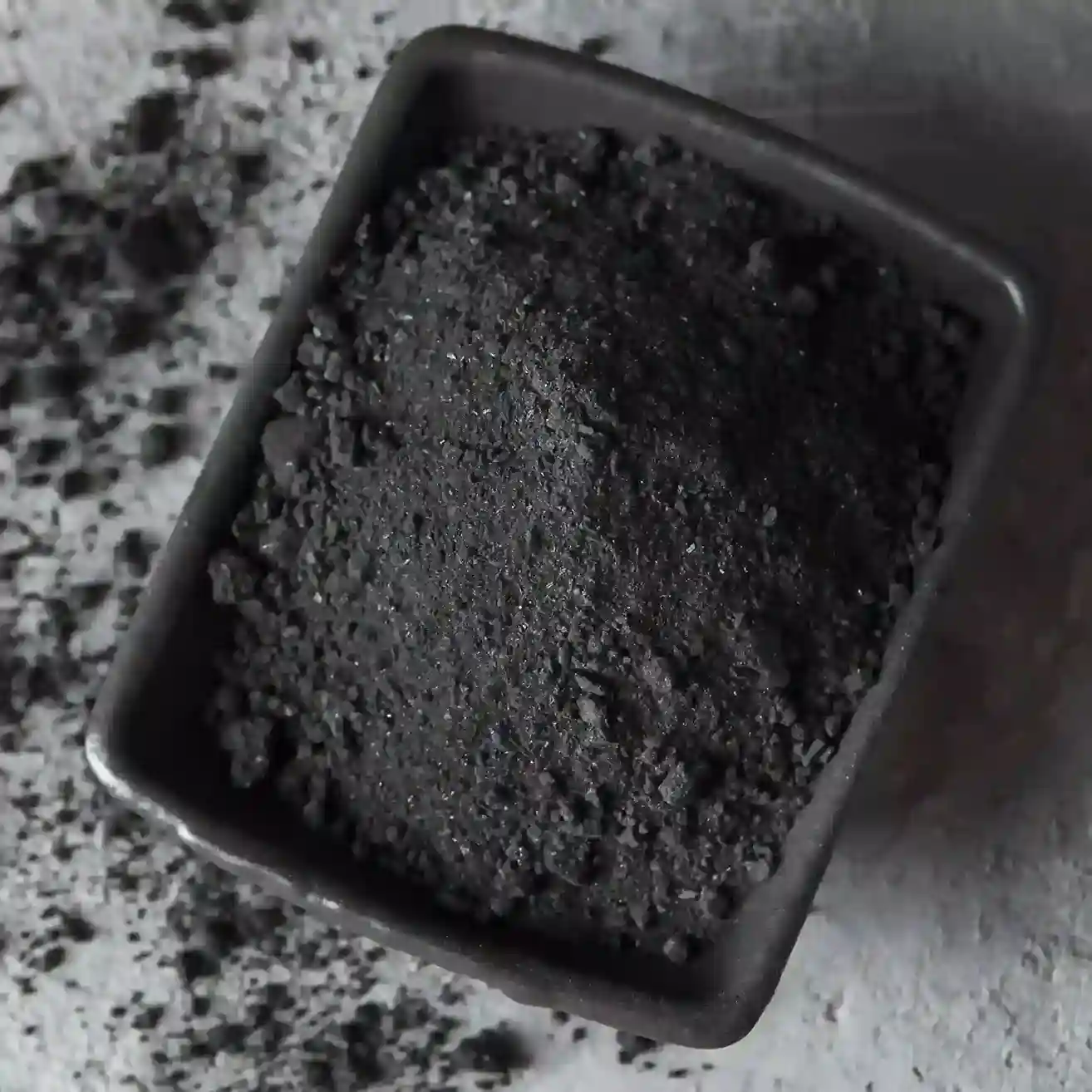
Orion is one of the world's major producers of specialty and high-performance carbon black.
Its products serve applications including:
Tires
Rubber products
Plastics
Coatings
Printing inks
Batteries
Conductive materials
Performance in these markets directly influences the company's overall earnings profile.
Specialty carbon black remains strategically important because it generally offers higher-value applications than traditional rubber carbon black.
Demand from coatings, plastics, batteries and conductive applications provides Orion with opportunities to diversify beyond conventional tire-related demand.
The company's ability to expand these higher-margin applications could therefore become increasingly important to future EBITDA growth.
The Q2 improvement also highlights the importance of product mix.
Higher-value specialty products can provide stronger margins than commodity-oriented volumes.
At the same time, changes in raw-material costs and customer pricing can quickly influence profitability.
For Orion, maintaining pricing discipline while improving product mix will remain central to sustaining the EBITDA recovery.
Carbon black production is heavily influenced by feedstock costs.
Changes in oil and other petroleum-derived feedstocks can affect manufacturing economics and pricing requirements.
Procurement teams therefore need to monitor both feedstock markets and carbon-black pricing when evaluating future supply contracts.
A single quarter of stronger EBITDA does not necessarily establish a sustained recovery.
The next quarters will determine whether Orion can maintain:
Higher volumes
Stronger pricing
Better product mix
Improved operating efficiency
Stable raw-material costs
If these factors continue moving in the right direction, the Q2 result could represent the beginning of a broader earnings recovery.

The automotive industry is one of the most important end markets for carbon black because of its use in tires and other rubber components.
Changes in global vehicle production, tire replacement demand and regional automotive activity can therefore have a direct effect on Orion's volumes.
A stronger automotive market would provide additional support for the company's traditional carbon-black business.
Battery materials represent another potentially important growth area.
Specialty carbon black can be used in conductive applications within battery technologies, creating opportunities beyond traditional tire and rubber markets.
As global battery production expands, demand for specialized conductive materials could become an increasingly important contributor to Orion's long-term strategy.
Orion's improved EBITDA also provides useful signals for chemical buyers.
Procurement teams sourcing carbon black should monitor:
Feedstock pricing
Contract price adjustments
Regional supply availability
Production utilization
Specialty-grade demand
Automotive-sector activity
Logistics costs
A stronger earnings environment could give producers greater confidence in maintaining pricing discipline.
The 26% sequential EBITDA improvement is significant because it provides evidence that Orion's earnings trajectory can improve materially within a relatively short period.
The result does not eliminate the company's exposure to cyclical demand or feedstock volatility.
However, it establishes a stronger starting point for evaluating the second half of 2026.
Orion's $58 million Q2 2026 adjusted EBITDA represents a 26% sequential improvement, making the quarter an important benchmark in the company's 2026 financial trajectory.
The next challenge is converting this quarter-over-quarter recovery into a sustainable improvement across the full year.
For investors, the key indicators will be EBITDA margins, volumes, specialty-product growth and cash generation.
For chemical procurement teams, the focus should remain on carbon-black availability, pricing trends and feedstock costs.
If Orion can maintain its Q2 momentum while expanding higher-value specialty applications, the quarter could ultimately prove to be an early indicator of a broader recovery in the company's earnings profile.
Orion's Q2 2026 adjusted EBITDA reached $58 million.
EBITDA increased 26% sequentially from $46 million in Q1.
The improvement provides a notable quarter-over-quarter recovery benchmark.
Carbon black remains Orion's core business across automotive, rubber, plastics and coatings.
Specialty carbon black provides opportunities for higher-value growth.
Feedstock costs remain an important profitability variable.
Automotive demand continues to influence traditional carbon-black volumes.
Battery and conductive applications offer longer-term growth potential.
Sustaining the Q2 improvement will be critical for Orion's full-year trajectory.
Buyers should closely monitor pricing, availability, feedstock costs and regional supply conditions.
Featured Product
Found this useful?
Continue Reading

Chemours' Advanced Performance Materials segment delivered 8% year-over-year growth in Q2 2026, with data-center and semiconductor demand emerging as important drivers and reinforcing the growing link between specialty chemicals and AI infrastructure.

Orion's stronger Western demand versus softer Asian market conditions highlights a growing regional divide in specialty chemicals, offering an important 2026 benchmark for tracking global manufacturing demand, pricing and sourcing opportunities.