Ranking the Combined Chemours-DuPont-Corteva Settlement Split by Company Share
The combined Chemours-DuPont-Corteva PFAS settlement provides an interesting example of how long-term environmental liabilities can be divided among related chemical companies.
Under the settlement's cost-sharing structure, Chemours is responsible for 50%, DuPont for 35.5%, and Corteva for the remaining 14.5%.
The split reflects the companies' negotiated allocation of responsibility and provides a useful benchmark for understanding how major chemical liability settlements can be distributed.
The Settlement at a Glance
The agreement with New Jersey covers approximately $875 million in payments over 25 years.
The company-level allocation is:
Company | Share | Approx. Share of $875M |
|---|---|---|
Chemours | 50% | $437.5M |
DuPont | 35.5% | $310.6M |
Corteva | 14.5% | $126.9M |
Total | 100% | $875M |
This makes Chemours the largest financial contributor by a considerable margin.
#1 — Chemours: 50%
Chemours carries the largest share of the settlement at 50%.
That means the company is responsible for approximately $437.5 million of the total settlement amount, based on the stated allocation.
The size of Chemours' share makes it the primary financial contributor within the three-company structure.
For investors, the key issue is how these long-term payments interact with:
Operating cash flow
Debt
Capital expenditure
Insurance recoveries
Future PFAS liabilities
#2 — DuPont: 35.5%
DuPont represents the second-largest share at 35.5%.
Its estimated portion of the $875 million settlement is approximately $310.6 million.
Although smaller than Chemours' obligation, the amount remains significant.
DuPont's broader restructuring strategy also makes its liability allocation particularly important because the company has separated several major businesses while continuing to manage historical liabilities.
#3 — Corteva: 14.5%
Corteva has the smallest share at 14.5%, representing approximately $126.9 million of the settlement.
The lower percentage means Corteva carries substantially less of the direct settlement burden than Chemours and DuPont.
Nevertheless, the obligation remains material enough to warrant monitoring alongside the company's other environmental and legal exposures.
Why the 50/35.5/14.5 Split Matters
The allocation is more than a simple payment schedule.
It provides insight into how liability can be divided when multiple companies share historical corporate relationships.
The three companies have overlapping historical connections to legacy DuPont businesses and PFAS-related operations.
The settlement therefore demonstrates how corporate restructuring can produce shared but unequal financial responsibilities.
The Cost-Sharing Structure Is Different From Equal Liability
The companies are not simply dividing the settlement three ways.
Instead:
Chemours → 50%
DuPont → 35.5%
Corteva → 14.5%
This suggests that negotiated allocation mechanisms can reflect historical business structures, agreements, and responsibility rather than the number of companies involved.
That makes the settlement useful for comparison with other multi-party environmental cases.
Long-Term Payments Reduce Immediate Cash Pressure
The settlement is structured over 25 years rather than requiring the companies to pay the entire amount immediately.
This spreads the financial impact across multiple years.
For chemical companies, long-term settlement structures can help manage:
Cash flow
Balance-sheet planning
Capital allocation
Investment requirements
Shareholder returns
However, the obligation remains a long-term financial commitment.
Reserves Still Matter
A long payment schedule does not eliminate accounting exposure.
Companies still need to evaluate and recognize their expected obligations under applicable accounting standards.
Investors should therefore compare:
Settlement share
with
Recorded liability
and
Future cash payments
to understand the actual financial impact.
Insurance Can Change the Net Cost
Environmental settlements can also involve insurance recoveries.
If companies obtain insurance proceeds related to historical PFAS liabilities, the ultimate economic burden could differ from the headline settlement allocation.
This is why investors should not automatically treat the settlement amount as equal to the final net cash cost.
Corporate Restructuring Adds Another Layer
The settlement also highlights an important issue for investors analyzing chemical-company spin-offs.
A business can become a separate public company while contractual arrangements continue to allocate portions of historical liabilities across the corporate group.
This means analysts should examine:
Indemnification agreements
Liability-allocation agreements
Escrow arrangements
Insurance rights
Parent-company guarantees
rather than relying only on current corporate ownership.
What Investors Should Watch
Chemours
Monitor whether its 50% share creates meaningful pressure on cash flow and leverage.
DuPont
Track how the 35.5% obligation fits into its broader legacy-liability strategy.
Corteva
Assess the 14.5% share alongside other environmental and legal commitments.
All Three Companies
Watch for:
Additional PFAS settlements
New regulatory actions
Insurance recoveries
Changes in reserves
Litigation outside New Jersey
Benchmarking the Settlement
The 50/35.5/14.5 structure provides a useful benchmark for future chemical-industry settlements.
A multi-company settlement can be evaluated by asking:
Who pays the largest share?
How is responsibility divided?
How long are payments spread?
Are payments backed by escrow or guarantees?
What portion is potentially recoverable through insurance?
These factors provide a clearer picture of liability than the headline settlement figure alone.
Looking Ahead
The Chemours-DuPont-Corteva agreement demonstrates how complex chemical liabilities can be distributed across companies with interconnected histories.
With Chemours carrying half of the settlement, DuPont 35.5%, and Corteva 14.5%, the structure creates a clear ranking of financial responsibility.
For investors, the key issue is not simply the percentage each company pays.
It is how that obligation interacts with cash flow, reserves, insurance, debt, and future environmental claims.
For the broader chemical industry, the settlement provides a useful example of how companies can share long-tail environmental liabilities while maintaining separate corporate identities.
Key Takeaways
Chemours carries the largest settlement share at 50%.
DuPont represents 35.5% of the obligation.
Corteva accounts for the remaining 14.5%.
Based on an $875 million settlement, the approximate shares are $437.5 million, $310.6 million and $126.9 million respectively.
The 25-year payment structure spreads the financial impact over time.
Insurance recoveries and existing reserves can affect the ultimate economic cost.
The settlement demonstrates how historical liabilities can remain connected across separately operating chemical companies.
The 50/35.5/14.5 allocation provides a useful benchmark for future multi-party environmental settlements.
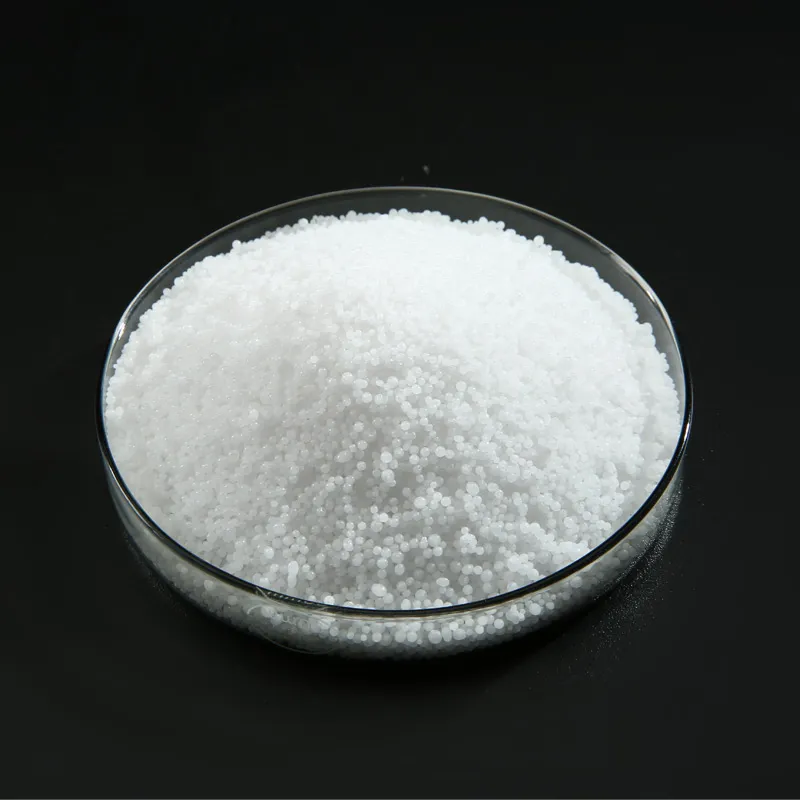
Caustic Soda Pearls - China
Found this useful?