
Ranking the Melanoma Treatment Landscape: Tudriqev Becomes the Second Post-Immunotherapy Option
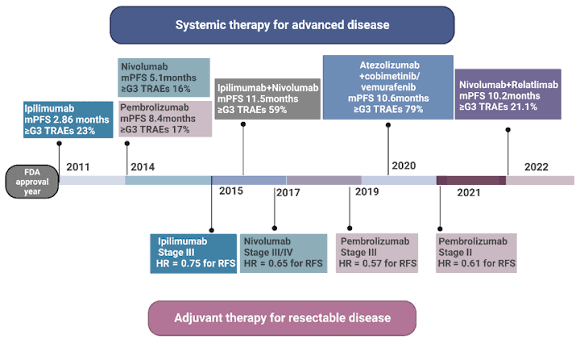
The approval of Tudriqev by the U.S. Food and Drug Administration marks an important development in the treatment landscape for patients with advanced melanoma whose disease has progressed after prior PD-1-blocking immunotherapy.
The FDA granted accelerated approval to Tudriqev, also known as vusolimogene oderparepvec, in combination with nivolumab for adults with unresectable advanced cutaneous melanoma following progression on an anti-PD-1 regimen.
The significance of the decision extends beyond another regulatory approval. Tudriqev becomes only the second FDA-approved treatment specifically available in this difficult post-immunotherapy setting, following Iovance Biotherapeutics' Amtagvi, approved in 2024.
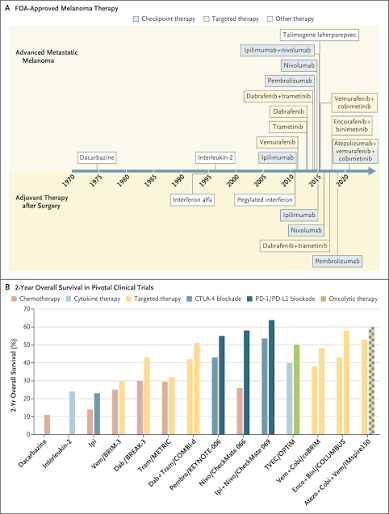
That unusually limited treatment landscape highlights the high level of unmet need in advanced melanoma and gives the new therapy an important position in the evolving oncology market.
Why the Second-Option Status Matters
Treatment options can become particularly limited when melanoma progresses despite immune checkpoint therapy.
Tudriqev's approval expands the available treatment landscape for this population while introducing a treatment approach that differs from conventional systemic therapies.
The development is important because it can:
Expand treatment options after immunotherapy failure
Increase competition within refractory melanoma
Create another commercial platform in oncology
Encourage further innovation in treatment-resistant disease
Provide physicians with an additional therapeutic approach
Highlight continuing unmet need in advanced melanoma
The narrow number of approved options also means that even a single new therapy can have an outsized impact on the competitive landscape.
Tudriqev Changes a Very Thin Market
Before Tudriqev's approval, Amtagvi was the only FDA-approved treatment specifically addressing this post-immunotherapy melanoma setting.
Tudriqev therefore changes the market from effectively a single-option environment to a two-option environment.
That may appear to be a small numerical change, but strategically it is significant.
Competition between two therapies can influence:
Physician treatment preferences
Patient access
Hospital capabilities
Treatment logistics
Commercial positioning
Pricing discussions
Clinical development strategies
The next phase will therefore be less about regulatory validation and more about how the two approaches perform in real-world use.
Ranking the Treatment-Landscape Shift
1. Unmet Need — Very High
The approval addresses adults with advanced melanoma whose disease has progressed after an anti-PD-1 treatment regimen.
2. Competitive Expansion — High
The market now has a second FDA-approved treatment specifically positioned for this difficult treatment setting.
3. Differentiated Treatment Approach — High
Tudriqev uses a genetically modified oncolytic virus that is injected directly into tumors and is designed to stimulate an immune response.
4. Commercial Opportunity — Significant
The limited treatment landscape creates potential commercial opportunity if physicians adopt the therapy broadly.
5. Evidence Risk — Still Relevant
The approval is accelerated, meaning continued regulatory support depends on confirmatory clinical evidence.
How Tudriqev Works
Tudriqev is an engineered oncolytic viral therapy.
The treatment uses a modified herpes virus that is administered directly into tumors. The mechanism is designed to destroy tumor cells while also stimulating an immune response capable of targeting cancer elsewhere in the body.
This approach differentiates Tudriqev from traditional chemotherapy and from some cell-based treatment strategies.
Its commercial appeal may therefore depend partly on whether physicians view the treatment process as sufficiently accessible compared with alternative approaches.

Ammonia Anhydrous
The Amtagvi Comparison
Amtagvi provides the most direct benchmark.
Iovance's therapy was approved in 2024 for adults with unresectable or metastatic melanoma previously treated with a PD-1-blocking antibody and, where appropriate, a BRAF inhibitor.
The two treatments differ substantially in their administration and manufacturing requirements.
Amtagvi is a tumor-infiltrating lymphocyte therapy requiring tumor tissue to be harvested and processed before the cells are returned to the patient.
Tudriqev, by contrast, is injected directly into tumors and is used in combination with nivolumab.
That distinction could become commercially important.
Convenience Could Become a Competitive Advantage
Treatment logistics matter considerably in oncology.
A therapy that requires complex cell collection, manufacturing and administration can place greater demands on hospitals and specialized treatment centers.
Tudriqev's direct tumor-injection approach could potentially offer a different logistical profile.
Reuters reported that Replimune expects the therapy to begin shipping approximately 60 days after approval and initially plans a rollout across roughly 200 hospitals.
That launch strategy will be important for determining how quickly the treatment can reach eligible patients.
The Approval Followed a Difficult Regulatory Journey
Tudriqev's eventual approval is particularly notable because the therapy was previously rejected twice by the FDA.
The agency first issued a complete response letter in 2025, citing concerns over the IGNYTE study's design, including the absence of an adequate control group and heterogeneity within the patient population.
The FDA rejected the application again in April 2026, citing insufficient evidence from the available studies.
Replimune then resubmitted the application, leading to another FDA review and an advisory committee meeting in July.
The Advisory Committee Vote Was a Turning Point
On July 30, 2026, an FDA advisory committee voted 10-3 that the IGNYTE efficacy results were evaluable and clinically meaningful.
The vote was important because FDA reviewers had previously raised concerns about whether the single-arm trial could reliably establish treatment benefit.
The committee's recommendation did not guarantee approval, but it represented a significant shift in the regulatory trajectory.
The FDA subsequently granted accelerated approval on August 6.
Clinical Data Provided the Basis for Approval
The FDA's decision was supported by data showing that the combination treatment produced tumor shrinkage or disappearance in approximately 24.2% of patients, with a median response duration of 14.1 months.
Those results helped establish the clinical rationale for accelerated approval despite the methodological concerns surrounding the underlying study.
For the market, the key question now becomes whether subsequent confirmatory evidence validates the initial response signal.
Accelerated Approval Creates a Second Checkpoint
Accelerated approval is not equivalent to unrestricted long-term regulatory validation.
Replimune must conduct a confirmatory Phase III study to verify clinical benefit, with results currently expected around 2030.
That creates a second major intelligence checkpoint.
Investors and industry participants will therefore need to monitor:
Confirmatory trial enrollment
Progression-free survival
Overall survival
Durability of responses
Safety
Real-world treatment adoption
Regulatory updates
The long-term commercial trajectory will depend heavily on these results.
The Market Is Small but Strategically Valuable
A limited patient population does not necessarily mean a limited commercial opportunity.
Rare or difficult-to-treat oncology populations can support substantial revenue when:
Treatment costs are high
Unmet need is significant
Clinical benefit is meaningful
Physician adoption is strong
Treatment alternatives are limited
Reuters reported that Replimune expects an average treatment course to cost approximately $450,000.
That pricing level makes market penetration and reimbursement particularly important commercial variables.
Launch Execution Will Matter
The next challenge for Replimune is converting regulatory approval into actual patient access.
The company will need to establish:
Treatment-center availability
Physician awareness
Patient identification
Reimbursement pathways
Distribution infrastructure
Administration capabilities
Because the therapy is administered directly into tumors, treatment-center expertise could influence adoption.
Competition May Still Be Limited
Even with Tudriqev's approval, the post-immunotherapy melanoma market remains highly specialized.
That means the competitive landscape is unlikely to resemble a broad primary-care pharmaceutical market.
Instead, competition will likely center on:
Clinical efficacy
Durability
Safety
Administration requirements
Treatment-center availability
Patient eligibility
Physician familiarity
This makes differentiation particularly important.
What the Approval Means for Oncology M&A
Tudriqev also has implications beyond the immediate melanoma market.
The approval demonstrates continued investor and pharmaceutical interest in specialized oncology platforms addressing treatment-resistant disease.
Companies developing differentiated approaches in narrow patient populations may attract strategic interest when they demonstrate:
Regulatory validation
Strong response rates
Durable outcomes
Differentiated mechanisms
Commercial scalability
Tudriqev's journey from repeated FDA rejection to accelerated approval therefore provides an interesting case study for the broader life sciences M&A market.
What Investors Should Watch
Several indicators will determine whether Tudriqev becomes a commercially important oncology product.
Patient Adoption
How quickly do treatment centers begin using the therapy?
Reimbursement
Will payers support its high treatment cost?
Clinical Durability
Do real-world outcomes resemble the clinical-trial data?
Confirmatory Evidence
Can the Phase III study verify clinical benefit?
Competitive Position
How will physicians compare Tudriqev with Amtagvi?
Market Expansion
Can the therapy eventually move into earlier treatment lines or additional indications?
These factors will determine whether the approval represents a niche opportunity or the foundation of a much larger oncology franchise.
A Two-Product Market Is Still a Thin Market
The most important intelligence point is simple:
Two approved options do not necessarily represent a crowded treatment market.
For patients whose melanoma has progressed after PD-1-based treatment, the addition of Tudriqev meaningfully expands choice, but the overall therapeutic landscape remains narrow.
That gives both approved therapies considerable strategic importance.
Looking Ahead
Tudriqev's approval marks a significant change in the advanced melanoma treatment landscape.
Following Amtagvi's 2024 approval, Tudriqev becomes the second FDA-sanctioned treatment specifically positioned for patients with advanced melanoma whose disease has progressed after prior PD-1 therapy.
The approval is particularly notable because it came after two previous FDA rejections, a contentious review of the underlying clinical evidence and a 10-3 advisory committee vote supporting the data's clinical meaningfulness.
The next stage will be defined by commercial execution and confirmatory evidence.
If Tudriqev demonstrates durable clinical benefit while offering a practical alternative to existing treatment, it could materially reshape this specialized melanoma market.
For investors, pharmaceutical companies and life sciences M&A professionals, the bigger lesson is that thin treatment landscapes can create significant strategic value when a new therapy successfully addresses an area of high unmet need.
Key Takeaways
Tudriqev is now the second FDA-approved treatment specifically positioned for advanced melanoma after progression on PD-1 therapy, following Amtagvi.
The FDA granted Tudriqev accelerated approval in combination with nivolumab.
The approval followed two previous FDA rejections of the therapy.
An FDA advisory committee voted 10-3 that the available efficacy results were evaluable and clinically meaningful.
Clinical data showed a 24.2% response rate with a median response duration of 14.1 months.
Tudriqev offers a different treatment approach from Amtagvi, particularly in administration and treatment logistics.
Confirmatory clinical evidence will remain an important long-term regulatory and commercial checkpoint.
The limited number of approved options highlights the continuing unmet need in treatment-resistant advanced melanoma.
Found this useful?