
Ranking the Scale of West Virginia's Nitric Acid Release History: 1,310 Pounds Over a Decade
The deadly April 2026 incident at the Ames Goldsmith Catalyst Refiners facility in West Virginia has drawn renewed attention to the site's longer environmental and chemical-safety history.
According to EPA data cited in reporting on the facility, 1,310 pounds of nitric acid were released into the air between 2014 and 2024.
On its own, the figure provides a relatively specific environmental-compliance benchmark. In the context of the facility's previous chemical incidents and the 2026 fatal event, however, it offers a broader data point for understanding long-term operational risk.
Why the 1,310-Pound Figure Matters
Environmental release data can help establish a facility's historical operating profile.
The 1,310-pound figure covers a 10-year period, making it useful for evaluating the site's cumulative reported nitric acid emissions rather than focusing only on individual incidents.
For chemical-industry analysts, such data can help assess:
Environmental performance
Chemical handling practices
Regulatory exposure
Historical emissions
Operational risk
Long-term compliance trends
Importantly, reported emissions and accidental releases are not necessarily the same thing. The data should therefore be viewed as part of the facility's broader environmental record rather than as a direct measure of accident risk.
Ames Goldsmith's Chemical Operations
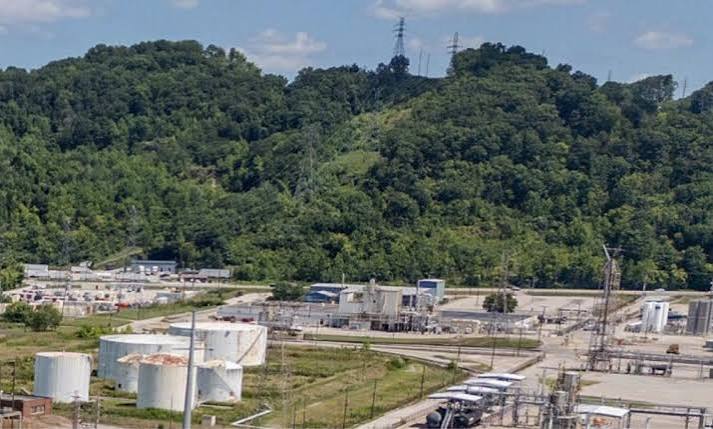
The facility, operated by Catalyst Refiners, is a subsidiary of Ames Goldsmith and is involved in recovering silver from industrial byproducts and related catalyst-refining operations.
Nitric acid has been part of the facility's operating environment for years.
State inspection records have documented nitric-acid storage and processing infrastructure, including nitric-acid tanks and process equipment.
The 2013 Incident Provides Important Context
The site's environmental history predates the 2014–2024 emissions data.
In August 2013, two workers were injured following a nitric acid spill. A subsequent inspection report stated that an inspection light fell into a reactor containing approximately 100 gallons of nitric acid, causing around 75 gallons to overflow.
The incident demonstrates that nitric acid had already represented an operational safety concern at the facility before the decade covered by the 1,310-pound emissions figure.
The 2026 Incident Was Different
The April 22, 2026 incident occurred during decommissioning work as the facility was preparing to close.
Officials said nitric acid was mixed with another substance during the process, generating toxic hydrogen sulfide gas and causing a violent chemical reaction. Two workers were killed and numerous others required medical treatment.
The distinction matters.
The historical nitric acid emissions provide an environmental record, while the 2026 event represents a major process-safety incident involving a chemical reaction during shutdown activities.
Emissions Versus Chemical Inventory
The 1,310-pound figure should also be distinguished from the amount of nitric acid physically present at the facility.
Reporting based on federally required hazardous-chemical inventory forms found that the facility held an average of approximately 44,900 pounds of nitric acid in 2023–2025, with a maximum daily amount of about 69,040 pounds.
This comparison illustrates an important point:
Annual emissions are not equivalent to chemical inventory.
A facility can have substantial quantities of hazardous chemicals on-site while reporting comparatively smaller atmospheric releases.
A Long-Term Compliance Benchmark
The 1,310-pound figure becomes more useful when combined with inspection records.
A January 2026 inspection of a nitric acid tank reportedly found no deficiencies, while a 2025 compliance monitoring report described equipment as operating as intended.
This creates a more nuanced picture of the facility's history.
The site had documented chemical incidents and reported emissions, but it also received inspections that did not identify deficiencies in certain areas.
Why Historical Data Matters After an Incident
Major industrial accidents often trigger questions about whether earlier warning signs existed.
Historical data can help investigators examine:
Previous spills
Emissions
Equipment inspections
Regulatory violations
Chemical inventories
Process changes
Maintenance records
Management decisions
The goal is not to assume that historical emissions caused a later accident.
Instead, the information helps establish the operational context in which the incident occurred.
The Role of Regulatory Oversight
The facility's history also raises questions about how environmental and workplace-safety oversight evolved over time.
Reporting has identified a 2018 federal workplace-safety violation alongside the earlier nitric acid incident and subsequent emissions history.
For chemical-industry analysts, this makes regulatory records an important component of facility-level intelligence.
Shutdowns Can Create Unique Chemical Risks
The 2026 event also demonstrates why decommissioning deserves separate attention in chemical safety.
Closing a facility can involve:
Tank cleaning
Chemical neutralization
Residual-material handling
Equipment dismantling
Waste treatment
Process isolation
These activities can create risks that differ from normal production operations.
The Chemical Safety Board's investigation into the incident is examining the circumstances surrounding the chemical reaction during decommissioning.
What This Means for Chemical Companies
The Ames Goldsmith case provides a broader lesson for companies managing chemical facilities approaching closure.
Environmental and safety assessments should not stop when production declines.
Instead, companies should carefully evaluate:
Remaining chemical inventories
Residual process chemicals
Tank contents
Waste streams
Cleaning procedures
Contractor activities
Emergency-response requirements
The transition from production to shutdown can itself become a high-risk operational phase.
What Procurement and Risk Teams Should Watch
Chemical buyers and industrial procurement teams can also use facility-level intelligence when evaluating suppliers.
Important indicators include:
Regulatory history
Environmental releases
Safety incidents
Facility inspections
Production status
Ownership changes
Planned closures
Chemical inventories
Such information can help buyers assess whether a supplier presents potential operational or continuity risks.
Looking Ahead
The 1,310 pounds of nitric acid released between 2014 and 2024 is not, by itself, evidence of a direct connection to the 2026 fatal incident.
Its importance lies in providing a measurable piece of the facility's longer environmental record.
When combined with the 2013 nitric acid spill, later inspections, the facility's chemical inventory and the fatal 2026 decommissioning incident, the data provides a more complete picture of the site's operational history.
For chemical companies, the broader lesson is clear:
Facility risk should be evaluated across the entire operating lifecycle—not only during active production.
For regulators and safety professionals, historical emissions and incident records can provide valuable context for future oversight.
For procurement and risk teams, they offer another layer of intelligence when assessing supplier reliability and industrial exposure.
The 1,310-pound figure is therefore more than an environmental statistic. It is a long-term data point that helps place the West Virginia facility's 2026 tragedy within its broader chemical-safety and compliance history.
Key Takeaways
The Ames Goldsmith Catalyst Refiners facility released 1,310 pounds of nitric acid into the air from 2014 through 2024, according to EPA data cited in reporting.
The site had a documented nitric acid spill in 2013 that injured two workers.
The April 2026 fatal incident occurred during decommissioning and involved a reaction that generated toxic hydrogen sulfide gas.
Reported emissions should not be confused with accidental releases or total chemical inventory.
The facility held tens of thousands of pounds of nitric acid during the 2023–2025 period.
Historical inspection records provide important context for evaluating facility-level risk.
Decommissioning can create chemical hazards that differ from normal production operations.
Environmental emissions, safety incidents and regulatory records together provide a stronger risk-intelligence framework.
The 1,310-pound figure is best viewed as a historical environmental benchmark, not proof of causation for the 2026 incident.
Glacial Acetic Acid - China
Found this useful?