Ranking TPC's Troubled Asset History Against Other Distressed-to-Acquired Chemical Assets
TPC Group's path from a major 2019 Port Neches explosion to Chapter 11 bankruptcy in 2022 and now a pending acquisition by Japan's ENEOS Holdings offers a useful case study in how distressed chemical assets can eventually attract strategic buyers.
The 2019 incident caused extensive property damage, production disruption and environmental consequences. TPC subsequently entered Chapter 11 in June 2022, eliminating more than $950 million of approximately $1.3 billion in secured debt as part of its restructuring.
Now, TPC's Gulf Coast operations are reportedly being sold to ENEOS in a transaction valued at approximately $1.28 billion including debt, subject to regulatory approval.
The sequence makes TPC a particularly useful benchmark for understanding how operational disruption, financial restructuring and strategic asset value can evolve over several years.
Why TPC's Asset History Matters
Distressed chemical assets can follow very different paths after a major operational or financial shock.
Some facilities are permanently closed.
Others are sold to competitors.
Some are restructured and returned to profitability before eventually attracting strategic buyers.
TPC belongs to the third category, making its history particularly relevant for chemical-sector M&A analysis.
The company's trajectory demonstrates how:
Operational disruption can trigger financial stress
Bankruptcy can eliminate legacy liabilities
Restructuring can restore financial flexibility
Strategic assets can retain value despite corporate distress
New owners can identify value that previous owners could not realize
The 2019 Explosion Was the Original Turning Point
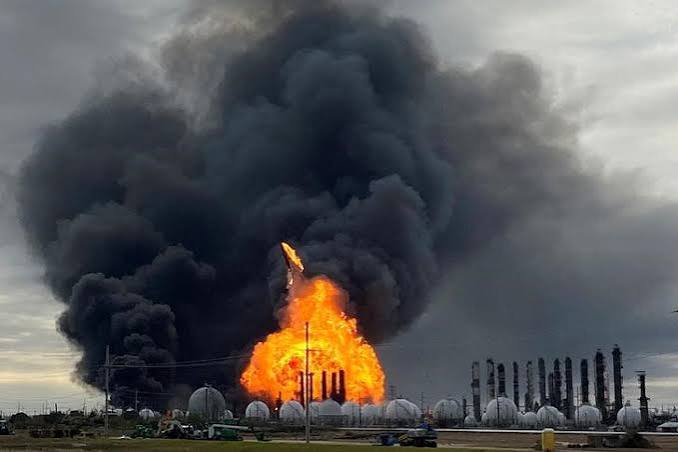
On November 27, 2019, two explosions occurred at TPC's Port Neches facility after a butadiene release.
The U.S. Department of Justice reported that more than 11 million pounds of extremely hazardous substances were released, while off-site property damage and other impacts exceeded $130 million.
The U.S. Chemical Safety and Hazard Investigation Board subsequently documented approximately $450 million of on-site property damage and $153 million of off-site property damage associated with the incident. The butadiene unit was destroyed and production ceased indefinitely.
That fundamentally changed the economics of the affected operation.
Production Disruption Became an Asset-Rationalization Problem
The Port Neches incident did more than create immediate repair costs.
It also changed the role of the facility.
The destroyed butadiene unit did not simply return to its previous operating configuration. The site was ultimately transitioned toward a terminal and services operation.
This illustrates an important feature of distressed chemical assets:
The value of a facility can survive even after its original production configuration becomes uneconomic or impractical.
Infrastructure, storage, logistics connections, customer relationships and other physical assets can retain strategic value.
Bankruptcy Became the Second Major Turning Point
TPC filed for Chapter 11 protection on June 1, 2022.
The company described the filing as a pre-arranged restructuring designed to deleverage the balance sheet and address legacy liabilities while continuing operations.
The restructuring ultimately eliminated more than $950 million of approximately $1.3 billion in secured funded debt. It also addressed contingent litigation liabilities associated with the 2019 explosion.
This dramatically changed the financial profile of the company.
The Restructuring Reset the Balance Sheet
TPC emerged from bankruptcy in December 2022 with:
A substantially lower debt burden
New capital
Greater liquidity
Resolved legacy liabilities
Strengthened commercial relationships
A more sustainable financial structure
TPC itself described the restructuring as creating an industry-leading balance sheet and stronger liquidity.
For M&A analysis, this is an important distinction.
A distressed company before restructuring may not have the same value—or the same liabilities—as the business that emerges from bankruptcy.
Ranking the Distress-to-Acquisition Journey
1. Operational Distress — Very High
The 2019 explosion destroyed a major production unit and permanently altered the Port Neches site's operating profile.
2. Financial Distress — Very High
TPC entered Chapter 11 with approximately $1.3 billion of secured funded debt, making the restructuring a substantial financial reset.
3. Liability Overhang — Very High
Explosion-related litigation and environmental liabilities were significant components of the restructuring process.
4. Post-Bankruptcy Recovery — Significant
TPC successfully emerged from Chapter 11 in December 2022 with a materially stronger balance sheet.
5. Strategic Buyer Interest — High
The pending ENEOS transaction demonstrates that the reorganized business retained sufficient strategic value to attract a major international buyer.
The ENEOS Deal Changes the Interpretation
The pending sale is important because it demonstrates that TPC's distressed history did not eliminate the strategic value of its remaining operations.
Instead, the restructuring appears to have created a cleaner platform that could eventually be transferred to a strategic owner.
ENEOS is expected to integrate the acquired Gulf Coast operations with its broader refining and energy activities.
That creates a very different M&A proposition from buying an asset directly out of bankruptcy.
Why Strategic Buyers Can See Value in Distressed Assets
Strategic buyers can sometimes extract value from distressed chemical assets because they already possess:
Existing infrastructure
Feedstock relationships
Distribution networks
Technical expertise
Customer relationships
Manufacturing capabilities
Regional logistics networks
An asset that appears unattractive to a standalone financial owner may therefore become strategically valuable to an industrial buyer with complementary operations.
TPC's pending ENEOS transaction illustrates this principle.

Polyaluminium Chloride
The Importance of Gulf Coast Infrastructure
TPC's operations are located within one of the most important chemical and energy regions in the United States.
The Gulf Coast provides access to:
Petrochemical feedstocks
Major refining infrastructure
Storage facilities
Pipeline networks
Ports
Industrial customers
Export markets
That infrastructure can retain strategic value even when individual production units experience disruption.
The pending acquisition therefore needs to be viewed not only as a purchase of individual chemical operations, but also as a strategic positioning move within the Gulf Coast industrial network.
Regulatory and Legal Issues Remain Relevant
TPC's history also demonstrates that operational distress can generate consequences that extend well beyond the initial event.
In 2024, the U.S. Department of Justice announced that TPC had pleaded guilty to a Clean Air Act violation connected with the explosions and agreed to pay more than $30 million in criminal fines and civil penalties, alongside approximately $80 million in safety and risk-management improvements.
The company's restructuring had already addressed significant legacy liabilities, but the broader regulatory history remains an important part of the asset's story.
Safety Investment Became Part of the Recovery
The post-incident recovery therefore involved more than financial restructuring.
TPC also committed substantial resources toward improving:
Process safety
Risk management
Facility controls
Operational procedures
Hazard identification
The DOJ settlement required approximately $80 million of improvements at TPC's Port Neches and Houston facilities.
For potential buyers, these investments can be important because operational improvements can reduce the future risk associated with acquiring historically troubled facilities.
TPC Versus a Conventional Distressed Sale
TPC's case differs from a simple distressed asset liquidation.
In a conventional distressed sale:
Financial stress → asset sale → new owner
TPC followed a more complicated path:
Operational disaster → liability accumulation → bankruptcy → restructuring → balance-sheet recovery → strategic acquisition
That makes it a more useful benchmark for analyzing chemical-sector restructuring.
The Bankruptcy Was Not the End of the Asset's Value
One of the most important lessons from TPC's history is that bankruptcy does not necessarily mean that an industrial asset has lost its strategic value.
The restructuring separated the company's future operating potential from much of its historical financial burden.
That can create an opportunity for a strategic buyer.
In effect, the restructuring can become a mechanism for repackaging an operationally valuable business with a more manageable financial structure.
Distressed Chemical Assets Can Become Strategic Targets
TPC's trajectory fits a broader pattern seen across the chemical industry.
When producers face:
Excess debt
Weak margins
Aging facilities
Environmental liabilities
Capacity rationalization
High maintenance requirements
assets may become candidates for restructuring or sale.
But buyers do not necessarily evaluate those assets using the seller's historical financial performance.
They may instead ask:
What can this asset be worth inside our existing network?
That difference can create significant M&A opportunities.
What Buyers Look For
Strategic buyers evaluating distressed chemical assets typically examine:
Physical infrastructure
Feedstock access
Product portfolio
Customer relationships
Logistics advantages
Production economics
Environmental liabilities
Maintenance requirements
Regulatory exposure
Potential synergies
TPC's history shows why all of these factors matter.
A troubled balance sheet alone does not necessarily make an asset unattractive.
The Role of Bankruptcy in Chemical M&A
Chapter 11 can sometimes function as a restructuring mechanism rather than a simple liquidation process.
For TPC, the process allowed the company to:
Reduce debt
Resolve legacy liabilities
Continue operations
Strengthen liquidity
Reposition the business for future growth
TPC's successful emergence in December 2022 demonstrates the potential for a reorganized chemical company to remain commercially viable.
The Acquisition Multiple Will Be Worth Watching
The reported ENEOS transaction value of approximately $1.28 billion including debt provides a useful benchmark for evaluating how much strategic value remains in the reorganized TPC business.
However, the transaction's final economics should be interpreted carefully.
The reported figure includes debt, while detailed financial terms and the precise allocation of value across the acquired operations may differ.
That makes direct comparisons with other chemical M&A transactions difficult until the transaction closes and more information becomes available.
From Distressed Company to Strategic Platform
TPC's transformation is therefore best understood as a multi-stage value recovery story.
Stage 1: 2019
Major operational disaster and destruction of the Port Neches butadiene unit.
Stage 2: 2022
Chapter 11 filing and substantial debt restructuring.
Stage 3: Late 2022
Emergence from bankruptcy with a significantly strengthened balance sheet.
Stage 4: 2024-2026
Continued regulatory, safety and operational developments.
Stage 5: 2026
Pending acquisition by ENEOS, reportedly valued at approximately $1.28 billion including debt.
That timeline makes TPC one of the more interesting distressed-to-strategic-acquisition stories in the chemical sector.
What Investors Should Watch
The transaction creates several intelligence checkpoints.
Investors should monitor:
Final regulatory approval
Closing conditions
Final transaction value
Debt assumed by ENEOS
Asset-level profitability
Integration plans
Capital expenditure requirements
Remaining environmental liabilities
Future utilization of Gulf Coast infrastructure
The final deal structure will reveal how much value ENEOS ultimately places on TPC's reorganized platform.
What Chemical Companies Can Learn
TPC's experience offers several lessons for chemical-sector management teams.
Financial discipline matters
High leverage can magnify the impact of operational disruption.
Liability management matters
Environmental and litigation exposure can materially alter asset value.
Infrastructure retains strategic value
Even when production assets are impaired, logistics and physical infrastructure can remain attractive.
Restructuring can restore optionality
A cleaner balance sheet can create opportunities that were unavailable before bankruptcy.
Strategic ownership can unlock synergies
A large industrial buyer may value an asset differently from its previous owner.
Looking Ahead
TPC's journey from the 2019 Port Neches explosion to its 2022 bankruptcy and eventual pending sale to ENEOS is a strong example of how distressed chemical assets can evolve through multiple stages of value creation.
The company's restructuring eliminated more than $950 million of secured debt and addressed major legacy liabilities, creating a substantially different financial platform from the business that entered Chapter 11.
The reported $1.28 billion ENEOS transaction now provides the next benchmark.
If the transaction closes as expected, TPC's history will demonstrate that operational disaster and financial distress do not necessarily mark the permanent destruction of industrial asset value.
For chemical-sector investors and M&A professionals, the more important lesson is that distressed assets can become attractive again when liabilities are restructured, operations stabilize and a strategic buyer can extract synergies unavailable to the previous owner.
Key Takeaways
TPC's 2019 Port Neches explosion became the starting point for a major operational and financial restructuring cycle.
The company filed for Chapter 11 in June 2022.
TPC eliminated more than $950 million of approximately $1.3 billion in secured funded debt through its restructuring.
The company emerged from bankruptcy in December 2022 with improved liquidity and a stronger balance sheet.
The pending ENEOS acquisition reportedly values the transaction at approximately $1.28 billion including debt.
TPC's trajectory demonstrates how distressed chemical assets can retain strategic value despite severe operational and financial disruption.
Gulf Coast infrastructure and logistics connectivity remain important components of the asset's strategic appeal.
The transaction provides a useful benchmark for analyzing distressed-to-acquired chemical assets in the current M&A cycle.
Found this useful?