Rhine Disruption Pattern Reinforces the Case for Agrochemical Feedstock Sourcing Diversification

Rhine Disruption Pattern Reinforces the Case for Agrochemical Feedstock Sourcing Diversification
Introduction
The Rhine River remains one of Europe's most important logistics corridors for the chemical industry, connecting major production centers with suppliers, customers, ports, and downstream manufacturing facilities. For agrochemical producers, this makes Rhine transportation conditions an important factor in the reliability of feedstock and intermediate supply.
Recurring periods of low water, reduced barge capacity, and transportation constraints demonstrate a broader lesson: agrochemical manufacturers should avoid excessive dependence on a single logistics corridor or geographic sourcing region.
The issue is not that Rhine transportation will become unreliable permanently. Rather, repeated disruptions highlight the value of maintaining alternative suppliers, routes, and transportation modes before a disruption occurs.
Why the Rhine Matters for Agrochemical Feedstocks
Germany's chemical industry is heavily connected to the Rhine logistics network. Large production centers and chemical clusters use inland waterways to move raw materials, intermediates, and finished products.
Agrochemical production depends on many upstream materials, including chemical intermediates, solvents, active-ingredient precursors, and specialty materials. Even when a final pesticide is produced at a different location, disruptions affecting upstream transportation can eventually affect its availability.
The Rhine therefore functions as more than a transportation route. It is part of the wider production ecosystem supporting Europe's chemical supply chains.
Low Water Creates a Capacity Problem
When Rhine water levels decline, barges cannot necessarily operate at normal loading levels. Operators may need to reduce cargo quantities to maintain safe navigation.
This creates a capacity problem rather than simply a transportation-delay problem.
A shipment that normally moves efficiently by barge may require:
Additional vessels.
Multiple smaller shipments.
Road transportation.
Rail transportation.
Longer delivery windows.
Higher safety-stock levels.
The financial impact can increase rapidly when several shippers compete for limited alternative capacity.
Repeated Disruptions Change the Risk Calculation
The most important lesson for agrochemical procurement is the recurring nature of Rhine-related disruption risk.
If low-water conditions occur repeatedly, companies should not treat each event as an isolated logistics emergency. Instead, river conditions should become part of normal supply-chain risk assessment.
This changes the procurement question from:
"How do we respond when the Rhine is disrupted?"
to:
"How much exposure should we have to a supply chain that depends on the Rhine?"
That distinction is important because diversification is generally easier and less expensive when implemented before a disruption.
The Case for Feedstock Sourcing Diversification
Agrochemical companies can reduce exposure by diversifying the sources of critical feedstocks and intermediates.
This does not necessarily mean replacing existing German or European suppliers. Instead, companies can develop a multi-source structure in which alternative suppliers are qualified and commercially viable before they are urgently needed.
Potential diversification strategies include:
Geographic Diversification
Companies can qualify suppliers from different European regions or from markets outside Europe.
A geographically diversified supplier base reduces the possibility that one regional logistics disruption affects the entire supply chain.
Supplier Diversification
Relying on two or more qualified suppliers for strategically important intermediates can provide additional flexibility when one supplier experiences a transportation or production problem.
Route Diversification
Even when the same supplier remains in place, companies can investigate alternative transportation routes and ports.
Mode Diversification
Road and rail can serve as contingency options when inland waterway capacity becomes constrained.
The objective is not to eliminate barge transportation but to ensure that a disruption does not completely stop material movement.
Not Every Feedstock Requires the Same Strategy
Diversification should be based on material criticality rather than applied uniformly across the procurement portfolio.
A low-value intermediate with many qualified suppliers may not justify the cost of maintaining multiple sources.
A critical active-ingredient precursor with:
Limited suppliers.
Long qualification times.
No easy substitute.
High production impact.
Strong dependence on Rhine logistics.
may require a much stronger contingency strategy.
Procurement teams can therefore rank materials according to supply criticality and logistics exposure.
Cost Versus Resilience
Sourcing diversification has an economic cost.
An alternative supplier may have a higher price, longer lead time, or smaller production capacity. Maintaining additional inventory can also increase working-capital requirements.
For this reason, companies should not attempt to diversify every input.
Instead, the objective should be to determine where the financial cost of redundancy is justified by the potential cost of a production interruption.
For critical agrochemical feedstocks, even a slightly higher sourcing cost may be economically rational if it protects against a much larger manufacturing disruption.
Rhine Risk Can Interact With Other Supply-Chain Problems
River disruption becomes more significant when it occurs alongside other market pressures.
For example, a low-water event could coincide with:
A chemical plant outage.
Tight European inventories.
Higher energy costs.
Port congestion.
Rising agricultural demand.
Supplier maintenance.
Geopolitical disruption elsewhere.
Under normal conditions, companies may absorb a temporary logistics problem. When multiple risks occur simultaneously, however, the same disruption can become much more difficult to manage.
This makes concentration risk an important consideration in agrochemical procurement.
Building a More Resilient Feedstock Strategy
A diversified sourcing strategy can combine several layers of protection.
1. Map Critical Feedstocks
Identify which raw materials and intermediates are essential for production and determine their current sourcing locations.
2. Map Logistics Dependency
Determine which materials depend on Rhine transportation and identify the specific logistics nodes involved.
3. Qualify Backup Suppliers
Develop technically and commercially viable alternatives before an emergency occurs.
4. Establish Alternative Routes
Evaluate rail, road, alternative inland waterways, ports, and other transportation options.
5. Adjust Safety Stocks
For highly critical materials, inventory buffers can provide additional time to activate alternative supply.
6. Monitor Conditions
Procurement teams can incorporate river levels, freight availability, weather conditions, and supplier inventory into ongoing risk monitoring.
Implications for European Agrochemical Manufacturing
The Rhine issue also highlights a broader structural question for Europe's chemical industry.
European chemical manufacturing is already dealing with energy costs, global competition, changing production footprints, and restructuring at major industrial sites.
If transportation dependencies are added to these pressures, companies may increasingly evaluate whether production networks are sufficiently diversified.
This could encourage manufacturers to maintain a combination of local European suppliers and strategically selected external sources.
However, greater reliance on imports introduces its own risks, including ocean freight exposure, tariffs, geopolitical uncertainty, currency movements, and longer supply chains.
Diversification therefore does not mean simply moving sourcing outside Europe. It means creating multiple viable pathways to obtain critical materials.
Implications for Chemical Marketplaces
Digital chemical marketplaces can play an important role in supporting this shift.
A procurement platform can help buyers compare suppliers not only by price but also by:
Production location.
Transportation route.
Lead time.
Available capacity.
Minimum order quantity.
Regulatory status.
Historical reliability.
Alternative sourcing regions.
Combining supplier intelligence with logistics information can make it easier to identify whether a low-priced supplier creates excessive geographic or transportation concentration.
This is particularly valuable for agrochemical buyers dealing with critical intermediates.
Outlook
The Rhine is likely to remain a major logistics artery for Europe's chemical industry. The objective should therefore not be to reduce dependence on the river to zero.
Instead, recurring disruption patterns strengthen the case for balanced sourcing and logistics diversification.
Agrochemical manufacturers that understand which feedstocks are most exposed, qualify alternative suppliers, and maintain flexible transportation options will be better positioned to absorb future disruptions.
The most resilient supply chains will likely combine regional sourcing, global supplier access, multiple transportation modes, appropriate inventory buffers, and real-time logistics monitoring.
Conclusion
Recurring Rhine disruption demonstrates why agrochemical manufacturers should look beyond individual transportation incidents and evaluate their broader sourcing concentration.
Low water levels can reduce barge capacity, increase logistics costs, extend delivery times, and place pressure on feedstock availability. When a critical intermediate depends heavily on one supplier and one logistics corridor, these effects can become much more significant.
The key lesson for procurement is therefore straightforward: feedstock diversification is not simply a response to disruption; it is a strategy for reducing structural supply-chain exposure.
By combining multiple qualified suppliers, alternative transportation routes, appropriate inventory buffers, and real-time logistics monitoring, agrochemical manufacturers can build greater resilience without abandoning the efficiency advantages of Europe's established Rhine-based chemical network.
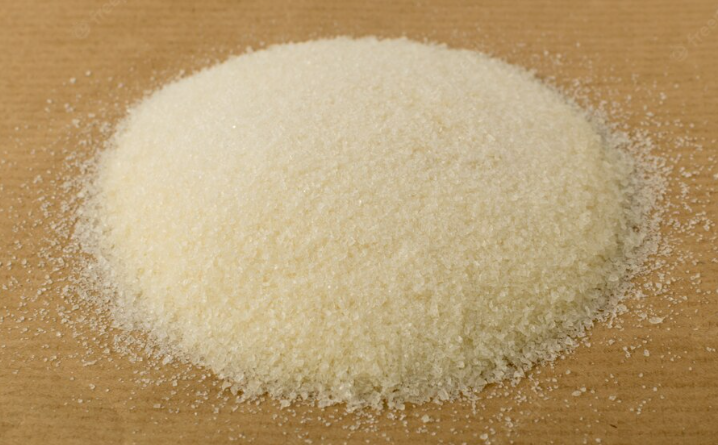
Agar (E406)
Found this useful?