Saudi Arabia: KBR's Purifier® Technology Selected for a 3,500 MTPD Jubail Ammonia Plant
Saudi Arabia: KBR's Purifier® Technology Selected for a 3,500 MTPD Jubail Ammonia Plant
SABIC Agri-Nutrients has selected KBR's Purifier® technology for a new 3,500 metric tons per day (MTPD) ammonia plant in Jubail, Saudi Arabia, marking another major investment in the Kingdom's fertilizer production infrastructure.
KBR announced the technology award on September 29, 2026, stating that it will provide technology licensing, basic engineering design, proprietary equipment and catalyst supply for the new grassroots, single-train ammonia facility.
The project will be delivered in cooperation with Samsung E&A, which is serving as the engineering, procurement and construction (EPC) contractor. The plant is designed to produce approximately 1.2 million metric tons of ammonia annually.
Source: KBR — KBR Ammonia Technology Selected for One of the Largest Fertilizer Complexes in Saudi Arabia
KBR Purifier Technology Selected for Jubail Ammonia Plant
The new Jubail facility will use KBR's Purifier® ammonia technology, a process technology developed for large-scale ammonia production.
Under the agreement, KBR's scope includes:
Purifier® technology licensing
Basic engineering design
Proprietary equipment
Catalyst supply
KBR will work alongside Samsung E&A, which will execute the EPC portion of the project.
The 3,500 MTPD capacity makes the facility one of the larger single-train ammonia plants associated with KBR's technology portfolio.
Source: KBR — KBR Ammonia Technology Selected for One of the Largest Fertilizer Complexes in Saudi Arabia
3,500 MTPD Single-Train Ammonia Facility
The Jubail plant is designed as a 3,500 MTPD single-train ammonia facility.
At this production rate, the plant is expected to produce approximately 1.2 million metric tons of ammonia per year.
A single-train configuration means that the principal ammonia production equipment is arranged around one continuous production train rather than several smaller parallel trains.
Large single-train plants can provide economies of scale by concentrating production capacity within a single integrated process configuration.
KBR has developed Purifier-based designs for large-scale ammonia production, with the company stating that its technology has been applied to single-stream facilities beyond the traditional 2,700 MTPD range.
Sources: KBR — Jubail project announcement; KBR — Single Stream 6,000 MTPD Ammonia Plant Using KBR's Purifier Technology
SABIC Agri-Nutrients to Expand Fertilizer Production
The Jubail ammonia project is expected to support SABIC Agri-Nutrients' broader fertilizer expansion strategy.
According to KBR, SABIC AN's urea production capacity is expected to increase from approximately 4.8 million metric tons per year to 7.4 million metric tons per year as a result of the wider project.
That represents an increase of approximately 2.6 million metric tons per year, or about 54% compared with the previous capacity level.
The additional ammonia production will provide an important feedstock for the company's expanded nitrogen fertilizer production.
Source: KBR — KBR Ammonia Technology Selected for One of the Largest Fertilizer Complexes in Saudi Arabia
What Is KBR's Purifier® Technology?
KBR's Purifier® technology is an ammonia production process designed for large-scale, single-train facilities.
The technology uses a conventional steam-reforming-based ammonia process configuration combined with a purification system designed to improve synthesis-gas quality before ammonia synthesis.
KBR says its Purifier-based technology can support large single-stream capacities while reducing equipment count and improving energy efficiency compared with certain conventional configurations.
The company has also highlighted the technology's potential for lower carbon and nitrogen-oxide emissions compared with conventional ammonia process designs.
Source: KBR — Single Stream 6,000 MTPD Ammonia Plant Using KBR's Purifier Technology
Purifier Technology Designed for Lower Carbon Intensity
One of the features highlighted by KBR for the Jubail project is the potential for lower carbon intensity per tonne of ammonia compared with conventional ammonia process designs.
KBR says its Purifier configuration is designed to improve process efficiency while reducing the environmental footprint associated with ammonia production.
KBR's published technical material identifies energy efficiency as one of the key advantages of its Purifier technology, with modern designs capable of achieving energy consumption levels as low as approximately 6.3 Gcal per metric ton of ammonia under specified conditions.
Actual performance at the Jubail facility will depend on the final design, operating conditions and project execution.
Sources: KBR — Jubail project announcement; KBR — Ammonia Revamp: KBR Response for Modern Day Challenges
Samsung E&A to Support Project Execution
KBR will work with Samsung E&A on the Jubail ammonia project.
Samsung E&A is serving as the EPC contractor, while KBR's role focuses on the ammonia technology package and related proprietary engineering, equipment and catalyst supply.
The division of responsibilities reflects the typical structure of large ammonia and fertilizer projects, where a technology licensor provides the process design and proprietary systems while an EPC contractor manages the broader engineering, procurement and construction programme.
The collaboration combines KBR's ammonia process technology with Samsung E&A's project execution capabilities.
Source: KBR — KBR Ammonia Technology Selected for One of the Largest Fertilizer Complexes in Saudi Arabia
Jubail Strengthens Saudi Arabia's Fertilizer Industry
The project is located in Jubail, one of Saudi Arabia's major industrial centres.
Jubail hosts extensive petrochemical, chemical and fertilizer production infrastructure, making it a strategic location for a large-scale ammonia facility.
The new plant will add further nitrogen-production capacity to an industrial cluster that already supports major chemical and fertilizer operations.
For SABIC Agri-Nutrients, the project is part of its strategy to expand fertilizer output and strengthen its position in global agricultural markets.
Project Supports Saudi Arabia's Vision 2030
KBR said the project supports Saudi Arabia's broader industrial development objectives under Vision 2030.
Increasing domestic fertilizer production aligns with the Kingdom's efforts to develop higher-value industrial activities and strengthen its position in global chemical and agricultural supply chains.
The project also contributes to the production of ammonia and urea, two key products in the global nitrogen fertilizer industry.
Saudi Arabia's established access to natural gas, industrial infrastructure and export logistics provides a foundation for large-scale fertilizer production.
Source: KBR — KBR Ammonia Technology Selected for One of the Largest Fertilizer Complexes in Saudi Arabia
New Plant Will Produce 1.2 Million Tonnes of Ammonia Annually
The planned plant's 3,500 MTPD capacity corresponds to approximately 1.2 million metric tons of ammonia per year based on the project's stated annual output.
Ammonia is an essential intermediate for nitrogen fertilizers, particularly urea and ammonium-based products.
Expanding ammonia production can therefore support downstream fertilizer capacity while also providing flexibility for the broader nitrogen products portfolio.
The scale of the planned facility places it among the larger individual ammonia production units being developed in the region.
Source: KBR — KBR Ammonia Technology Selected for One of the Largest Fertilizer Complexes in Saudi Arabia
KBR's Largest Ammonia License by Capacity in the Middle East and Africa
KBR described the award as its largest ammonia license by capacity in the Middle East and Africa.
The company also said the project represents one of the largest ammonia-capacity plants licensed in Saudi Arabia.
The award further expands KBR's presence in large-scale ammonia technology and follows another major single-train ammonia award announced by the company earlier in 2026.
KBR said the Jubail award is its second large-scale single-train ammonia award of 2026, following a 3,430 MTPD plant in Latin America.
Source: KBR — KBR Ammonia Technology Selected for One of the Largest Fertilizer Complexes in Saudi Arabia
KBR Has Extensive Ammonia Technology Experience
KBR has been involved in ammonia technology development and licensing for decades.
The company says its ammonia technology has been deployed in more than 260 grassroots facilities since 1943.
Its technology portfolio includes large-scale ammonia plants designed to improve energy efficiency, reduce emissions and support higher production capacities.
KBR has also developed digital tools such as KBR INSITE®, described by the company as a physics-enabled AI advisor designed to support smarter plant operations.
The Jubail award adds another large-scale Saudi project to KBR's global ammonia technology portfolio.
Source: KBR — KBR Ammonia Technology Selected for One of the Largest Fertilizer Complexes in Saudi Arabia
Ammonia Technology Is Evolving Toward Larger Single-Train Plants
The Jubail project reflects a broader trend toward increasingly large ammonia production trains.
Historically, ammonia plants were built at much smaller capacities. Advances in process technology, equipment design and heat integration have enabled producers to develop larger single-train units.
KBR's Purifier technology is specifically positioned for this large-scale market.
The company states that its Purifier-based process can support single-stream ammonia production capacities of up to 6,000 MTPD using established equipment and catalyst technologies.
The 3,500 MTPD Jubail plant therefore falls within the large-scale capacity range targeted by the technology.
Source: KBR — Single Stream 6,000 MTPD Ammonia Plant Using KBR's Purifier Technology
Implications for the Global Fertilizer Market
The Jubail ammonia project comes as fertilizer producers continue to invest in additional nitrogen production capacity.
Ammonia is the starting point for many nitrogen fertilizers, making new ammonia facilities important for agricultural supply chains.
Saudi Arabia has several structural advantages for ammonia and fertilizer production, including access to natural gas feedstock, established chemical infrastructure and export connectivity.
The additional capacity at Jubail will contribute to SABIC Agri-Nutrients' overall fertilizer production platform and provide additional ammonia feedstock for urea production.
Focus on Energy Efficiency and Emissions
Modern ammonia plants consume substantial amounts of energy, making process efficiency an important factor in plant economics and environmental performance.
KBR's Purifier technology is designed around improvements in energy efficiency and synthesis-gas purification.
KBR's published technical information states that its Purifier process can achieve energy consumption of approximately 6.27 Gcal per metric ton of ammonia for its large-scale design under the specified conditions.
The company also identifies reduced CO₂ and NOx emissions as potential environmental benefits.
These published figures describe the technology generally and should not be interpreted as guaranteed performance specifications for the Jubail project.
Source: KBR — Single Stream 6,000 MTPD Ammonia Plant Using KBR's Purifier Technology
Supporting Global Food Security
KBR has linked the Jubail project to the expansion of fertilizer production and global food security.
Ammonia-derived nitrogen fertilizers play a central role in modern agriculture because nitrogen is one of the essential nutrients required for crop growth.
Increasing fertilizer production capacity can therefore contribute to the availability of nitrogen products for agricultural markets.
For Saudi Arabia, the project also strengthens the country's role as a major producer and exporter of fertilizer products.
Source: KBR — KBR Ammonia Technology Selected for One of the Largest Fertilizer Complexes in Saudi Arabia
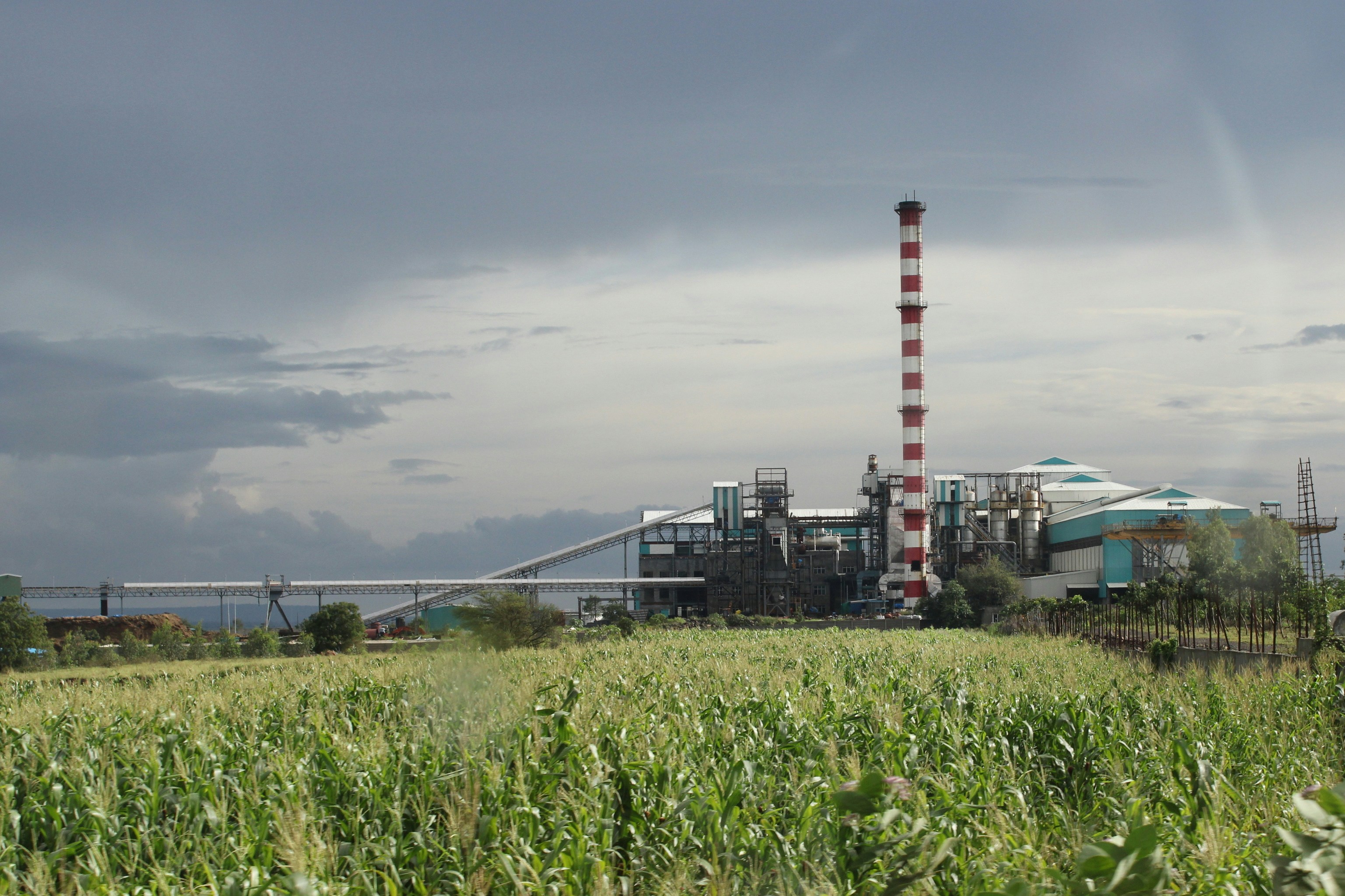
What Comes Next for the Jubail Ammonia Project?
Following the technology award, KBR will provide the licensed process technology, basic engineering design, proprietary equipment and catalysts required under its contract.
Samsung E&A will support the project as EPC contractor.
The planned facility will ultimately add approximately 1.2 million metric tons per year of ammonia production capacity and support SABIC Agri-Nutrients' wider expansion of urea capacity.
The project represents another significant investment in Saudi Arabia's fertilizer industry and demonstrates the continued development of large-scale ammonia production technology in the Kingdom.
The selection of KBR's Purifier® technology for the 3,500 MTPD Jubail ammonia plant adds another major project to Saudi Arabia's growing fertilizer and chemical infrastructure. With KBR providing the technology package and Samsung E&A serving as EPC contractor, the project combines a large-scale ammonia process design with established engineering and construction capabilities.
For SABIC Agri-Nutrients, the development supports a planned increase in urea production capacity from 4.8 million to 7.4 million tonnes per year. For KBR, the award represents its largest ammonia technology license by capacity in the Middle East and Africa and another significant deployment of its Purifier® technology.
KBR — KBR Ammonia Technology Selected for One of the Largest Fertilizer Complexes in Saudi Arabia
KBR — Single Stream 6,000 MTPD Ammonia Plant Using KBR's Purifier Technology
KBR — Ammonia Revamp: KBR Response for Modern Day Challenges
Liquid Ammonia
Found this useful?