Semiconducting COF Research Could Shape Future Battery Materials Standards
Research into dopant-free semiconducting covalent organic frameworks, or COFs, is opening another path for advanced functional materials. While the technology remains at the research and development stage, its progression toward potential commercialization could eventually create new questions for battery material regulators.
The regulatory challenge would not begin with the material's commercial launch alone. Regulators may need to understand how novel COF chemistries perform, what substances they contain and how their production, use and disposal affect existing safety frameworks.
For chemical procurement teams, the development highlights a broader trend. Novel battery materials can create regulatory requirements before supply chains reach commercial scale, making early visibility important for manufacturers and buyers.
Why Semiconducting COFs Matter for Advanced Materials
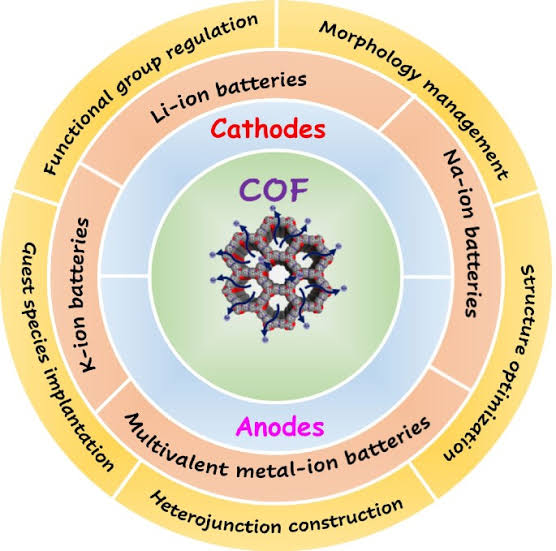
Covalent organic frameworks are porous, ordered materials constructed through the linking of organic building blocks. Their tunable structures make them attractive for research across areas including energy storage, catalysis, sensing and electronics.
Semiconducting COFs are particularly relevant because their electronic properties can support applications where controlled charge transport is important.
Dopant-free approaches are also significant from a materials development perspective. If researchers can achieve useful electronic behaviour without relying on additional dopants, future material systems could have different composition, manufacturing and regulatory profiles.
That distinction may become important if these materials eventually enter battery technologies.
From Laboratory Chemistry to Commercial Regulation
New materials often move through several stages before regulators encounter them at commercial scale. Researchers first establish performance and manufacturing feasibility, while companies later assess whether the material can meet cost, reliability and scalability requirements.
Regulatory frameworks then need to address the material within its actual application.
This progression can create a timing challenge. Regulators may have limited historical data on a novel material when companies begin seeking commercial applications.
For advanced battery materials, regulators could eventually need information covering:
Chemical composition: Understanding the substances and structural components used in the material.
Manufacturing processes: Assessing potential workplace and environmental exposures.
Performance characteristics: Determining how the material behaves under operational conditions.
Safety profile: Evaluating risks during production, storage, use and disposal.
End-of-life behaviour: Considering recycling, recovery and waste-management requirements.
The regulatory framework may therefore need to evolve alongside the technology.
Global Supply Chains Add Another Layer
Battery materials are increasingly sourced through international supply networks. A novel COF could involve raw materials from one country, framework synthesis in another and battery manufacturing somewhere else.
Different jurisdictions may apply different approaches to chemical registration, environmental assessment and product safety.
This can create additional compliance requirements for companies attempting to commercialize new materials globally.
Procurement teams should therefore consider regulatory geography early. A material that can move smoothly through one market may face additional registration or documentation requirements elsewhere.
Regulation Can Influence Commercialization Speed
Regulatory uncertainty can affect investment decisions even before formal standards exist. Companies may hesitate to build large production capacity when future compliance requirements remain unclear.
Clear regulatory pathways can have the opposite effect. When manufacturers understand what testing, documentation and registration will be required, they can incorporate those costs into development planning.
For COF developers and potential battery manufacturers, early engagement with regulatory specialists can therefore become part of commercialization strategy.
This can also help identify material characteristics that may require additional safety or environmental assessment before large-scale production begins.
Sustainability and End-of-Life Questions Will Matter
Battery materials increasingly face scrutiny across their full lifecycle. Regulators and customers may consider not only performance but also resource use, manufacturing impacts and end-of-life management.
Novel COF materials could eventually encounter similar expectations.
Questions may include whether the material can be recovered during battery recycling, whether its chemical components create waste-management concerns and whether manufacturing generates substances requiring additional controls.
These issues are still part of the longer commercialization pathway. However, addressing them early can reduce the risk of discovering major constraints after industrial investment has already begun.
What Chemical Buyers Should Monitor
Procurement professionals do not need to predict which research materials will become commercial products. They can instead monitor signals that indicate a technology is moving toward industrial adoption.
Useful indicators include:
Pilot-scale production: Movement from laboratory synthesis toward repeatable larger-scale manufacturing.
Battery integration: Demonstrations showing that the material performs within complete battery systems.
Supplier development: New commercial partnerships involving COF building blocks or manufacturing.
Regulatory engagement: Increasing attention from chemical and battery safety authorities.
Standardization activity: Industry efforts to establish testing methods or performance specifications.
These signals can help procurement teams distinguish promising research from technologies approaching practical commercialization.
The Bottom Line for Battery Materials Procurement
Dopant-free semiconducting COF research is primarily a materials science development today, but its eventual commercialization could create regulatory questions for the battery industry. As novel chemistries move from research laboratories toward industrial applications, regulators will need frameworks that address performance, safety, environmental impact and lifecycle management.
For chemical buyers, the lesson is to monitor emerging material technologies before they reach full commercial scale. Early awareness can support supplier development, regulatory planning and sourcing diversification.
If semiconducting COFs become part of future battery architectures, their regulatory pathway will likely develop alongside their technical maturity. The companies that understand both sides of that transition will be better positioned to manage the procurement and compliance requirements that follow.
Antimony Trioxide (99.5%) - China
Found this useful?