Seveso III Anniversary Regulatory Review: Is the Directive Keeping Pace With Chemical Industry Change?
The fiftieth anniversary of the Seveso disaster has renewed attention on whether Europe’s major-accident legislation remains suitable for a chemical industry transformed by digitalisation, climate change, new energy technologies, and increasingly complex production systems. The July 10, 1976 release of a toxic dioxin cloud from the ICMESA plant in northern Italy became a turning point in European industrial safety policy. It led to the first Seveso Directive in 1982 and eventually to the current Seveso III Directive, 2012/18/EU, which remains the central EU framework for preventing major accidents involving dangerous substances and limiting their consequences for human health and the environment. The European Commission marked the anniversary by reaffirming the Directive’s importance while explicitly recognising that Europe now faces an evolving risk landscape shaped by digitalisation, climate change, and the energy transition.
Seveso III requires covered industrial establishments to identify major-accident scenarios, operate prevention policies and safety-management systems, prepare emergency plans, provide information to authorities and the public, and undergo risk-based inspections. Its application depends largely on whether listed dangerous substances are present above specified quantity thresholds. The framework has delivered a consistent preventive structure across thousands of European industrial sites, and the Commission’s latest implementation report continues to treat it as an effective cornerstone of EU industrial safety. The report for 2019–2022 examined national implementation, inspections, emergency planning, establishment numbers, and reported accidents rather than announcing a comprehensive replacement of the Directive. The current policy question is therefore not whether Seveso III has ceased to function, but whether its established hazard and quantity-based model captures the full range of operational risks now emerging inside modern chemical facilities.
Why Climate, Cyber, and Mixture Risks Are Driving Calls for Modernisation
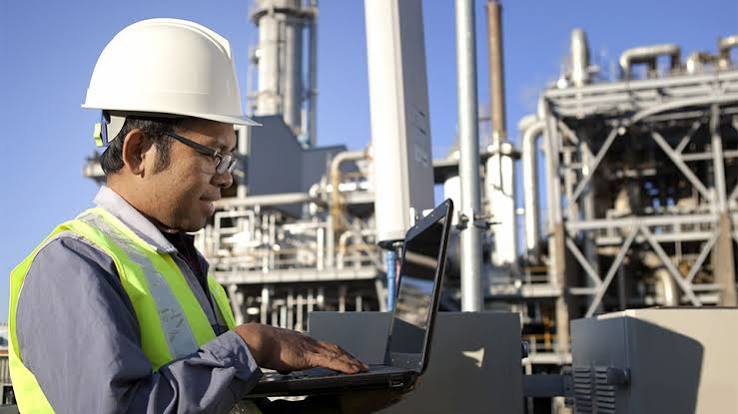
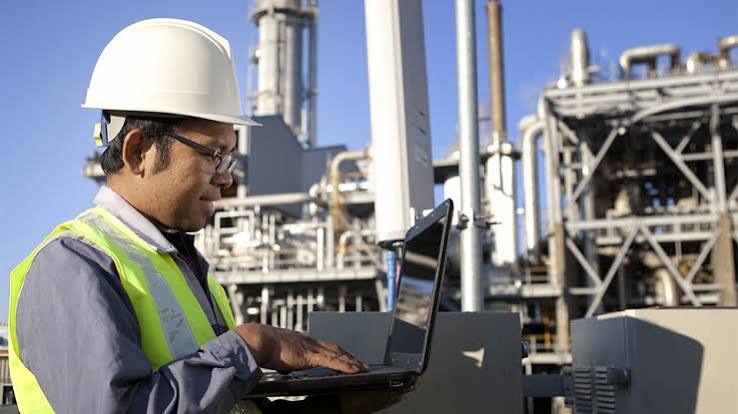
Cybersecurity is one of the clearest areas where the industrial environment has changed since the Seveso framework was first conceived. Modern chemical plants depend extensively on distributed control systems, connected sensors, remote-access tools, automated safety systems, and digitally integrated utilities. A cyberattack may interfere with valves, cooling systems, process controls, alarms, or emergency-response communications in ways capable of contributing to a physical major accident. Seveso III requires operators to maintain safety-management systems and assess major-accident scenarios, which may allow cyber-related risks to be considered where they affect process safety. However, the Directive does not establish a detailed cybersecurity regime for industrial control systems. Chemical companies must therefore manage overlapping requirements through Seveso compliance, the NIS2 cybersecurity framework, national critical-infrastructure rules, and technical process-safety standards rather than relying on one integrated regulatory structure.
Climate-related hazards raise a similar challenge. Flooding, wildfires, extreme heat, drought, storms, and water scarcity can affect chemical storage, power supply, cooling capacity, containment systems, emergency access, and hazardous-material stability. These natural-hazard-triggered technological accidents, often described as Natech events, can create major consequences even where the original trigger is outside the plant. Seveso safety reports and emergency planning can incorporate external hazards, but regulatory specialists increasingly question whether climate projections, compound weather events, and long-duration infrastructure stress are addressed consistently across Member States. A facility designed around historical flood levels or temperature ranges may not remain adequately protected under future climate conditions unless its risk assessment and engineering controls are regularly updated.
The classification of complex substances and mixtures is another area attracting attention. Seveso III is closely aligned with EU classification rules and applies through categories and thresholds covering specified dangerous substances. This structure works most clearly where individual substances have established hazard classifications and known inventories. Modern chemical sites, however, may manage changing waste streams, recycled feedstocks, intermediates, by-products, batteries, hydrogen-related materials, and mixtures whose composition varies over time. A mixture may present significant operational risk even where no single component appears in sufficient quantity to trigger straightforward threshold treatment. This does not necessarily place the material outside the Directive, because mixture-classification rules and hazard categories may still apply, but it can make inventory assessment, regulatory interpretation, and emergency planning more complex.
The energy transition adds further pressure. Hydrogen, ammonia, battery materials, carbon-capture systems, recycled hydrocarbon feedstocks, and large-scale energy storage are introducing new process configurations into existing industrial sites. Some of these substances are already covered by Seveso thresholds, but the combination of new technologies, co-location, rapid scale-up, and limited operating history may require different accident scenarios from those traditionally associated with refineries and conventional chemical plants. Regulators must determine whether existing classifications, thresholds, inspection expertise, and technical guidance remain sufficient as these technologies become commercially widespread.
For compliance professionals, the practical message is to prepare for regulatory evolution without assuming that a formal Seveso IV proposal has already been launched. The Commission’s anniversary statement confirms that changing risks are on the policy agenda, but there is currently no published timetable guaranteeing a comprehensive revision between 2026 and 2030. Companies should monitor Commission evaluations, expert-group activity, implementation reports, delegated amendments to technical annexes, and interactions with NIS2, climate-adaptation, industrial-emissions, and emergency-response legislation. Internal compliance planning should already incorporate cyber-physical accident scenarios, forward-looking climate hazards, variable mixture inventories, and new energy-transition technologies even where national Seveso guidance has not yet been updated explicitly.
The strongest operators will not wait for a legislative revision before modernising their safety cases. They will test whether existing major-accident prevention policies adequately address digital control-system compromise, simultaneous utility failure, extreme weather, alternative feedstocks, and complex mixture behaviour. They will also document how these risks are governed across process safety, cybersecurity, environmental compliance, engineering, and emergency-response functions. The fiftieth anniversary does not establish that Seveso III is obsolete. It does, however, reinforce that a framework created from the lessons of a twentieth-century chemical accident must continually adapt to the interconnected risks of twenty-first-century industry.
Looking for EU industrial-safety intelligence? Treat cyber risk, climate-driven Natech events, complex mixtures, and energy-transition technologies as current compliance issues while monitoring whether the Commission converts anniversary discussion into formal Seveso reform.