SIBUR Retains Top Credit Ratings as Its Investment Cycle Nears Peak
Russian petrochemical group SIBUR has retained top credit ratings as its major investment cycle moves through its peak, highlighting the company's financial resilience while it continues to manage significant capital spending and elevated debt levels.
Chinese rating agency CSCI Pengyuan affirmed SIBUR's long-term rating at “Ai” on the international scale and “AAA” on the Chinese national scale, with a stable outlook. The assessment reflects SIBUR's strong domestic market position, integrated value chain, diversified product portfolio, and secure raw-material access.
The development provides an important indicator for chemical-industry intelligence because SIBUR is balancing large-scale capacity investment with financial discipline during a challenging global petrochemical environment.
Why the Credit Rating Matters
Credit ratings provide an external assessment of a company's financial strength and ability to manage its obligations.
For a capital-intensive petrochemical producer such as SIBUR, maintaining a top rating while completing major projects can support:
Financing flexibility
Access to debt markets
Supplier confidence
Investment continuity
Long-term project execution
Financial planning
CSCI Pengyuan specifically cited SIBUR's market position, vertically integrated value chain, diversified portfolio, and long-term access to raw materials as factors supporting the rating.
Investment Cycle Has Increased Debt
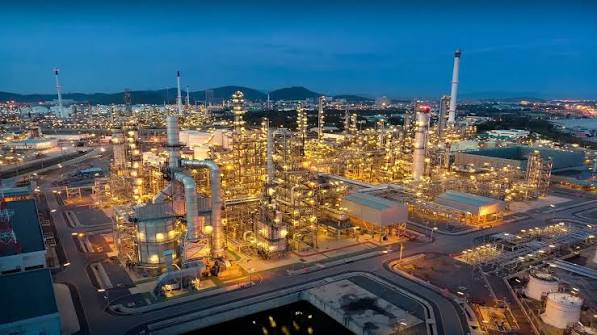
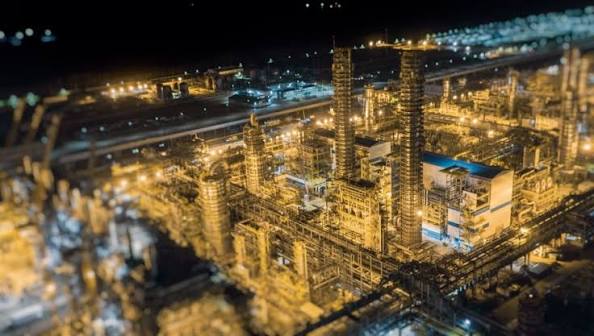
SIBUR entered 2025 at the peak of a major investment cycle. By the end of that year, the company had invested approximately 483 billion rubles in construction and expansion projects, including major developments in Tatarstan and Western Siberia.
The scale of investment resulted in higher debt at the end of the reporting period. However, the rating agency expects SIBUR's debt burden to gradually decline during 2026–2027 as new projects are commissioned and investment intensity moderates.
This creates an important financial transition: moving from a period dominated by capital expenditure toward one increasingly focused on asset utilization, production growth, and deleveraging.
Integrated Operations Provide Structural Support
SIBUR's vertically integrated business model is an important part of its credit profile.
Integration across the petrochemical value chain can provide advantages through:
Secure raw-material access
Greater production coordination
Product diversification
Operational efficiency
Better control of supply flows
Reduced exposure to individual feedstock markets
The rating assessment also highlighted SIBUR's strong domestic market position and its efforts to expand export channels and international cooperation.
New Capacity Could Change the Company's Financial Profile
Large investment programs can temporarily increase financial pressure, but the resulting assets can also expand production capacity and diversify the product portfolio once commissioned.
CSCI Pengyuan expects the phased commissioning of SIBUR's new assets to increase production capacity, broaden its product range, and expand operational scale.
The transition from construction to production therefore becomes a critical phase for monitoring SIBUR's financial performance.
For industry analysts, important indicators include:
Capacity utilization
Production growth
Export volumes
EBITDA generation
Capital expenditure
Net debt
Debt-to-EBITDA
Operating cash flow
Financial Discipline Becomes More Important
SIBUR's latest financial performance provides additional context for the investment-cycle transition.
According to SIBUR's first-half 2026 IFRS results, revenue was 516.4 billion rubles, EBITDA was 196 billion rubles, and net debt stood at approximately 1.015 trillion rubles as of June 30, 2026.
Net debt declined 3.2% from the end of 2025, while net debt-to-EBITDA improved to 2.7x from 2.8x. SIBUR said the reduction in leverage was connected to the company moving beyond the peak of its investment cycle.
ACRA separately confirmed SIBUR's AAA(RU) credit rating with a stable outlook in August 2026, citing its very strong market position, very large business scale, high profitability, strong liquidity, and low debt burden relative to its rating framework.
Market Conditions Remain Challenging
The strong ratings come against a difficult petrochemical backdrop.
SIBUR reported that first-half 2026 revenue declined 2.5% year over year, citing cooling demand across several end-use sectors and a stronger ruble that increased competition from imports.
At the same time, EBITDA increased 1% year over year, supported by operational-efficiency measures including productivity improvements, non-core expense optimization, and more efficient production management.
This suggests that cost control and operational efficiency are becoming increasingly important as the company moves beyond the most investment-intensive phase of its growth program.
Competitive Intelligence
Companies tracking SIBUR and the wider Russian petrochemical sector should monitor several indicators.
1. Debt Reduction
The pace of net-debt reduction will help indicate how quickly the investment cycle is translating into stronger financial flexibility.
2. New Asset Commissioning
The timing and ramp-up of major projects will determine when new capacity begins contributing to production and earnings.
3. Capacity Utilization
Higher utilization of new assets could become an important driver of operating leverage.
4. Export Development
Changes in export channels and international market cooperation can influence SIBUR's ability to diversify demand.
5. Product Portfolio
New specialty and higher-value products could reduce dependence on more cyclical petrochemical segments.
6. Credit Ratings
Future rating actions will provide an external signal of how rating agencies assess SIBUR's leverage, liquidity, profitability, and cash-flow profile.
Procurement Considerations
For chemical buyers and industrial procurement teams, large petrochemical investment programs can have implications beyond corporate finance.
New capacity can influence:
Product availability
Regional supply balances
Export flows
Contract structures
Lead times
Supplier concentration
Pricing dynamics
Procurement teams should therefore track major petrochemical investments alongside production data and credit developments.
A financially resilient producer completing a large investment program may have greater capacity to maintain production and supply commitments, while newly commissioned assets can gradually change regional product availability.
Looking Ahead
SIBUR's retained top credit ratings provide an important signal as the company moves from a capital-intensive investment phase toward a period focused increasingly on commissioning, utilization, operational efficiency, and debt reduction.
The combination of large-scale investment, integrated operations, diversified products, and strong market positioning remains central to the company's financial profile. At the same time, weaker demand and challenging petrochemical market conditions mean that successful execution of the next phase will depend on efficient asset ramp-up and disciplined financial management.
For chemical-market intelligence teams, the most important indicators through 2026–2027 will be new capacity utilization, leverage reduction, operating cash flow, export development, and the contribution of newly commissioned assets.
Key Takeaways
SIBUR retained “Ai” internationally and “AAA” on the Chinese national scale, with a stable outlook from CSCI Pengyuan.
The company invested approximately 483 billion rubles in production construction and expansion through the end of 2025.
SIBUR's net debt reached approximately 1.015 trillion rubles at June 30, 2026, while net debt-to-EBITDA improved to 2.7x.
ACRA also confirmed SIBUR's AAA(RU) rating with a stable outlook in August 2026.
The company is transitioning from peak investment intensity toward asset commissioning and debt reduction.
Procurement teams should monitor new capacity, utilization, exports, and changing regional supply balances.
Sources

Bitumen
Found this useful?