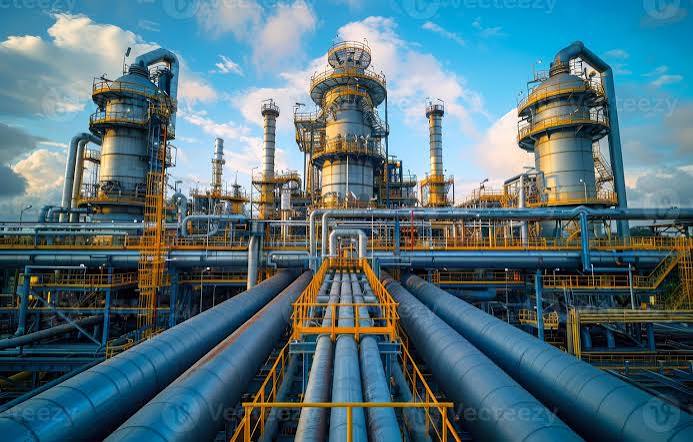
South Korea's petrochemical rationalization drive has claimed another major asset. Lotte Chemical is spinning off its naphtha cracker at Daesan and merging the resulting entity with HD Hyundai Chemical, a deal that permanently closes a plant capable of producing 1.1 million tonnes of ethylene per year.
The closure was targeted for early September 2026, following a March 2026 announcement confirming Lotte's intent to spin off and eventually shut the unit. It adds to a growing list of South Korean cracker closures and mergers moving under the country's Corporate Vitality Act, aimed at addressing years of persistent regional overcapacity.
What the Daesan Cracker Actually Produced
Before its closure, the Daesan steam cracker was a substantial piece of South Korean petrochemical capacity, not a marginal asset.
The unit was designed to produce 1.1 million metric tonnes per year of ethylene.
It also generated 550,000 tonnes per year of propylene and 190,000 tonnes per year of butadiene.
These outputs fed directly into Lotte's downstream polymer and derivative production, meaning the closure ripples beyond ethylene supply alone.
Losing a cracker of this scale is a meaningful subtraction from South Korea's total olefins capacity, even in a market that has been actively trying to shrink itself.
The Structure of the HD Hyundai Deal
This is not simply Lotte walking away from an underperforming asset. The closure is embedded in a formal joint venture structure with a competitor.
Lotte Chemical and HD Hyundai Chemical will each invest roughly 600 billion won, about $398 million, into a newly formed 50:50 joint venture.
The Daesan cracker itself will be permanently closed as part of consolidating production between the two companies.
The deal was announced in March 2026 and targeted for contract signing and completion around the September 2026 timeframe.
Why This Fits a Government-Backed Restructuring Pattern
South Korea's petrochemical sector has been under sustained pressure from regional overcapacity, driven in large part by aggressive Chinese capacity additions over the past several years. The Corporate Vitality Act gives Korean producers a formal legal framework to consolidate and close capacity jointly rather than each absorbing losses independently.
The stated goals of this framework are strengthening vertical integration, improving operational efficiency and securing cost competitiveness.
Lotte has framed the move as part of a broader strategic shift, targeting functional and high-value materials to make up 60 percent of its portfolio by 2030.
The deal is one of several such consolidation moves working through South Korea's chemical sector as producers respond to structurally weak olefins margins.
How This Fits Alongside Korea's Broader Earnings Recovery
The timing here is worth noting against a separate, recent trend. South Korea's chemical sector just posted one of its strongest KOSPI earnings upgrades in months, driven by falling naphtha costs and rising polyethylene prices. That improving margin environment does not contradict this closure. It reinforces the underlying strategy.
Rationalization moves like the Daesan closure are designed to permanently reduce excess olefins capacity, supporting margins for the capacity that remains.
An improving spread environment gives producers more financial breathing room to absorb the one-off costs of closures and joint venture restructuring.
Together, these two trends suggest Korean producers are simultaneously shrinking the industry's total footprint while positioning surviving assets to capture better margins.
What Buyers Should Watch Next
For ethylene, propylene and downstream polymer buyers with exposure to Korean supply, the Daesan closure is a genuine capacity reduction, not a temporary maintenance event. Buyers sourcing HDPE, LLDPE, ethylene glycol or styrene monomer through Lotte's broader production network should confirm which specific product lines were fed by Daesan output versus Lotte's Yeosu and Ulsan complexes, since supply continuity will vary by product depending on where that capacity sat.
More broadly, this closure is a useful marker for tracking how far South Korea's rationalization wave has progressed. With a major asset like Daesan now permanently exiting the market through a formal joint venture structure, buyers should expect further consolidation announcements as the region continues working through its structural overcapacity problem.