Applications and Buyers
Soy Protein Concentrate Market 2026: Applications, Buyers, and Global Demand
calendar_todayMay 19, 2026
person
Applications and Buyers Shaping the Soy Protein Concentrate Market in 2026
Introduction to Soy Protein Concentrate Market
Soy protein concentrate (SPC) continues to strengthen its position as a strategic platform chemical and functional protein ingredient across global food, feed, and nutrition industries in 2026. Produced through the removal of soluble carbohydrates from defatted soybean meal, SPC typically contains protein levels above 65%, making it highly attractive for manufacturers seeking cost-efficient and sustainable protein enrichment solutions. The global soy protein concentrate market is projected to grow at a CAGR of 6.8% through 2030, supported by increasing demand for plant-based proteins and high-performance feed ingredients. Average global pricing in early 2026 remains between USD 1,150–1,420/MT, while worldwide production volumes are estimated to exceed 9.5 million metric tons annually.
Food and Beverage Industry Accelerates Demand
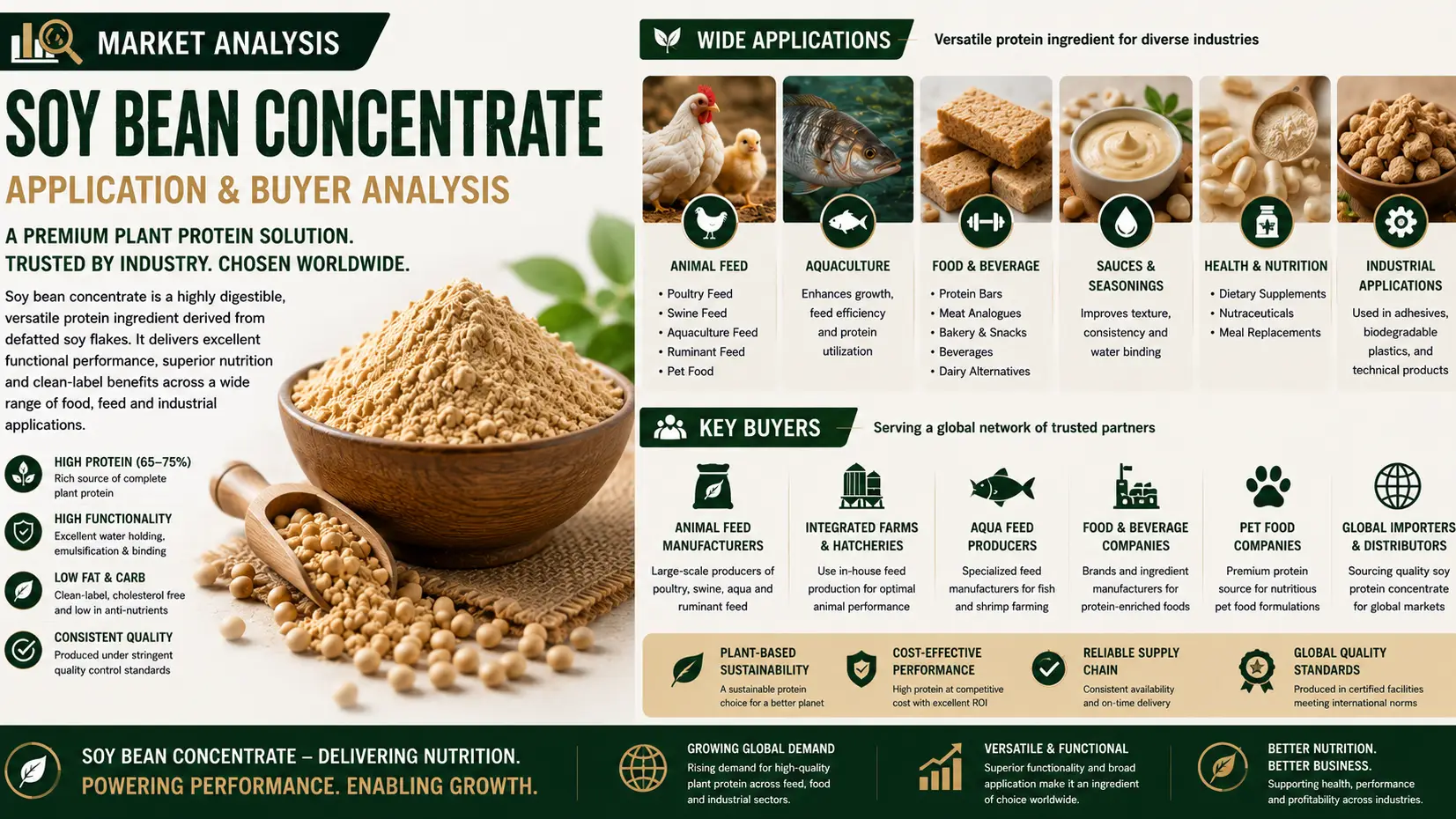
The food and beverage sector remains the largest buyer segment for soy protein concentrate in 2026, particularly among producers of meat alternatives, bakery products, nutritional beverages, and dairy substitutes. Manufacturers increasingly utilize SPC for its emulsification, water retention, and texture-enhancing capabilities. In Asia-Pacific and North America, plant-based food companies have expanded procurement contracts amid rising consumer demand for protein-rich diets.
Industrial buyers are prioritizing non-GMO and identity-preserved soy protein concentrate, especially in premium retail markets. In Europe, food-grade SPC prices have reached approximately USD 1,480/MT, reflecting tight supply and stronger certification requirements. Large-scale processors in China and the United States collectively account for over 55% of global food-grade SPC output in 2026.
Animal Feed Producers Expand Procurement Volumes
Animal nutrition remains a core application area, particularly in aquaculture, poultry, and swine feed manufacturing. Soy protein concentrate is increasingly replacing fishmeal due to cost stability and improved amino acid consistency. Aquafeed producers in Norway, Vietnam, and Ecuador are among the largest industrial buyers, with global aquaculture consumption surpassing 3.2 million metric tons this year.
Feed manufacturers value SPC for its digestibility and low anti-nutritional factors, especially in shrimp and salmon farming. Feed-grade SPC prices currently range from USD 980–1,180/MT, depending on protein concentration and origin. Brazil and Argentina continue expanding crushing and processing capacities to meet export demand from Asia and Europe.
Emerging Buyers in Functional Nutrition and Pet Food
Beyond traditional sectors, the functional nutrition and pet food industries are becoming high-growth purchasing segments. Sports nutrition companies increasingly incorporate soy protein concentrate into protein blends, meal replacements, and fortified beverages due to its affordability relative to whey protein.
Meanwhile, premium pet food manufacturers are integrating SPC into hypoallergenic and high-protein formulations. The global pet nutrition sector alone is expected to contribute nearly 14% of incremental SPC demand growth between 2026 and 2029. Buyers are particularly concentrated in the United States, Germany, Japan, and South Korea, where demand for sustainable ingredient sourcing continues to rise.
Regional Trade Dynamics and Industrial Purchasing Trends
Global trade patterns for soy protein concentrate are shifting alongside soybean processing investments. China remains the dominant importer, while Brazil strengthens its role as a competitive exporter due to lower soybean feedstock costs. Freight volatility and energy prices continue influencing international SPC pricing, especially for containerized food-grade shipments.
In 2026, global export volumes are expected to surpass 4.1 million metric tons, with Southeast Asia emerging as one of the fastest-growing consumption regions. Long-term procurement agreements between multinational food manufacturers and protein processors are becoming increasingly common as buyers seek price stability and supply security.
Conclusion
As a platform chemical and high-value protein ingredient, soy protein concentrate continues to expand across food, feed, functional nutrition, and pet care industries in 2026. Strong application diversity, evolving buyer preferences, and rising global protein demand are sustaining long-term market growth despite pricing and logistics fluctuations. Companies operating in this sector increasingly require dependable sourcing networks, consistent quality standards, and flexible international supply solutions.
In this evolving market environment, Tradeasia International supports global buyers and manufacturers through integrated chemical and ingredient sourcing services, competitive procurement channels, and international distribution capabilities tailored to industrial supply chain requirements.
Sources
soy protein concentratefeed AdditivesAditif pakanKonsentrat Protein KedelaiFuttermittelzusatzstoffeSojaproteinkonzentratफीड एडिटिव्ससोया प्रोटीन कॉन्सेंट्रेट
Found this useful?