Spain Seals the Last Castor Wells
Spain Seals the Last Castor Wells
Spain Completes a Major Offshore Decommissioning Milestone
Spain has completed the permanent sealing of all 13 wells at the controversial Castor underground natural gas storage facility off the Mediterranean coast. On October 5, 2026, gas infrastructure operator Enagás announced that the work had been completed in accordance with the technical, environmental and safety requirements established for the project.
The operation marks a major milestone in the long-running decommissioning of Castor, which was suspended after a series of earthquakes occurred during the facility's initial gas injection activities in 2013.
The Spanish government subsequently ordered the facility to be dismantled and its wells permanently abandoned. Enagás carried out the sealing work under the mandate of Spain's Ministry for the Ecological Transition and the Demographic Challenge (MITECO).
With the wells now sealed, the project can progress toward the final dismantling of the remaining offshore and onshore surface installations.
How the 13 Castor Wells Were Permanently Sealed
The sealing programme involved complex offshore well-abandonment operations designed to isolate the wells permanently and prevent unwanted fluid or gas migration.
Enagás used the Noble Resolve jack-up offshore platform to carry out the work. A jack-up platform can be positioned at an offshore location and supported on legs extending to the seabed, providing a stable working environment for specialised operations.
Three plugs were installed in each of the 13 wells, creating multiple barriers intended to provide permanent isolation. The work required specialised equipment, technical planning and verification to meet the applicable abandonment requirements.
The final operations also included cutting the well casings and conductors below the seabed and removing associated wellhead equipment and pipes. This left the seabed clear of the components associated with the wells.
The objective was not simply to stop gas flow temporarily, but to permanently abandon the wells and restore conditions that support their long-term isolation.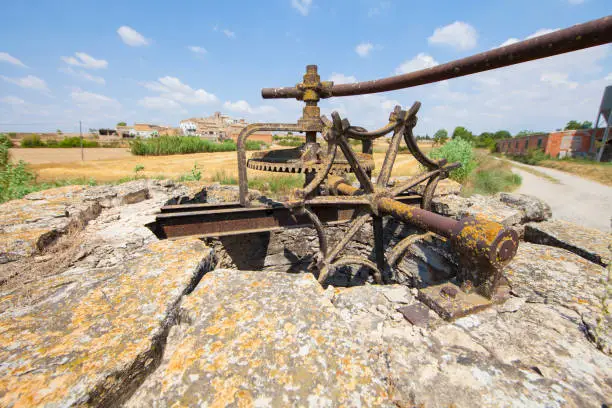
Why Was the Castor Gas Storage Facility Closed?
Castor was developed to provide underground natural gas storage beneath the Mediterranean Sea, approximately 21.6 kilometres off the coast near Vinaròs in Castellón, eastern Spain.
Underground storage facilities can help balance gas supply and demand by storing gas when it is available and withdrawing it when demand increases. Castor was intended to provide this flexibility for Spain's gas system.
However, the facility's initial gas injection activities in September 2013 were followed by hundreds of seismic events in the surrounding area. The events prompted the suspension of operations and raised serious questions about the suitability and safety of the project.
The storage facility was subsequently placed in a state of technical preservation, commonly described as hibernation. In October 2019, Spain's Council of Ministers ended that status and ordered the facility's dismantling and the permanent sealing and abandonment of its wells.
The final sealing programme is the result of that decision and the subsequent technical and regulatory process.
What Did the Castor Sealing Operation Cost?
The permanent sealing operation has been reported to cost approximately €241 million, subject to final certification.
The figure relates to the well-sealing and abandonment work, rather than necessarily representing the full lifetime cost of the original Castor project or every remaining decommissioning activity.
Castor has been the subject of considerable public and legal controversy since its suspension. Its history involves the original infrastructure investment, the seismic events, the decision to abandon the storage facility and the financial consequences of bringing the project to an end.
The latest milestone closes an important technical chapter, but the remaining dismantling work will still need to be completed.
What Happens to the Remaining Castor Infrastructure?
The Castor facility includes more than the 13 wells. Its wider infrastructure consists of an offshore surface installation and an onshore operating facility near Vinaròs, connected by a pipeline system.
The offshore structure is located around 21.6 kilometres from the coast. The connecting pipeline is approximately 30.3 kilometres long, including offshore and onshore sections.
Now that the wells have been permanently sealed, the next stage is the final dismantling of the remaining marine and land-based surface installations.
This work involves removing infrastructure that is no longer required while complying with applicable safety and environmental requirements. The permanent abandonment of the wells is an important prerequisite because it addresses the long-term isolation of the subsurface openings before the wider facilities are removed.
Completion of the sealing operation does not mean that all Castor infrastructure has already been dismantled.
Why Permanent Well Abandonment Matters
Offshore well abandonment is a specialised part of the oil and gas industry's decommissioning process. Wells that are no longer required must be isolated to reduce the risk of gas or fluids migrating into other geological formations or reaching the seabed.
Multiple barriers, engineering verification and regulatory oversight are important parts of this work. The design and execution requirements depend on the characteristics of each well and the geological conditions.
In Castor's case, the work has additional significance because the facility was suspended following a seismic episode associated with its initial operation. Permanent sealing is part of the broader process of bringing the project to an end and managing the remaining infrastructure.
The successful completion of the 13 wells represents progress toward the site's final decommissioning, although long-term responsibilities and any remaining regulatory obligations must continue to be addressed as required.
A Controversial Energy Project Reaches a New Stage
The Castor project was originally intended to strengthen Spain's gas storage capacity. Instead, its suspension following the 2013 seismic events led to years of preservation, regulatory decisions and decommissioning work.
Enagás's October 2026 announcement confirms that the permanent sealing of all 13 wells has now been completed. The installation of three plugs in each well and the removal of associated equipment represent a key step in securing the subsurface infrastructure.
The next phase will focus on dismantling the remaining offshore and onshore installations. For Spain, this marks further progress in closing out a complex energy infrastructure project whose operational history differed sharply from its original purpose.
Sources
Enagás — Official announcement, October 5, 2026: Enagás completes the permanent sealing of the Castor underground storage wells
Spain's Official State Gazette (BOE) — April 14, 2025: Authorisation for the permanent sealing and abandonment of the Castor wells
Cinco Días — October 5, 2026: Enagás completes sealing of the Castor gas storage wells
Spain's Official State Gazette (BOE) — November 2019: Government agreement ordering the dismantling of Castor and permanent well abandonment
Found this useful?