
Specialty Fertilizers Market Forecast: Growth in Precision Agriculture
Precision agriculture is changing how farmers manage fertilizers, water and soil nutrients, creating new opportunities across the agricultural inputs industry. The specialty fertilizers market is gaining momentum as growers increasingly focus on improving nutrient efficiency, enhancing crop quality and reducing losses during application.
Unlike conventional fertilizers that primarily supply nutrients in bulk, specialty fertilizers offer targeted solutions for specific crops, soil conditions and growing environments. Their growing integration with precision farming technologies is reshaping fertilizer demand and creating opportunities for manufacturers, exporters, distributors and procurement professionals.
Market projections reflect this expansion. According to Grand View Research, the global specialty fertilizers market was valued at approximately USD 40 billion in 2025 and is projected to reach USD 62.2 billion by 2033, growing at a compound annual growth rate (CAGR) of 5.7% between 2026 and 2033.
What Is Driving the Specialty Fertilizers Market?
Specialty fertilizers are formulated to deliver nutrients efficiently and address specific agricultural requirements. They include water-soluble fertilizers, controlled-release fertilizers, liquid formulations and micronutrient products designed to support targeted crop nutrition.
Several structural changes in agriculture are supporting market expansion:
Rising food demand: Growing populations and changing dietary preferences are increasing pressure on agricultural producers to improve productivity.
Limited arable land: Farmers must maximize output from existing farmland, increasing interest in efficient nutrient management.
Soil nutrient deficiencies: Continuous cultivation can deplete essential nutrients, creating demand for customized fertilizer formulations.
High-value crop production: Fruits, vegetables, horticultural crops and greenhouse cultivation require precise nutrient management to maintain quality and yields.
Sustainability requirements: Agricultural producers increasingly seek solutions that reduce nutrient losses and improve resource efficiency.
These developments are encouraging fertilizer manufacturers to move beyond conventional bulk products toward specialized formulations that address individual crop requirements.
Precision Agriculture Is Reshaping Fertilizer Demand
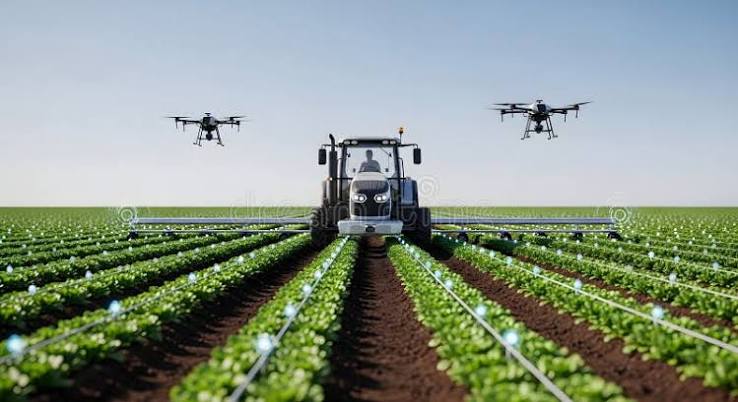
Precision agriculture combines agricultural data, technology and field-level management to optimize farming operations. GPS-guided machinery, soil sensors, satellite imagery, drones and digital farm management platforms help growers understand variations in soil conditions and crop requirements.
This approach changes how farmers purchase and apply fertilizers. Instead of treating entire fields uniformly, they can adjust nutrient applications according to specific conditions.
Key technologies supporting specialty fertilizer adoption include:
Variable-rate application: Equipment adjusts fertilizer quantities across different areas of a field according to soil and crop data.
Soil mapping: Detailed soil information helps identify nutrient deficiencies and develop targeted fertilizer strategies.
Remote sensing: Satellite imagery and drones help monitor crop development and identify areas requiring additional attention.
Digital nutrient management: Farm software supports application planning, crop monitoring and nutrient budgeting.
Precision irrigation: Automated irrigation systems integrate water delivery with fertilizer application to improve nutrient availability.
As these technologies become more accessible, demand for compatible specialty fertilizer formulations is likely to increase across commercial farming operations.
Key Specialty Fertilizer Categories Gaining Attention
Different specialty fertilizer categories serve different agricultural needs. Their commercial potential depends on crop requirements, local farming practices, irrigation infrastructure and access to application technology.
Water-Soluble Fertilizers
Water-soluble fertilizers dissolve readily in water and support fertigation and foliar application. Their compatibility with irrigation systems makes them valuable in greenhouses, horticulture and intensive farming.
These products allow growers to deliver nutrients during specific growth stages. Their demand is closely linked to the expansion of precision irrigation and commercial crop cultivation.
Controlled-Release Fertilizers
Controlled-release fertilizers gradually release nutrients over a defined period. Protective coatings regulate nutrient availability and help match nutrient delivery with crop development.
These formulations can reduce the need for repeated applications, making them attractive for horticulture, turf management, landscaping and selected field crops.
Micronutrient Fertilizers
Micronutrients such as zinc, iron, boron and manganese support essential plant functions despite being required in relatively small quantities.
Soil deficiencies and increasing awareness of balanced crop nutrition are strengthening demand for micronutrient products. Customized blends also offer suppliers opportunities to address specific regional soil conditions.
Liquid Specialty Fertilizers
Liquid formulations support uniform distribution and compatibility with modern spraying and irrigation systems. They are increasingly relevant to large-scale farms seeking convenient application methods and efficient nutrient delivery.
Fertigation: A Major Opportunity for Specialty Fertilizer Suppliers
Fertigation combines irrigation with fertilizer application, allowing nutrients to reach crops through irrigation water. This technique supports precise nutrient management while potentially reducing labor and application time.
The approach is particularly relevant in regions facing water scarcity or operating intensive agricultural systems.
Commercial opportunities include:
Water-soluble NPK formulations for different crop growth stages
Potassium nitrate and other soluble nutrient sources
Micronutrient solutions for targeted deficiency management
Crop-specific fertilizer blends for horticulture and protected cultivation
Compatible products for drip and sprinkler irrigation systems
Grand View Research identifies fertigation as the leading application segment in the specialty fertilizers market in 2025, reflecting the importance of irrigation-based nutrient delivery.
For chemical traders, understanding the compatibility, solubility and intended application of these products can help strengthen relationships with agricultural distributors and commercial growers.
Regional Market Trends and Growth Opportunities
Regional agricultural conditions play a significant role in specialty fertilizer consumption. Climate, soil composition, crop selection, irrigation infrastructure and farming investment influence the adoption of advanced nutrient solutions.
Asia-Pacific
Asia-Pacific represents a significant specialty fertilizer market, supported by large agricultural economies, intensive cultivation and increasing investment in modern farming practices.
China and India offer substantial opportunities due to extensive crop production and growing interest in agricultural productivity. Southeast Asian markets also present potential demand across horticulture, plantation crops and commercial agriculture.
North America
North American agriculture benefits from established precision farming infrastructure and widespread use of digital agricultural technologies.
Demand is supported by commercial farming operations, advanced irrigation systems and interest in improving fertilizer efficiency. Controlled-release products, liquid fertilizers and micronutrient solutions remain relevant to specialized crop requirements.
Europe
European agricultural markets place considerable emphasis on nutrient efficiency, environmental management and sustainable farming practices.
Specialty fertilizers can support growers seeking to optimize nutrient application while responding to environmental requirements. Manufacturers with efficient formulations and consistent product quality may find opportunities across established agricultural supply chains.
Latin America
Brazil and other agricultural economies in Latin America provide opportunities for specialty fertilizer suppliers serving large-scale crop production.
Commercial farming, export-oriented agriculture and diverse soil conditions create demand for tailored nutrient solutions. Efficient nutrient management remains particularly important for maintaining crop productivity across extensive agricultural areas.
Challenges Affecting Market Expansion
Despite promising growth, specialty fertilizer suppliers face several commercial and operational challenges.
Higher product costs: Specialty formulations often command higher prices than conventional fertilizers. Farmers may hesitate to adopt them when agricultural commodity prices decline or operating costs increase.
Limited technical awareness: Some growers lack sufficient knowledge of specialty fertilizer benefits, application techniques and crop-specific nutrient requirements.
Infrastructure constraints: Precision fertigation requires appropriate irrigation equipment, technical support and reliable access to agricultural inputs.
Supply chain volatility: Raw material prices, energy costs, freight rates and geopolitical disruptions can affect production economics and international availability.
Product compatibility: Certain formulations require careful handling and compatibility assessment when used with irrigation systems or other agricultural inputs.
For distributors and exporters, reliable product specifications, appropriate packaging, technical documentation and consistent quality can help address these concerns.
Sustainability and Efficient Nutrient Management
Environmental considerations are becoming increasingly important in fertilizer purchasing and agricultural production. Excessive or poorly timed nutrient application can contribute to nutrient runoff, soil degradation and greenhouse gas emissions.
Specialty fertilizers can support more efficient nutrient management through several approaches:
Controlled-release formulations that regulate nutrient availability over time
Water-soluble products that support targeted application
Micronutrient solutions that address specific deficiencies
Fertigation systems that integrate nutrient delivery with irrigation
Customized fertilizer blends designed for particular soil and crop conditions
These technologies do not automatically eliminate environmental impacts. Their benefits depend on suitable product selection, appropriate application rates, soil conditions and effective farm management.
For manufacturers, developing products that support nutrient-use efficiency can strengthen their position in agricultural markets where sustainability is becoming a purchasing consideration.
Competitive Landscape and Product Innovation
The specialty fertilizers industry includes established fertilizer producers, agricultural input companies and specialized nutrient solution manufacturers.
Major companies operating in the market include:
Yara International
Nutrien Ltd.
ICL Group
The Mosaic Company
SQM
EuroChem Group
K+S
OCP Group
CF Industries
Competition increasingly extends beyond fertilizer production. Companies are investing in product development, agricultural advisory services, distribution networks and digital tools that help growers select appropriate nutrient solutions.
Strategic partnerships with distributors, agronomists and agricultural technology providers can also support market penetration. These relationships help manufacturers reach customers while providing technical support that encourages product adoption.
For chemical traders, opportunities may emerge in sourcing specialty nutrient products, supplying agricultural distributors and developing regional partnerships with manufacturers.
Specialty Fertilizers Market Forecast for 2027 and Beyond
The outlook for specialty fertilizers remains positive as precision agriculture, advanced irrigation and efficient nutrient management continue to influence agricultural investment.
Grand View Research estimates that the global market will expand from USD 42.2 billion in 2026 to USD 62.2 billion by 2033, representing a CAGR of 5.7%. Other research firms project different market sizes and growth rates because they apply varying market definitions and forecasting methodologies.
Several developments could shape the next phase of growth:
Greater precision farming adoption: Digital monitoring and variable-rate application technologies will support demand for targeted nutrient solutions.
Expansion of fertigation: Investment in irrigation infrastructure will encourage consumption of water-soluble and liquid fertilizers.
Growth in micronutrient demand: Greater attention to soil health and nutrient deficiencies will increase demand for specialized formulations.
Product innovation: Improved coatings, customized blends and enhanced nutrient delivery technologies will expand product differentiation.
Emerging agricultural markets: Modernization of farming practices in developing economies may create additional opportunities for specialty fertilizer manufacturers and exporters.
Market participants that combine product quality, technical expertise and reliable distribution are likely to be better positioned to capture these opportunities.
What Procurement Teams and Chemical Traders Should Do Now
The changing specialty fertilizers market creates opportunities for buyers and sellers across agricultural supply chains. However, successful procurement requires more than comparing prices.
Procurement teams should evaluate:
Nutrient composition and product grade
Solubility and compatibility with irrigation systems
Crop-specific requirements and application methods
Product specifications and quality documentation
Packaging, storage conditions and shelf life
Supplier consistency and shipment reliability
Total landed cost, including freight and logistics
Chemical traders can also broaden their portfolios by identifying demand for water-soluble fertilizers, micronutrients, controlled-release formulations and specialized NPK products.
Understanding local agricultural practices and seasonal purchasing cycles can help importers and distributors anticipate demand and develop stronger relationships with customers.
The specialty fertilizers market is moving toward more targeted, technology-supported and resource-efficient crop nutrition. Precision agriculture is not simply changing how farmers operate. It is also creating new commercial opportunities for fertilizer producers, chemical suppliers and international trading businesses.

Monoammonium Phosphate (Technical) - Morocco
Found this useful?