
Specialty Fertilizers: The Growing Role of Water-Soluble and Controlled-Release Products
Agricultural producers increasingly need fertilizer solutions that deliver nutrients efficiently while supporting higher crop productivity and better resource management. Specialty fertilizers are gaining commercial importance as farmers move towards precision agriculture, fertigation and nutrient management systems that match fertilizer applications with specific crop requirements.
Two important categories are water-soluble fertilizers and controlled-release fertilizers. Water-soluble products allow farmers to deliver nutrients through irrigation systems or foliar applications, while controlled-release formulations regulate nutrient availability over an extended period.
These technologies create opportunities for fertilizer manufacturers, chemical traders, importers, exporters and agricultural input distributors. However, their commercial success depends on formulation quality, nutrient composition, application requirements and reliable supply chains.
What Are Specialty Fertilizers?
Specialty fertilizers are products designed to address specific crop nutrition requirements through advanced formulations, nutrient delivery methods or controlled nutrient availability. Unlike conventional fertilizers that often supply nutrients through standard soil applications, specialty products offer more targeted approaches to agricultural nutrient management.
Their development reflects the growing demand for efficient fertilizer use across commercial farming, horticulture, greenhouse production and high-value crop cultivation.
The category includes several product types:
Water-soluble fertilizers: Fully soluble nutrient products designed for fertigation, drip irrigation and foliar feeding.
Controlled-release fertilizers: Products that regulate nutrient release through coatings, membranes or specialised carrier materials.
Slow-release fertilizers: Formulations that release nutrients gradually through chemical or biological processes.
Specialised nutrient blends: Fertilizer combinations developed to meet particular crop requirements or growing conditions.
Water-soluble and controlled-release products serve different purposes. One provides nutrients in a form that dissolves readily in water, while the other regulates the speed at which nutrients become available to plants.
Water-Soluble Fertilizers and Their Role in Precision Agriculture
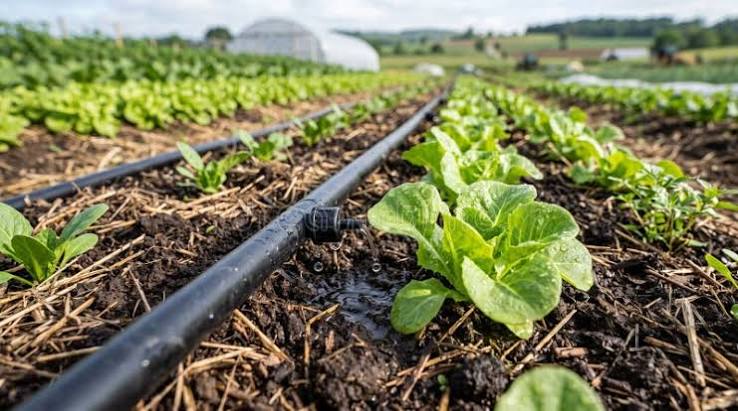
Water-soluble fertilizers contain nutrients that dissolve completely in water under specified conditions. Farmers can apply these products through fertigation systems or foliar spraying, allowing them to supply nutrients according to crop development stages.
Fertigation combines irrigation and fertilizer application. It enables agricultural producers to deliver measured nutrient quantities directly through irrigation water, particularly in drip and micro-irrigation systems.
The International Fertilizer Association identifies fertigation as an important approach to improving water and nutrient management through the application of appropriate fertilizer sources, rates, timing and placement.
Several characteristics make water-soluble fertilizers commercially attractive:
1. Efficient nutrient delivery
Water-soluble products allow farmers to supply nutrients directly through irrigation systems. This supports more targeted nutrient management and reduces the need for some conventional soil application operations.
2. Flexible application schedules
Farmers can adjust fertilizer concentrations and application frequency according to crop growth stages. This flexibility is especially useful in greenhouse production and intensive horticulture.
3. Compatibility with modern irrigation
Drip irrigation and other fertigation systems rely on suitable soluble nutrient sources. Fertilizers must dissolve properly and should not introduce excessive insoluble material that could obstruct irrigation equipment.
4. Support for foliar nutrition
Selected water-soluble fertilizers can also supply nutrients through leaf applications. This provides another option for addressing specific nutritional requirements during crop development.
However, buyers must evaluate solubility, nutrient concentration, water quality compatibility and product purity before selecting a fertilizer for commercial agricultural applications.
Controlled-Release Fertilizers: Managing Nutrient Availability Over Time
Controlled-release fertilizers use specialised coatings, membranes or matrix technologies to regulate how quickly nutrients become available after application. Manufacturers generally incorporate soluble nutrient sources into granules or other formulations and apply a release-controlling structure around them.
Water enters the product through the coating or matrix, dissolves the internal nutrients and allows them to move gradually into the surrounding soil.
This technology aims to align nutrient availability more closely with crop requirements. Instead of releasing the entire nutrient supply immediately, the fertilizer provides nutrients over a designed period.
Common controlled-release technologies include:
Polymer-coated fertilizers: Specialised polymer membranes regulate water penetration and nutrient diffusion.
Sulfur-coated fertilizers: Sulfur layers help delay nutrient release, although coating integrity can influence consistency.
Multilayer coatings: Manufacturers combine different coating materials to adjust release characteristics.
Biodegradable coatings: Research increasingly explores bio-based materials that can regulate nutrient release while reducing dependence on persistent synthetic materials.
Controlled-release products can reduce the frequency of fertilizer applications and help limit nutrient losses under suitable conditions. Their performance still depends on coating characteristics, soil moisture, temperature and the crop's nutrient requirements.
Water-Soluble vs Controlled-Release Fertilizers: Understanding the Difference
Both technologies improve nutrient management, but their delivery mechanisms and applications differ considerably.
Water-soluble fertilizers provide readily available nutrients once they dissolve in water. Farmers can control their application timing and concentration through irrigation or foliar feeding.
Controlled-release fertilizers regulate nutrient availability through the physical characteristics of the product. Their coatings or matrices determine how quickly nutrients move into the surrounding soil.
The main commercial differences include:
Nutrient delivery: Water-soluble products deliver dissolved nutrients through irrigation or spraying, while controlled-release products regulate nutrient movement over time.
Application methods: Water-soluble fertilizers suit fertigation and foliar feeding, whereas controlled-release products commonly support soil application.
Nutrient availability: Water-soluble products become available rapidly after dissolution, while controlled-release formulations extend nutrient availability.
Equipment requirements: Fertigation requires compatible irrigation and nutrient delivery equipment, while controlled-release granules generally require appropriate soil application methods.
Procurement priorities: Buyers of soluble fertilizers prioritise purity, solubility and compatibility, while controlled-release buyers focus on coating quality, release duration and product consistency.
Neither category is universally better. Agricultural producers should select products according to crop requirements, irrigation infrastructure, soil characteristics and operational costs.
Agricultural Applications Driving Specialty Fertilizer Demand
Specialty fertilizers serve a growing range of agricultural applications, particularly where growers require accurate nutrient management and consistent crop performance.
Commercial greenhouse production
Greenhouse operators frequently use water-soluble fertilizers because they can adjust nutrient concentrations according to crop development. Fertigation also supports controlled nutrient delivery in soilless growing systems.
Fruit and vegetable cultivation
High-value crops often require carefully managed nutrient programmes. Water-soluble fertilizers provide flexibility during different growth stages, while controlled-release products can support longer-term nutrient availability.
Cereal and field crop production
Controlled-release fertilizers can help manage nutrient supply across extended growing periods. Their suitability depends on local soil conditions, rainfall patterns and crop nutrient requirements.
Nurseries and ornamental plants
Container-grown plants require careful nutrient management because growing media hold limited nutrient reserves. Controlled-release products can provide a more extended nutrient supply, while soluble products allow growers to make targeted adjustments.
Plantation agriculture
Commercial plantations can evaluate both fertilizer categories according to crop cycles, soil conditions and application costs. Selecting the appropriate formulation can support more organised nutrient management across large cultivation areas.
Market Opportunities for Manufacturers and International Traders
The specialty fertilizer sector offers opportunities for businesses operating across fertilizer production, chemical distribution and agricultural supply chains.
Growing adoption of fertigation, greenhouse cultivation and precision agriculture encourages demand for products with specific solubility characteristics and controlled nutrient delivery.
Manufacturers can explore several areas of commercial development:
Advanced formulations: Developing water-soluble NPK blends and specialised nutrient combinations for different crops.
Coating technology: Improving controlled-release coatings to achieve more consistent nutrient release.
Product diversification: Expanding from conventional fertilizer production into soluble and enhanced-efficiency formulations.
Regional distribution: Supplying agricultural markets where drip irrigation and commercial horticulture are expanding.
Technical partnerships: Working with agricultural distributors and irrigation equipment suppliers to improve product adoption.
For importers and exporters, specialty fertilizers create opportunities to serve agricultural markets that require reliable access to specific nutrient formulations.
However, market entry requires an understanding of local agricultural practices, product registration requirements and the technical expectations of commercial buyers.
Procurement Challenges and Product Quality Requirements
Specialty fertilizers require careful purchasing decisions because their performance depends on technical characteristics that may not appear in a basic product quotation.
For water-soluble fertilizers, procurement teams should examine:
Solubility: The product should dissolve appropriately under the intended water conditions without leaving excessive insoluble residues.
Purity: Impurities can affect crop safety and irrigation equipment performance.
Nutrient composition: Buyers should confirm the guaranteed nutrient analysis and the proportions of relevant nutrients.
Water compatibility: Product performance should be evaluated against irrigation water quality and the risk of precipitation or clogging.
Packaging: Moisture-resistant packaging helps protect products during storage and transportation.
Controlled-release fertilizers require a different quality assessment.
Buyers should review coating composition, coating integrity, nutrient release duration and batch consistency. They should also request technical information describing how release performance changes under different soil temperatures and moisture conditions.
International traders should additionally evaluate supplier production capacity, shipping arrangements, documentation and the ability to maintain product quality throughout transportation.
A low purchase price does not necessarily represent the best commercial value. Product suitability, application efficiency and reliability of supply should also influence procurement decisions.
Sustainability and the Future of Specialty Fertilizers
Specialty fertilizers can contribute to more efficient agricultural nutrient management by improving the timing, placement and availability of nutrients. Better nutrient management can help reduce unnecessary applications and nutrient losses under appropriate farming conditions.
Water-soluble fertilizers support precision application through fertigation, while controlled-release formulations can extend nutrient availability and reduce the need for repeated applications.
However, controlled-release technology also faces environmental challenges. Conventional polymer coatings may leave persistent residues in soil, creating interest in biodegradable alternatives and more sustainable coating materials.
Research increasingly focuses on bio-based coatings, hydrogel systems and advanced matrix formulations. These developments aim to balance predictable nutrient release, manufacturing efficiency and environmental compatibility.
For manufacturers, investment in coating technology, formulation research and quality control can create opportunities for product differentiation. For agricultural buyers, evaluating both agronomic performance and environmental characteristics will become increasingly important.
What Procurement Teams Should Prioritise in 2027
The growing specialty fertilizer market presents opportunities for agricultural suppliers and international chemical traders, but buyers need a structured sourcing strategy.
Procurement teams should prioritise three areas.
First, identify the intended agricultural application. Fertigation systems require highly soluble products, while extended soil nutrient management may benefit from appropriately designed controlled-release formulations.
Second, evaluate technical specifications before comparing prices. Solubility, nutrient analysis, coating integrity, release duration and packaging quality directly influence product suitability.
Third, establish relationships with manufacturers that can provide consistent specifications, technical documentation and dependable deliveries.
Specialty fertilizers are likely to remain an important part of agricultural input development as farming businesses pursue more precise and resource-efficient nutrient management. Suppliers that understand the differences between water-soluble and controlled-release products can better serve changing agricultural requirements and identify new international trading opportunities.
Potassium Dichromate
Found this useful?