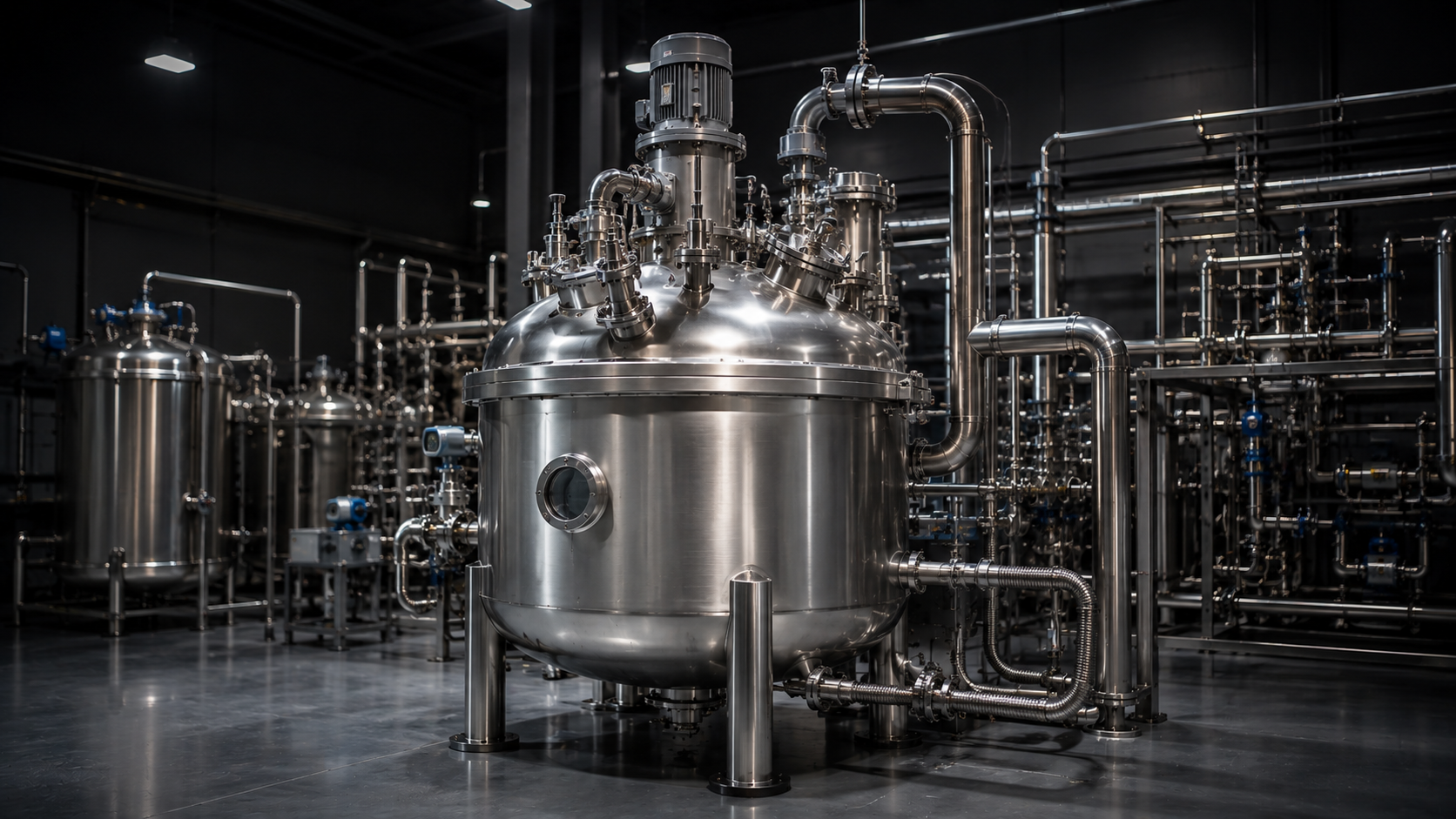
European manufacturing investment continues to shift toward high-value specialty products, and the Syensqo Le Havre expansion represents another important step in that direction. The Belgian specialty chemicals company has officially broken ground on a manufacturing expansion at its Le Havre site, reinforcing its commitment to advanced chemical production while making use of one of Europe's established petrochemical hubs.
For chemical traders, procurement managers and industrial manufacturers, projects like this signal more than additional production capacity. They highlight where future supply, innovation and regional competitiveness are likely to grow over the coming years.
Why the Syensqo Le Havre Expansion Matters
Manufacturing location remains a strategic advantage in the chemical industry. Companies increasingly seek facilities that combine access to raw materials, skilled labor, transportation infrastructure and nearby industrial customers.
Le Havre offers those advantages through its well-developed petrochemical ecosystem. Existing logistics networks, storage terminals and port facilities help manufacturers move both feedstocks and finished products efficiently across European and international markets.
For Syensqo, expanding within this environment allows the company to build on existing infrastructure rather than creating an entirely new production base.
Unlike commodity chemicals that compete largely on price, specialty chemicals generate value through performance, formulation and technical characteristics.
Demand continues to expand because manufacturers require materials that deliver:
Better durability for industrial products while reducing maintenance costs.
Improved processing efficiency across manufacturing operations.
Enhanced sustainability through lower emissions, reduced waste or energy savings.
Greater consistency for industries operating under strict quality requirements.
These characteristics make specialty chemicals increasingly attractive even during periods of broader market uncertainty.
Le Havre's Strategic Role in European Chemical Manufacturing
Le Havre has developed into one of France's most significant industrial and logistics centers. Its combination of maritime access and established chemical infrastructure creates an efficient platform for manufacturers serving European customers.
Several factors strengthen the site's long-term attractiveness.
Deep-water port facilities simplify both import and export operations.
Existing petrochemical assets reduce infrastructure development costs.
Strong transportation links connect production sites with major European manufacturing regions.
Industrial clusters encourage collaboration between suppliers, manufacturers and service providers.
For procurement teams, this type of ecosystem often translates into shorter lead times and greater supply reliability.
How Existing Petrochemical Infrastructure Supports Specialty Production
Building specialty chemical facilities within an established petrochemical complex creates several operational advantages.
Companies benefit from shared utilities, transportation systems and experienced technical workforces. This reduces construction complexity while allowing production to scale more efficiently as demand grows.
The approach also supports better coordination with suppliers that provide essential feedstocks used in specialty manufacturing.
Supply Chain Benefits for Chemical Buyers
Recent years have reminded buyers that production capacity alone does not guarantee reliable supply. Geographic diversification and resilient logistics have become equally important purchasing considerations.
The Le Havre expansion may contribute to stronger regional supply through:
Increased manufacturing flexibility for specialty products.
Improved proximity to European industrial customers.
Reduced dependence on longer international supply routes.
Better responsiveness to changing customer requirements.
These advantages become particularly valuable for industries that operate with limited inventory or strict production schedules.
What This Means for Importers, Exporters and Distributors
Chemical distributors often monitor manufacturing investments because they influence future trade flows.
An expanded production footprint in Western Europe can create new opportunities for:
Regional distribution partnerships.
Cross-border supply agreements.
Inventory optimization across European warehouses.
More competitive delivery schedules for industrial customers.
Exporters may also benefit from improved access to global shipping routes through Le Havre's established maritime infrastructure.
Industries increasingly seek materials that deliver greater efficiency rather than simply lower cost. This trend continues to reshape investment priorities across the chemical sector.
Applications for specialty chemicals continue to expand in areas such as:
Automotive manufacturing where advanced materials improve vehicle performance.
Electronics production that requires highly consistent chemical formulations.
Industrial coatings designed for greater durability and corrosion resistance.
Advanced polymer systems supporting lightweight and high-strength components.
As manufacturers pursue product innovation, suppliers capable of delivering specialized formulations gain a stronger competitive position.
Sustainability Remains Part of Investment Strategy
Modern chemical investments increasingly balance production growth with environmental performance.
New facilities often incorporate technologies that improve operational efficiency through lower energy consumption, optimized resource use and more effective process control. While every project follows its own technical roadmap, sustainability continues to influence investment decisions across the global specialty chemical sector.
Customers increasingly evaluate suppliers not only on price but also on manufacturing practices, environmental performance and long-term operational resilience.
Market Outlook for European Specialty Chemicals
The Le Havre expansion reflects broader confidence in Europe's specialty chemical sector despite ongoing global market challenges.
Investment continues to focus on facilities capable of producing differentiated, high-value products supported by reliable logistics and established industrial infrastructure.
Procurement professionals should expect continued competition among suppliers based on:
Companies that combine these strengths will likely remain attractive partners as industrial customers continue diversifying their sourcing strategies.
What Procurement Teams Should Do Now
Manufacturing expansions rarely affect markets overnight, but they often influence future supply dynamics and commercial opportunities.
Procurement teams should monitor developments that may improve supplier diversity, strengthen regional sourcing options and enhance long-term supply security. Early awareness allows buyers to evaluate potential partnerships before additional production reaches full commercial operation.
Businesses that maintain strong relationships with multiple qualified suppliers often position themselves more effectively during periods of changing market conditions.
Ready to source specialty chemicals from verified global suppliers? Explore competitive offers on our platform today.