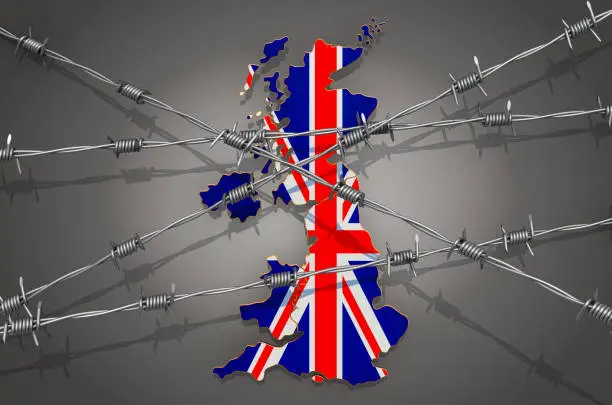
The UK Launches a New Trade Defense Case Against Chinese, Mexican and South Korean PVC
The UK Launches a New Trade Defense Case Against Chinese, Mexican and South Korean PVC
Introduction
The United Kingdom’s trade-remedy framework is facing another important test as concerns over low-priced polymer imports continue to grow. A new trade-defense case involving PVC imports from China, Mexico and South Korea could have significant implications for the UK’s domestic PVC industry, importers, distributors, and downstream manufacturers.
The development comes amid a broader increase in trade-remedy activity around chemicals and polymers. The UK’s Trade Remedies Authority (TRA) has stated that its 2026–2029 strategy is focused on making the UK’s trade-remedy system more accessible, agile, assertive, and accountable in addressing practices such as dumping and subsidised imports.
Why PVC Matters to the UK Market
Polyvinyl chloride (PVC) is one of the world’s most widely used polymers. It is essential to industries including construction, electrical products, packaging, healthcare, automotive components, flooring, pipes, and profiles.
Because PVC is a globally traded commodity, UK buyers depend on international suppliers to maintain competitive pricing and reliable availability. However, a sharp increase in imports at prices considered unfairly low can place pressure on domestic producers.
This creates a difficult balance for policymakers: protecting domestic production while ensuring that downstream users continue to have access to competitively priced raw materials.
The Role of China, Mexico and South Korea
The inclusion of China, Mexico and South Korea makes the case particularly significant for international PVC trade flows.
These countries are established participants in global polymer markets, and changes in their access to the UK market could influence supplier competition and regional pricing.
Trade measures against one group of suppliers can also have wider consequences. If imports from targeted origins become less competitive, UK buyers may shift toward alternative suppliers, potentially changing trade flows across Europe, Asia, the Middle East and other producing regions.
Recent European market developments demonstrate how quickly PVC trade patterns can change. European PVC imports from China, Taiwan, Mexico and South Korea increased substantially during 2025 as suppliers replaced some volumes affected by existing European trade measures.
What a Trade Defense Investigation Means
A trade-defense investigation generally examines whether imported products are being sold at unfair prices and whether those imports are causing or threatening material injury to the domestic industry.
The UK’s TRA is responsible for investigating such cases and can recommend measures where the evidence supports intervention. Depending on the investigation and findings, potential remedies can include anti-dumping duties or other trade measures.
Importantly, the launch of an investigation does not automatically mean that duties will be imposed. Authorities must evaluate evidence from domestic producers, exporters, importers, and other affected stakeholders before reaching a final determination.
The UK recently demonstrated this process in other sectors. For example, the TRA opened an investigation into LLDPE imports from the United States in July 2026 after a complaint from the UK industry. The investigation is examining whether imports were dumped and whether they caused injury to the domestic industry.
Potential Impact on UK PVC Buyers
For UK PVC buyers, the most immediate concern is uncertainty.
During a trade-defense investigation, importers may need to reassess:
Supplier selection and country-of-origin exposure
Contract pricing and delivery terms
Inventory requirements
Potential duty exposure
Alternative sourcing options
Freight and landed costs
Long-term supply agreements
If definitive duties are eventually introduced, the landed cost of PVC from affected origins could increase. Buyers may then seek alternative sources from regions not covered by the measures.
This could create opportunities for competing producers while simultaneously increasing procurement complexity.
Potential Impact on PVC Producers
For domestic PVC producers, trade-defense action could provide additional protection against imports if authorities determine that unfair trade practices have caused material injury.
A more level competitive environment could support domestic production, capacity utilisation, and investment.
However, downstream industries may have a different perspective. PVC converters and manufacturers rely on competitive raw-material prices, meaning higher import costs could increase production expenses for products such as pipes, cables, profiles, flooring, packaging and other PVC-based goods.
The ultimate impact will therefore depend on the scope and outcome of the investigation.
Trade Diversion Could Become a Key Market Factor
One of the most important consequences to monitor is trade diversion.
When a major market introduces trade restrictions, suppliers may redirect volumes toward other destinations. This can alter regional supply-demand balances and create price differences between markets.
For example, if access to the UK becomes more difficult for affected exporters, additional volumes could be redirected toward Europe, the Middle East, Africa, South Asia or other markets.
This makes the UK investigation relevant beyond the domestic market. International PVC traders and procurement teams may need to monitor not only UK policy developments but also potential changes in regional export offers and freight economics.
Implications for Procurement Strategy
For chemical and polymer buyers, the development reinforces the importance of maintaining diversified supply chains.
Companies heavily dependent on one country or supplier should evaluate alternative origins before any final trade remedy is introduced. Procurement teams can also benefit from monitoring regulatory developments alongside traditional market indicators such as PVC prices, feedstock costs, freight rates and operating rates.
A diversified sourcing strategy can reduce the risk of sudden cost increases or supply disruptions if trade measures are ultimately implemented.
Broader Shift Toward Trade Protection
The PVC case fits into a wider global trend toward stronger trade-defense measures across industrial and chemical markets.
Governments are increasingly examining imports in sectors where domestic producers argue that foreign competition is being supported by excess capacity, subsidies, or pricing practices that distort competition.
The UK has already taken action in other industrial sectors. In March 2026, the government accepted the TRA’s recommendation to impose anti-dumping measures on Chinese tin mill products, with different duty rates applying to cooperating and other Chinese exporters.
This suggests that trade remedies are becoming an increasingly important factor in international chemical and industrial procurement.
What Comes Next?
The next stage will depend on the evidence collected during the investigation and the findings reached by the UK authorities.
Market participants should closely monitor official notices, investigation timelines, responses from exporters and importers, and any provisional or final recommendations.
For buyers, the key question is not simply whether duties will be imposed. It is how the investigation could change supplier economics, regional availability and landed PVC costs.
Conclusion
The UK’s new trade-defense case involving PVC from China, Mexico and South Korea could become an important development for the country’s polymer market.
While the investigation is intended to determine whether unfair trade practices have harmed the UK industry, its potential effects could extend across the wider PVC supply chain. Domestic producers may gain protection if measures are introduced, while importers and downstream manufacturers could face higher costs or the need to diversify sourcing.
For procurement teams, the development is a reminder that trade policy is now an increasingly important component of chemical-market strategy. Monitoring regulatory action alongside prices, supply availability, freight and supplier performance will be essential as the investigation progresses.
Ammonium Sulphate - Taiwan

Found this useful?