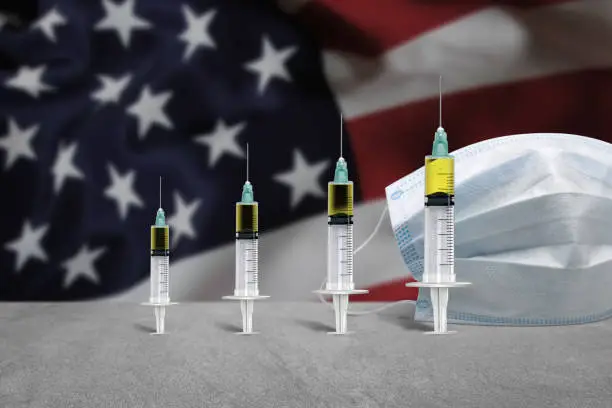
The US Directs New Executive Action at Its Childhood Vaccine Schedule

The US Directs New Executive Action at Its Childhood Vaccine Schedule
Introduction
The United States has taken a major step toward changing its federal approach to childhood vaccination. On August 10, 2026, President Donald Trump signed an executive order directing federal agencies to pursue changes to the childhood immunization schedule, including reducing the number of vaccines recommended for all children and reconsidering how several vaccines are administered.
The move has triggered significant debate among public health experts, physicians, vaccine manufacturers, and policymakers. Supporters describe the action as an effort to increase parental choice and flexibility, while critics argue that changes to established vaccination guidance should be based on strong scientific evidence.
What the Executive Action Directs
The executive order seeks to reorganize the federal childhood vaccine schedule into different recommendation categories. Under the order, 11 vaccines would remain recommended for all children, while several others would move into categories involving high-risk groups or shared decision-making between parents and healthcare providers.
The order also directs the U.S. Department of Health and Human Services (HHS) to examine the timing and sequencing of routine childhood vaccinations.
Another major element is the proposal to administer vaccines separately rather than combining multiple immunizations during the same medical visit when feasible.
The Proposed Change to the MMR Vaccine
One of the most significant proposals involves the measles, mumps and rubella (MMR) vaccine.
The executive order directs federal officials to work toward making the three components available as separate vaccines rather than relying on the combined MMR formulation. The order also promotes the administration of individual vaccines at separate appointments.
However, separate measles, mumps, and rubella vaccines are not currently available in the United States, meaning implementation would require additional development and regulatory steps.
Public health experts have raised concerns that separating vaccines could require additional appointments and create more opportunities for children to miss or delay doses.
The Order Does Not Immediately Rewrite the Entire Vaccine System
An important distinction is that an executive order does not automatically replace the existing clinical vaccination schedule overnight.
The order directs federal agencies and advisory bodies to undertake reviews and develop recommendations. Legal and public health experts have emphasized that the immediate effect on families, healthcare providers, and state requirements is more limited than the announcement may suggest.
State governments also retain significant authority over school-entry vaccination requirements. The order nevertheless directs the Justice Department to challenge certain state vaccine policies involving medical and religious exemptions.
Why the Decision Is Controversial
The policy has generated strong opposition from major medical and public health organizations.
Critics argue that the existing childhood immunization schedule is based on decades of clinical evidence and population-level disease prevention research. They have questioned whether sufficient new scientific evidence exists to justify major changes to the schedule.
The controversy is particularly significant because the United States is already experiencing declining childhood vaccination coverage.
According to CDC data released on August 17, 2026, kindergarten vaccination coverage declined during the 2025–2026 school year. MMR and polio coverage were approximately 92.4%, while exemptions from one or more vaccines increased to 4.2% from 3.6% the previous year.
Vaccine Coverage and the Measles Situation
The timing of the executive action is particularly notable because the United States is facing a substantial measles resurgence.
The latest CDC data reported 2,566 confirmed measles infections in 2026, the highest number recorded in more than three decades. Health experts emphasize that approximately 95% vaccination coverage is generally needed to maintain community protection against measles outbreaks.
This situation has intensified concerns that additional delays or reductions in vaccination could increase vulnerability to preventable diseases.
Public health specialists have also pointed to regional differences. While national coverage has declined modestly, some communities have experienced much larger reductions, creating areas where outbreaks can spread more easily.
Implications for Parents and Healthcare Providers
The proposed changes could have practical consequences for families and healthcare providers.
If vaccines are increasingly administered individually rather than in combination or during separate appointments, parents could face:
More healthcare visits
Additional scheduling requirements
Greater logistical challenges
Potential increases in out-of-pocket costs
Higher risk of delayed or missed doses
The order's emphasis on parental choice could also result in more individualized vaccination discussions between families and healthcare professionals.
At the same time, healthcare providers may need to navigate changing federal recommendations while also complying with state-specific requirements and insurance coverage rules.
Potential Impact on Vaccine Manufacturers
The policy could also affect pharmaceutical companies involved in vaccine manufacturing.
A move away from combination vaccines could create demand for individual vaccine formulations. However, developing, manufacturing, testing, and obtaining regulatory approval for separate products can take considerable time and investment.
The proposed separation of MMR is particularly complex because the individual formulations would need to be available, evaluated, and manufactured at sufficient scale before such a system could become practical.
For vaccine manufacturers, the policy could therefore create both new commercial opportunities and significant regulatory uncertainty.
Broader Implications for the U.S. Healthcare System
The executive action could have effects beyond the childhood vaccine schedule itself.
Vaccination recommendations influence insurance coverage, public health programs, healthcare-provider practices, school requirements, and pharmaceutical supply chains.
Changes in federal recommendations could therefore require insurers, healthcare organizations, state governments, and vaccine manufacturers to reassess existing systems.
The issue also highlights the broader challenge of balancing parental autonomy, public health protection, scientific evidence, and government policy.
The Scientific Debate
The administration has presented the executive action as part of an effort to establish what it calls a more flexible and "gold-standard" approach to childhood vaccination.
However, medical organizations and independent experts have disputed several claims made by President Trump and Health Secretary Robert F. Kennedy Jr. during the announcement. Fact-checkers and public health specialists have emphasized that claims linking vaccines to autism are not supported by the scientific evidence.
The World Health Organization has also defended evidence-based immunization schedules, noting that vaccination recommendations are developed from extensive research and assessments of disease risks and population needs.
What Happens Next?
The next stage will depend on how HHS, CDC, advisory committees, state governments, healthcare organizations, and other stakeholders respond to the executive order.
The administration has directed federal officials to examine issues including vaccine timing and sequencing, individual vaccine products, alternative adjuvants, vaccine safety monitoring, and risk-benefit assessments.
The implementation process could therefore extend well beyond the signing of the executive order.
For parents, the most important distinction is between a federal policy directive and an immediate change in the vaccines available or legally required. The executive order sets a process for revising recommendations, but further administrative, regulatory, and potentially legal actions will determine its practical impact.
Conclusion
The Trump administration's new executive action represents one of the most consequential recent attempts to reshape the U.S. childhood vaccination framework.
By directing federal agencies to reduce the number of vaccines recommended universally, reconsider vaccination timing, encourage separate administration, and explore splitting the MMR vaccine into individual components, the order could significantly influence the future direction of U.S. vaccine policy.
However, the policy arrives amid declining childhood vaccination rates and the country's largest measles outbreak in decades, making its public health implications particularly significant.
The coming months will determine whether the proposed changes translate into concrete revisions to federal recommendations, healthcare practices, vaccine manufacturing, and state immunization policies—or remain primarily a framework for further debate and regulatory review.

Aluminium Nitrate
Found this useful?