The wave of closures and disposals reshaping petrochemicals
A growing wave of petrochemical plant closures, asset disposals, and portfolio reviews is reshaping Europe's chemical manufacturing base.
The trend became increasingly visible in 2025 as companies such as LyondellBasell and Huntsman moved to reduce European exposure, while other major producers announced crackers and chemical-unit closures. The underlying pressures include weak demand, global overcapacity, stronger imports from Asia, and Europe's relatively high production costs.
For chemical procurement teams, the significance extends beyond individual plants. Capacity rationalization can change supplier concentration, regional availability, import requirements, logistics routes, and long-term pricing dynamics.
LyondellBasell's European Portfolio Reshaping
LyondellBasell announced in June 2025 that it had entered exclusive negotiations with AEQUITA for the sale of four European olefins and polyolefins assets.
The sites were located in:
Berre, France
Münchsmünster, Germany
Carrington, United Kingdom
Tarragona, Spain
The transaction was part of LyondellBasell's broader European strategic assessment. The company said the move would allow it to focus more strongly on assets with durable competitive advantages and areas such as specialty polymers and circular and low-carbon solutions.
Importantly, this was not simply a closure program. The assets ultimately moved to new ownership, demonstrating another form of European petrochemical restructuring: disposal rather than shutdown.
The transaction was completed in May 2026, with the divested business operating under the name Velogy. LyondellBasell retained its Advanced Polymer Solutions business in Tarragona.
Huntsman Shows the Closure Side of the Equation
Huntsman provides a contrasting example.
The company began a restructuring program in 2025 involving the closure of its maleic anhydride manufacturing facility in Moers, Germany, alongside broader European organizational and site reductions.
Huntsman's 2025 filing recorded approximately $97 million of restructuring expense, including around $88 million related to asset impairment and site closure costs. Further closure-related expenses were expected during 2026.
The broader Hydrocarbon Processing review also identified Huntsman's Deggendorf polyurethane facility among European closures, demonstrating how restructuring is affecting specialty and performance chemicals as well as basic petrochemicals.
Why European Petrochemical Assets Are Under Pressure
Several structural factors are driving the rationalization.
Global Overcapacity
Rapid capacity expansion, particularly in Asia, has increased competition in several petrochemical chains.
Higher European Production Costs
European producers face comparatively high energy and feedstock costs, especially where plants rely on naphtha rather than lower-cost ethane.
Weak Demand
Sluggish European industrial demand makes it harder for older and smaller plants to achieve competitive utilization rates.
Rising Imports
Increasing imports from Asia can place additional pressure on European producers whose cost structures are less competitive.
Aging Infrastructure
Many European crackers and chemical facilities are significantly older than newer plants in regions that have expanded capacity more recently.
Closures vs. Disposals
One of the most important distinctions for market intelligence is whether an asset is closed or sold.
A closure permanently removes production capacity from the market.
A disposal, however, can transfer capacity to a new owner that may pursue a different operating strategy.
LyondellBasell's European transaction demonstrates the second model: assets moved into a new platform rather than disappearing immediately from the market.
For procurement teams, this means an announced sale should not automatically be interpreted as a supply loss. Ownership changes can instead lead to new commercial strategies, investment programs, or portfolio specialization.
The Broader European Pattern
The restructuring extends beyond LyondellBasell and Huntsman.
In 2025, major companies including Dow, ExxonMobil, TotalEnergies, Shell, Eni, bp, and SABIC were also associated with European closures, asset reviews, or divestment plans.
For example, TotalEnergies announced the planned closure of its oldest Antwerp steam cracker by the end of 2027, citing an expected surplus of ethylene in Europe.
LyondellBasell and Covestro also announced the permanent closure of the PO11 propylene oxide/styrene monomer unit at Maasvlakte in the Netherlands, citing global overcapacity, increased Asian imports, and high European production costs.
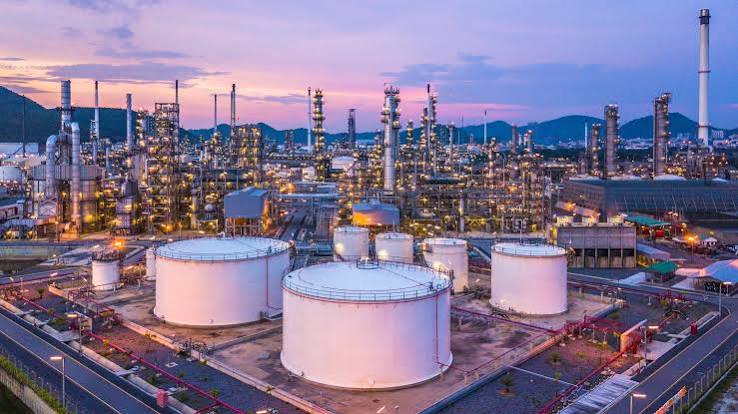
Taken together, these developments suggest that European petrochemical restructuring is not isolated to one company or product chain.
Implications for Chemical Supply Chains
Capacity rationalization could gradually change Europe's position in global chemical trade.
Potential consequences include:
Greater dependence on imports
Longer supply chains
Increased regional supplier concentration
Greater sensitivity to freight costs
Changes in inventory requirements
New opportunities for non-European producers
Greater importance of alternative sourcing markets
Primary chemicals such as ethylene and propylene are particularly important because they feed multiple downstream value chains, including plastics, pharmaceuticals, packaging, and industrial products.
Competitive Intelligence
Companies monitoring European petrochemical markets should track several indicators.
1. Capacity Announcements
New closures, idlings, and production reductions can reveal where structural pressure is greatest.
2. Asset Sales
A sale can indicate that a large producer no longer considers an asset strategically attractive, even if another owner sees potential.
3. Utilization Rates
Persistently low utilization can increase the likelihood of additional rationalization.
4. Import Flows
Rising imports can reveal where domestic capacity is becoming less competitive.
5. New Investment
Investment in specialty polymers, recycling, or lower-carbon production can indicate where companies expect stronger long-term returns.
Procurement Considerations
Procurement teams should avoid treating all European closures as immediate supply shortages.
Instead, buyers should:
Map exposure to affected production chains
Monitor ownership changes after asset sales
Identify alternative qualified suppliers
Track European import volumes
Review safety-stock requirements
Monitor freight and landed costs
Evaluate regional sourcing alternatives
Maintain flexibility in long-term contracts
For critical raw materials, early supplier qualification can provide protection before additional capacity rationalization occurs.
Looking Ahead
The European petrochemical industry is increasingly moving toward a smaller, more selective production base.
The likely outcome is not the disappearance of European chemicals production, but greater concentration among assets with stronger cost positions, scale, integration, technology, or access to attractive downstream markets.
At the same time, assets considered non-core by major producers may continue to attract specialized investors willing to operate them under different cost structures and strategic models.
For procurement professionals, this creates a market where ownership changes can be as important as shutdown announcements.
Tracking both closures and disposals will therefore be essential for understanding future European chemical supply, import dependence, and supplier competitiveness.
Key Takeaways
European petrochemical restructuring is increasingly taking the form of both closures and asset disposals.
LyondellBasell's four-site European disposal demonstrates the transfer-of-ownership model.
Huntsman's European restructuring illustrates the permanent capacity-reduction model.
Global overcapacity, Asian imports, weak European demand, and high production costs remain major pressures.
Capacity rationalization could increase Europe's dependence on imported primary chemicals.
Procurement teams should distinguish between assets being sold and capacity being permanently removed.
Supplier diversification and early qualification can reduce exposure to future European capacity changes.
Sources

Acrylic Acid (99.5%) - China
Found this useful?