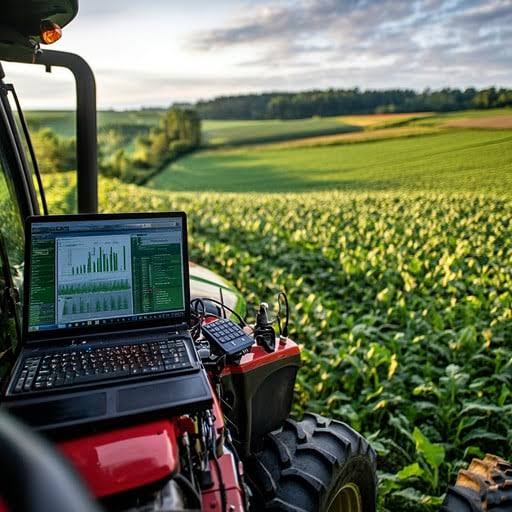
Artificial intelligence is rapidly becoming one of the most influential technologies in modern agriculture. From predicting crop yields to optimizing irrigation schedules and recommending fertilizer application rates, AI-powered decision support systems promise to improve efficiency while reducing costs. However, agricultural economists at Purdue University have cautioned that AI-generated recommendations do not always reflect real-world field conditions, highlighting the importance of combining digital insights with practical agronomic expertise. For fertilizer manufacturers, agrochemical suppliers and procurement professionals, this growing debate has significant implications for product stewardship, customer support and regulatory compliance.
The adoption of precision agriculture has accelerated in recent years as farmers seek to maximize productivity while managing increasingly complex economic and environmental challenges. AI systems can analyze enormous volumes of data in seconds, but agriculture remains heavily influenced by variables that are difficult to capture through algorithms alone. Soil composition, unexpected weather events, local farming practices and crop-specific conditions often require decisions that extend beyond automated recommendations.
Modern AI platforms process information from satellites, weather forecasts, sensors and historical farm records to generate recommendations for growers.
These technologies commonly assist with:
The ability to rapidly analyze large datasets enables farmers to make more informed decisions while improving operational efficiency across large farming operations.
As digital agriculture continues expanding, AI tools are becoming increasingly integrated into fertilizer management and crop protection strategies.
Why Real-World Field Conditions Still Matter
Despite advances in machine learning, agricultural environments remain highly dynamic.
Field performance can vary because of:
Soil texture differences.
Local weather conditions.
Drainage characteristics.
Crop rotation history.
Pest pressure.
Water availability.
Farm management practices.
Two neighbouring fields growing the same crop may respond differently to identical fertilizer recommendations due to variations that are difficult for AI models to fully capture.
Agricultural economists therefore emphasize that digital recommendations should support, rather than replace, field observations and professional agronomic judgment.
Fertilizer Recommendations Require Context
Determining the correct fertilizer application rate involves balancing crop requirements with economic and environmental considerations.
AI models typically evaluate:
Nutrient demand.
Yield targets.
Historical productivity.
Weather forecasts.
Soil testing results.
However, experienced agronomists also consider factors such as equipment limitations, localized soil variability and recent field observations before making final recommendations.
For fertilizer suppliers, combining AI-driven insights with expert advisory services can improve customer confidence while reducing the risk of inappropriate product application.
Agrochemical Companies Must Balance Innovation With Responsibility
Digital agriculture presents significant opportunities for agrochemical manufacturers, but it also increases expectations regarding the accuracy and reliability of advisory tools.
Companies developing AI-powered recommendation platforms should prioritize:
Reliable decision-support systems strengthen customer relationships while demonstrating responsible product stewardship.
Organizations that clearly communicate both the capabilities and limitations of AI recommendations are more likely to earn long-term trust from growers and agricultural advisers.
Human Expertise Remains Essential
Artificial intelligence excels at processing data, but agriculture continues to rely heavily on human experience.
Agronomists contribute valuable knowledge through:
Field inspections.
Soil interpretation.
Crop health assessments.
Seasonal planning.
Risk evaluation.
Their expertise helps verify whether AI-generated recommendations align with actual field conditions before implementation.
Rather than replacing agricultural professionals, AI increasingly serves as a decision-support tool that enhances human expertise.
Regulatory Expectations Are Evolving
As AI becomes more widely used in agriculture, regulators and industry organizations are paying greater attention to transparency and accountability.
Future expectations may include:
Greater documentation of recommendation methodologies.
Improved data quality standards.
Independent performance validation.
Responsible AI governance.
Clear communication of system limitations.
Organizations that establish strong governance frameworks today will be better prepared for evolving regulatory requirements as digital agriculture continues to mature.
Procurement and Supply Chain Planning Benefit From Better Data
AI is also influencing procurement and supply chain management within the fertilizer industry.
Advanced analytics help organizations improve:
When combined with validated field information, these capabilities support more responsive supply chains while reducing waste and improving customer service.
The key lies in integrating digital intelligence with practical agricultural expertise rather than relying exclusively on algorithmic predictions.
Building Trust in the Next Generation of Agricultural Technology
Artificial intelligence will continue reshaping agriculture, but its long-term success depends on credibility, transparency and consistent real-world performance. Purdue University's observations reinforce that digital recommendations should complement experienced agronomists rather than replace them.
For fertilizer manufacturers, agrochemical suppliers and agricultural technology providers, the future lies in combining advanced analytics with scientific validation and practical field knowledge. Organizations that invest in responsible AI development, independent testing and customer education will be better positioned to deliver reliable decision-support tools while strengthening trust throughout the agricultural value chain.
As precision agriculture continues evolving, the most successful solutions will be those that recognize farming as both a science and a practice shaped by local conditions, human expertise and continuous learning.
Ready to source precision agriculture and fertilizer solutions from verified global suppliers? Explore competitive offers on our platform today.