Umicore Buys High-Throughput Screening Technology From Solvias
Umicore Precious Metals Chemistry has acquired high-throughput screening and a portfolio of specialty ligand technologies from Solvias, a move that immediately strengthens its catalyst development platform. The services tied to these technologies will transition into Umicore’s operations over the course of 2026. For procurement leaders in the pharmaceutical and fine chemical sectors, this deal signals a meaningful shift in how advanced catalyst screening services are sourced.
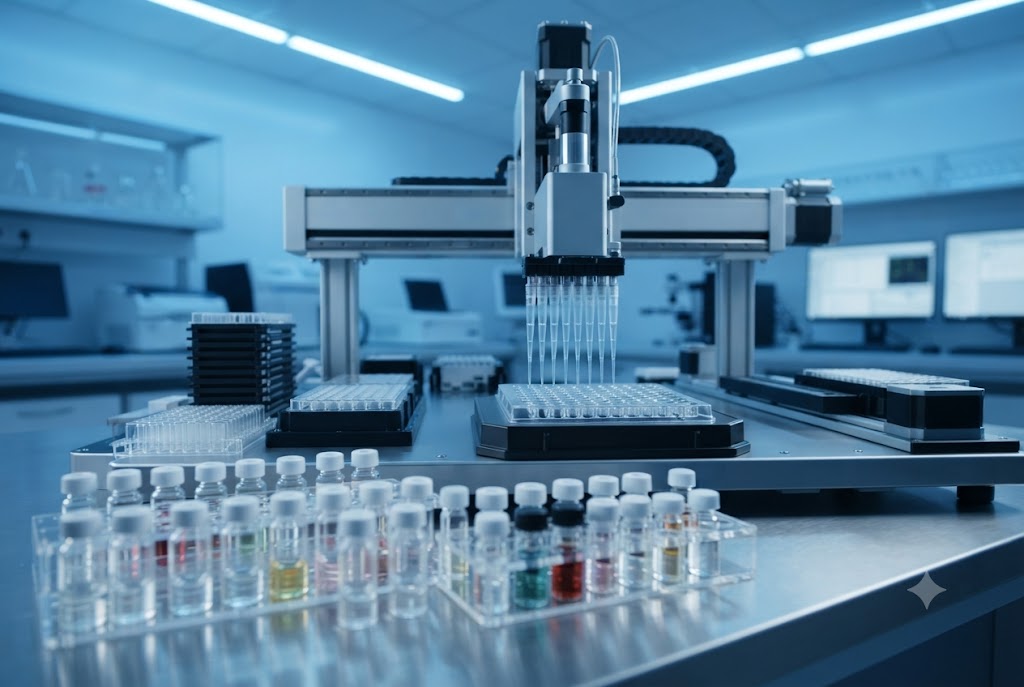
The acquisition is not about production capacity or raw material supply. It is a technology-focused transaction that brings robotic screening systems, proprietary ligand libraries and decades of reaction optimisation know-how under one roof. Umicore gains a proven capability to rapidly screen hundreds of catalytic reactions in parallel, drastically shortening the time it takes to identify the right ligand and metal combination for a specific chemical transformation.
What High-Throughput Screening Brings to Precious Metal Chemistry
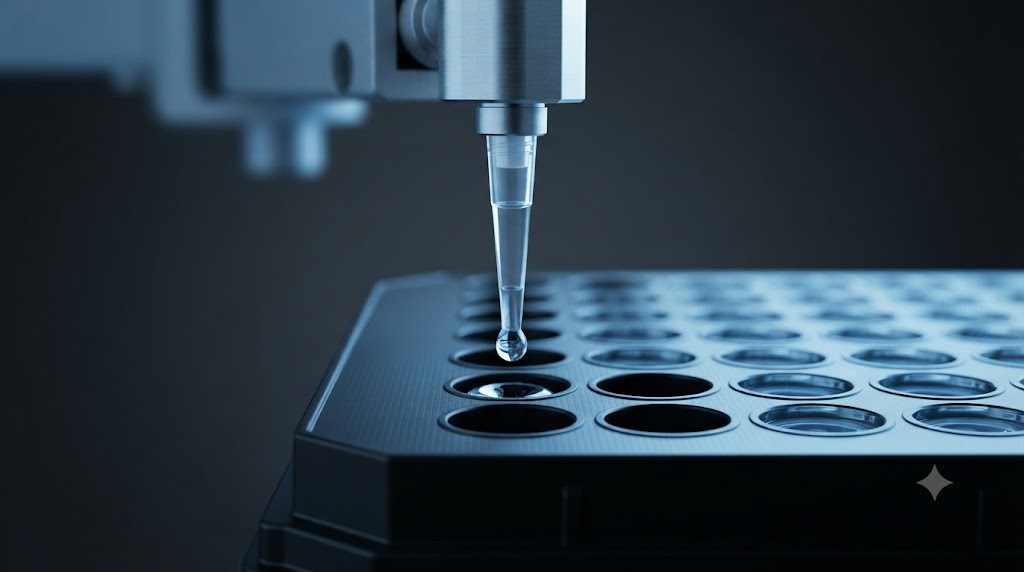
High-throughput screening, or HTS, transforms the way chemists discover and optimise catalytic reactions. Instead of running one reaction at a time in a round-bottom flask, robotic workstations set up hundreds of miniature reactions simultaneously. Each reaction varies the catalyst, ligand, solvent, temperature or pressure in a systematic way. Analytical tools then read out conversion, selectivity and yield data in a fraction of the time conventional methods require.
For precious metal chemistry, where platinum, palladium, ruthenium and rhodium catalysts drive high-value reactions, this speed matters enormously. Pharmaceutical process chemists can identify a lead catalytic system in days rather than weeks. The ability to screen ligand libraries at scale means fewer failed scale-up attempts, lower metal loading in final processes and faster routes to regulatory filing.
Umicore already held deep expertise in precious metal catalyst manufacturing and recycling. By absorbing Solvias' HTS platform, the group can now offer a fully integrated service: from screening and ligand selection through to catalyst supply at commercial scale. That end-to-end capability appeals to drug manufacturers who want a single partner accountable for both development speed and supply security.
The Solvias Specialty Ligand Portfolio
Solvias built its reputation on a carefully curated collection of specialty ligands, many of which became go-to solutions for challenging cross-coupling, asymmetric hydrogenation and carbonylation reactions. The portfolio includes families of phosphine ligands, diphosphine ligands and N-heterocyclic carbenes tuned for specific metal centres and substrate classes.
These ligands represent years of iterative design, proprietary know-how and application data. When a pharma company needs to install a chiral centre with high enantiomeric excess or couple two complex fragments without protecting group interference, having immediate access to a library of proven ligands saves months of synthesis work. Umicore now owns that library and the associated technical knowledge.
The deal includes the ligand intellectual property, the HTS hardware and the service workflows that Solvias had refined for clients ranging from small biotechs to large generic manufacturers. By mid-2026, customers who previously ordered screening campaigns from Solvias will work directly with Umicore’s technical teams, a transition that both companies are managing with careful project handovers.
Umicore’s Strategic Logic
Umicore’s Precious Metals Chemistry division has been steadily expanding from a pure metal supply and recycling play into a full-spectrum catalyst solutions provider. The Solvias acquisition fills a specific gap in early-stage screening and ligand design, the front-end work that locks in customer relationships before commercial supply contracts are signed.
By controlling the screening step, Umicore positions itself at the chemistry decision point. When a pharmaceutical process R&D team selects a specific ligand and metal combination for a new drug candidate, that choice often flows through into commercial supply for the life of the product. Capturing that selection moment gives Umicore a long-term pipeline of commercial catalyst demand.
The deal also deepens Umicore’s offering in homogeneous catalysis, an area where custom ligand design and rapid screening are essential differentiators. Heterogeneous catalyst suppliers rarely need this capability. Homogeneous precious metal chemistry, by contrast, thrives on ligand tuning. Solvias brings exactly that tuning capability.
Service Transition and the 2026 Timeline
Both companies have confirmed that all screening services will transition during 2026. Existing client projects will continue without interruption. Solvias will support the migration of workflows, instrumentation and data management systems to Umicore’s facilities over several planned phases.
This phased approach gives customers time to re-establish service agreements, update quality audit requirements and transfer intellectual property access protocols. Procurement teams with active or upcoming catalyst development projects should map their screening needs against this timeline immediately. Any project planning to initiate screening in late 2026 will almost certainly land within Umicore’s lab environment.
The transition also means that confidentiality agreements, material transfer agreements and master service agreements may need review. Legal and procurement functions should begin that review early to avoid delays when screening requests are submitted under the new ownership.
Impact on Pharmaceutical and Fine Chemical Buyers
Pharmaceutical companies rely on rapid catalyst screening to compress development timelines. A delayed screening campaign can push back IND filings, clinical trial starts and ultimately commercial launch dates. Consolidation of this critical service under a single supplier raises both opportunities and concerns.
On the opportunity side, a single partner offering screening, ligand supply and precious metal catalyst manufacturing can reduce administrative burden. One contract, one quality agreement and one point of contact simplify project management. Bundled pricing for screening-plus-supply may emerge as Umicore builds its integrated model.
The concern sits with supply chain concentration. When one supplier controls both the screening pathway and the commercial catalyst supply, buyers may find it harder to benchmark pricing or quickly qualify an alternative ligand if supply tightens. Pharma procurement teams should maintain visibility on at least one alternative screening provider and ensure that second-source ligand options remain viable.
Sourcing Implications for Ligands and Catalysts
The specialty ligand market is small in volume but high in value. Individual ligands may cost thousands of dollars per gram, and a single process change can shift annual demand significantly. Umicore’s expanded ligand library, combined with its precious metal recycling network, creates an integrated value proposition that standalone ligand suppliers may struggle to match.
Buyers who previously sourced ligands from Solvias will now negotiate with Umicore. That change may bring revised pricing structures, minimum order quantities or packaging formats. Early engagement with Umicore’s commercial team will help clarify which ligand grades remain available from stock and which require custom synthesis lead times.
Procurement managers should also expect increased cross-selling. Umicore may propose full metal-plus-ligand packages, leveraging its recycling loop to offer metal leasing models that reduce the upfront cost of precious metal inventory. These models can improve working capital, but buyers must scrutinise the total lifecycle cost rather than just the screening fee.
What Procurement Teams Should Do Now
The 2026 transition provides a clear window for procurement action. Buyers who prepare now will convert this shift into commercial advantage. Those who wait may find their preferred screening slots booked solid and their ligand supply contracts under renegotiation without alternatives in hand.
A few immediate steps will reduce risk and uncover value:
Confirm which current or planned catalyst screening projects will be affected by the transition and request a detailed handover timeline from Solvias or Umicore.
Audit existing supply agreements for specialty ligands and assess whether sole-source dependencies exist. Where they do, qualify a second ligand or an alternative screening partner.
Engage Umicore early to understand commercial terms for bundled screening, ligand supply and catalyst metal leasing. Early adopters may secure priority access and locked-in pricing.
Update vendor master data, quality agreements and confidentiality agreements to reflect the new entity. Delaying this administrative step can stall project starts later in 2026.
Monitor the competitive landscape for other screening technology providers. Smaller contract research organisations and academic screening centres can serve as backup or benchmarking resources.
The Bottom Line for Buyers
Umicore’s acquisition of Solvias’ high-throughput screening and ligand technologies is a calculated move that deepens its control over the precious metal catalyst value chain. For pharmaceutical and fine chemical buyers, the deal means faster access to advanced screening but also a more concentrated supplier landscape. The transition during 2026 will test how well procurement teams adapt to a supplier that now spans discovery, development and commercial supply.
Buyers who engage proactively can lock in better terms, protect project timelines and ensure that their catalyst supply chains remain competitive. Those who treat this as a routine headline may find themselves negotiating from a weaker position once the integration is complete.
Ready to source specialty ligands from verified global suppliers? Explore competitive offers on our platform today.
Methanol
Found this useful?