US BIOSECURE Act vs EU Biotech Act: Ranking 2026's Biomanufacturing Reshoring Commitments
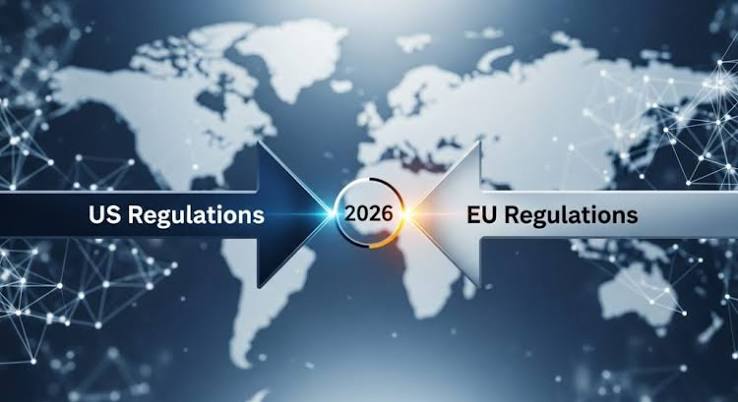
Recent M&A activity in industrial biotechnology, including Again's acquisition of Genomatica, has put a spotlight on how differently the US and EU are approaching biomanufacturing reshoring in 2026. Both regions want more domestic bio-based production capacity. Both have named policy vehicles to get there. But the BIOSECURE Act in the US and the Biotech Act in the EU are not the same kind of instrument, and treating them as a simple funding contest misses what buyers actually need to track.
What the BIOSECURE Act Actually Commits
The BIOSECURE Act became law on December 18, 2025, folded into the FY2026 National Defense Authorization Act. It is a procurement and grant restriction, not a spending program.
Under the Act, US federal agencies cannot buy biotechnology equipment or services from designated "biotechnology companies of concern." They also cannot fund those companies through contracts, loans or grants, even indirectly through a recipient.
That is a security and supply-chain tool aimed at reducing dependence on foreign-adversary-linked biotech suppliers. The often-cited figure of up to $15 billion for domestic bio-infrastructure sits alongside the Act in press coverage and administration messaging, but it is not an appropriation written into the BIOSECURE Act's text itself. Procurement teams should treat it as a policy signal, not a guaranteed funding line.
Where the EU Biotech Act Stands in 2026
The EU has split its Biotech Act into two parts. Part one, covering health biotechnology, was formally proposed in December 2025 and is still moving through legislative negotiation between Parliament and Council.
The health-focused piece already has real numbers attached to it:
The BioTechEU initiative, backed by InvestEU, is expected to mobilise up to €10 billion in biotech investment across 2026 and 2027.
Strategic health biotechnology projects could attract between €19 billion and €40 billion in mobilised investment by 2038, according to Commission estimates.
Part two, sometimes referred to informally as Biotech Act II, is the piece that would actually cover industrial biotechnology and non-health biomanufacturing, which is the segment most relevant to chemical traders. As of mid-2026, that part is still under a Call for Evidence process, with a proposal not expected until the third quarter of 2026 at the earliest. It does not yet have a locked funding figure.

Comparing Investment Ambition Without a Clean Number
A side-by-side ranking sounds simple until you look at what each region is actually offering.
Legal status: BIOSECURE is enacted law. The EU's industrial biomanufacturing piece is still pre-proposal.
Mechanism: BIOSECURE restricts who the US government can buy from. The EU's tools mobilise investment and speed up regulatory approval rather than restricting suppliers.
Dollar figures: The US figure is a public commitment outside the statute. The EU's €10 billion and €19-40 billion figures are tied to health biotech specifically, not yet to industrial biomanufacturing.
None of that makes one region more "ambitious" than the other in a way that reduces cleanly to a ranking. It does mean buyers are dealing with two different kinds of policy risk on either side of the Atlantic.
Why the Procurement Lever Matters More Than the Headline Number
For chemical traders and procurement managers, the BIOSECURE Act's practical effect is more immediate than any funding figure. It directly changes who US federal buyers, and by extension many federally linked supply chains, are allowed to source biotechnology equipment and services from.
Biotechnology companies of concern named or later designated under the Act face a hard procurement wall, with a five-year safe harbor for existing contracts. That is a sourcing decision buyers have to work around now, not a future funding pool they are waiting on.
The EU side is the opposite shape. Nothing restrictive kicks in yet for industrial biomanufacturing suppliers. The near-term effect is mostly about which projects get fast-tracked for regulatory support and access to the BioTechEU financing instruments once they are up and running.
Trade Flow and Sourcing Implications for Chemical Traders
Deals like Again's acquisition of Genomatica show where the commercial response to this policy environment is already showing up. Combining AI-driven bioprocess design with decades of fermentation and industrial-scale production expertise is exactly the kind of capability build-out both the US and EU want to see more of domestically.
Buyers sourcing bio-based chemicals and intermediates should watch a few practical signals over the rest of 2026:
Whether the Department of Defense's 1260H list of companies of concern gets updated again in the near term, since that directly affects which suppliers stay eligible for US federal-linked contracts.
Whether the EU's industrial biomanufacturing proposal, expected in Q3 2026, actually attaches a specific investment figure once it moves past the Call for Evidence stage.
Whether more bio-industrial M&A activity follows the Again-Genomatica pattern, since consolidation of AI design capability with scale-up expertise is becoming a competitive response to reshoring pressure on both continents.
What Procurement Teams Should Track Through Late 2026
Sourcing teams do not need a winner declared between the US and EU approaches. They need to know which lever affects their supplier list today and which one is still a proposal.
BIOSECURE Act: Already law. Check supplier status against the companies-of-concern designation process now, not later.
EU Biotech Act, Part 1: In legislative negotiation, health biotech focused, adoption expected late 2026 or 2027.
EU Biotech Act, industrial piece: Still pre-proposal, watch for a Q3 2026 update before assuming any specific funding number applies to industrial biomanufacturing.
The Bottom Line for Procurement Teams
The US has moved first with a binding restriction that already reshapes eligible suppliers. The EU has larger headline investment figures on the table but they currently apply to health biotech, with the industrial biomanufacturing piece still unwritten. Buyers who need bio-based chemicals and intermediates should track both, but shouldn't wait on either to finish before adjusting supplier due diligence.
Glacial Acetic Acid (99,8%) - China
Found this useful?