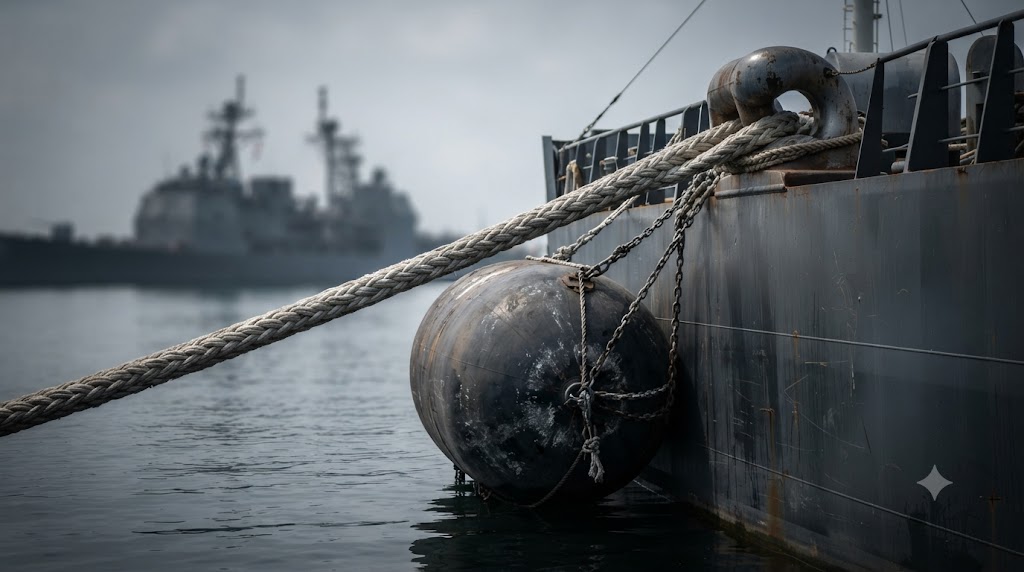
US Naval Forces Board a Chemical Tanker Carrying Naphtha Near Hormuz
Global petrochemical supply chains are facing heightened geopolitical friction as maritime security operations intensify in critical chokepoints. US naval forces recently boarded vessels in the vicinity of the Strait of Hormuz, including a chemical tanker carrying naphtha and clean products, to verify compliance with a reimposed blockade. Notably, no US strikes on Iran were reported in the prior two days, indicating a focus on enforcement and inspection rather than active kinetic conflict. Procurement managers and chemical traders must immediately assess the implications of these maritime interdictions. The Strait of Hormuz is a vital artery for global energy and chemical feedstocks. Any disruption, delay, or heightened scrutiny in this corridor directly impacts the timely delivery of naphtha to steam crackers across Asia and Europe. Buyers relying on these foundational molecules need to anticipate logistical bottlenecks and potential supply tightness. Understanding the mechanics of this geopolitical risk allows sourcing teams to build resilient contingency plans. Strategic agility is now essential for navigating this complex and volatile market environment.
The Mechanics of Strait of Hormuz Disruptions
The Strait of Hormuz is arguably the world’s most critical maritime chokepoint for the energy sector, facilitating the transit of roughly 20 to 30 percent of global petroleum and petrochemical feedstocks. Chemical tankers carrying naphtha, mixed xylenes, and clean refined products rely on this narrow passage to reach major refining and cracking hubs in East Asia and, via the Suez Canal, Europe.
When naval forces board vessels for compliance checks, it introduces immediate operational friction. Inspections can delay voyages by days or even weeks, disrupting tightly calibrated just-in-time delivery schedules. Furthermore, the mere presence of heightened naval activity triggers automatic spikes in maritime war risk insurance premiums. These additional costs are inevitably passed down the supply chain, inflating the total landed cost of imported petrochemicals.
For steam crackers operating on thin margins, a delayed naphtha delivery can force a reduction in operating rates. This cascading effect means that a localized maritime inspection can ultimately manifest as a derivative shortage thousands of miles away.
Impact on Naphtha and Clean Product Markets
Naphtha is the lifeblood of the global petrochemical industry, serving as the primary feedstock for steam crackers that produce ethylene, propylene, and aromatic hydrocarbons. A disruption in naphtha flows from the Middle East forces downstream producers to compete for alternative, often more expensive, supply sources.
Procurement teams must anticipate a ripple effect of market tightening:
Freight and Insurance Volatility: Shipping rates for chemical tankers in the region will surge as owners demand higher compensation for perceived risk.
Feedstock Substitution: Crackers may attempt to switch to alternative feedstocks like liquefied petroleum gas (LPG) or ethane, driving up demand and prices for those specific molecules.
Derivative Shortages: Prolonged delays in naphtha delivery will inevitably lead to reduced output of polyethylene, polypropylene, and benzene derivatives, tightening global polymer markets.
Buyers must recognize that these are not isolated freight issues but fundamental supply chain shocks that require immediate strategic intervention.
Strategic Sourcing and Risk Mitigation
Procurement professionals must adopt highly disciplined sourcing strategies to mitigate the risks associated with geopolitical chokepoints. Relying on a single maritime route for critical feedstocks is a massive operational liability.
Buyers should actively qualify alternative suppliers in regions unaffected by the Strait of Hormuz, such as North America, West Africa, or domestic sources where applicable. While this may involve higher baseline freight costs, it provides a vital hedge against total supply severance.
Negotiating flexible contracts becomes essential during these highly volatile periods. Agreements must include clear volume adjustment clauses, alternative delivery ports, and explicit definitions of force majeure triggers related to geopolitical events. Suppliers value partners who can adapt quickly to shifting logistical realities, but buyers must also fiercely protect their own operational continuity.

Beta Pinene
Found this useful?