LyondellBasell's second quarter earnings, excluding unusual items, reached $1.4 billion, up nearly 600% from the same quarter last year. Dow flipped to a profit after a loss the year before, with sales climbing close to 20%. BASF's adjusted EBITDA rose from €1.6 billion to €2.4 billion, beating analyst forecasts by a wide margin.
All three results trace back to the same cause. Middle East supply disruption, tied to the conflict around the Strait of Hormuz, has tightened petrochemical markets and pushed pricing sharply higher. That has been very good for producer margins, and it is starting to draw the kind of public attention that tends to precede regulatory action elsewhere in the energy sector.
How Dramatic the Gains Actually Were
The scale of this quarter's earnings jump is unusual even by petrochemical industry standards. LyondellBasell's CEO acknowledged directly on the company's earnings call that the conflict created a substantially improved earnings outcome for the business, not shying away from describing it as a windfall.
The underlying supply dynamics explain why margins moved so fast.
An estimated 20% to 25% of Middle Eastern polyethylene capacity has been damaged and is not expected to restart until 2027 at the earliest.
Chinese polyethylene inventories have been drawn down roughly 30% since the conflict began, with plant operating rates there running around 75%.
An April 2026 polyethylene price increase was reportedly the largest on record for the industry.
BASF and Dow benefited from similar dynamics, with BASF noting that customers made advance purchases during the volatile quarter and that its integrated European production footprint provided a competitive advantage amid the disruption.
Why This Looks Different From a Normal Up Cycle
Petrochemical margins are cyclical by nature, and producers regularly see earnings swing with feedstock costs and demand. What makes this quarter distinct is the direct, publicly acknowledged link between a geopolitical conflict and producer profits, stated plainly by company leadership rather than inferred by analysts after the fact.
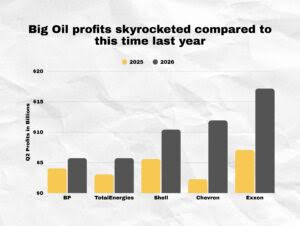
That distinction matters because it mirrors almost exactly the pattern that triggered windfall tax debates in the oil and gas sector during 2022, following Russia's invasion of Ukraine, and again now during the current Middle East conflict.
The Windfall Tax Momentum Building Elsewhere
Windfall tax proposals have moved from talking point to active legislation in several markets this year, almost entirely targeting oil and gas producers so far rather than downstream petrochemical companies.
In the United States, separate windfall profits tax bills have been introduced in Congress targeting major oil producers, with one measure proposing a per-barrel excise tax tied to the gap between current and average prior-year prices.
Portugal approved a 33% windfall tax in late July 2026 on extraordinary profits earned by oil and refining companies, calibrated against 2024 and 2025 average earnings.
The United Kingdom's existing windfall tax on North Sea oil and gas, combined with other levies, now totals a 78% rate on profits and is projected to roughly double 2024-25 revenue in 2026.
None of these measures currently target petrochemical producers specifically. That gap is worth watching closely. LyondellBasell, Dow and BASF are not oil and gas producers in the traditional sense, but their earnings are directly tied to the same geopolitical disruption driving the current wave of windfall tax proposals against energy companies.
Why Petrochemical Producers Could Be Next
A few factors suggest chemical companies may not stay outside this conversation indefinitely. Public officials pushing windfall tax legislation have repeatedly framed their target broadly as companies profiting from geopolitical instability rather than narrowly as crude oil producers, leaving room for the definition to expand.
Corporate transparency has also made this an easier target than it might otherwise be. When a company's own chief executive publicly describes a quarter's results as a windfall tied to conflict, that statement becomes a ready-made talking point for lawmakers building a public case for taxation, regardless of whether the company technically fits current legislative definitions.
What This Means for Chemical Buyers
For procurement teams, the immediate financial impact of any future windfall tax on petrochemical producers is uncertain and likely still some distance away given current legislative focus on oil and gas. Still, a few practical considerations are worth building into planning now.
Elevated petrochemical pricing tied to Middle East supply disruption is likely to persist into 2027 regardless of any tax policy changes, given the scale of damaged capacity described by producers themselves.
Buyers should watch legislative language carefully as windfall tax proposals evolve, since even modest definitional changes could eventually pull large petrochemical producers into scope.
Diversifying supply relationships across producers with different geographic exposure to Middle East disruption remains a more immediate and controllable risk mitigation step than anticipating tax policy outcomes.
What Buyers Should Watch Next
The scale of this quarter's chemical sector earnings gains, openly tied by company leadership to a geopolitical conflict, puts producers in a similar position to the oil majors that have already drawn windfall tax legislation. Whether that scrutiny extends from crude oil producers to downstream petrochemical companies remains an open question, but the public framing risk is already present given how directly executives have described these results.
Buyers should track both the pricing implications of continued Middle East supply disruption and the slower moving but potentially significant policy risk building around how governments choose to define and tax windfall profits going forward.
Ready to source polyethylene and related petrochemical materials from verified global suppliers? Explore competitive offers on our platform today.